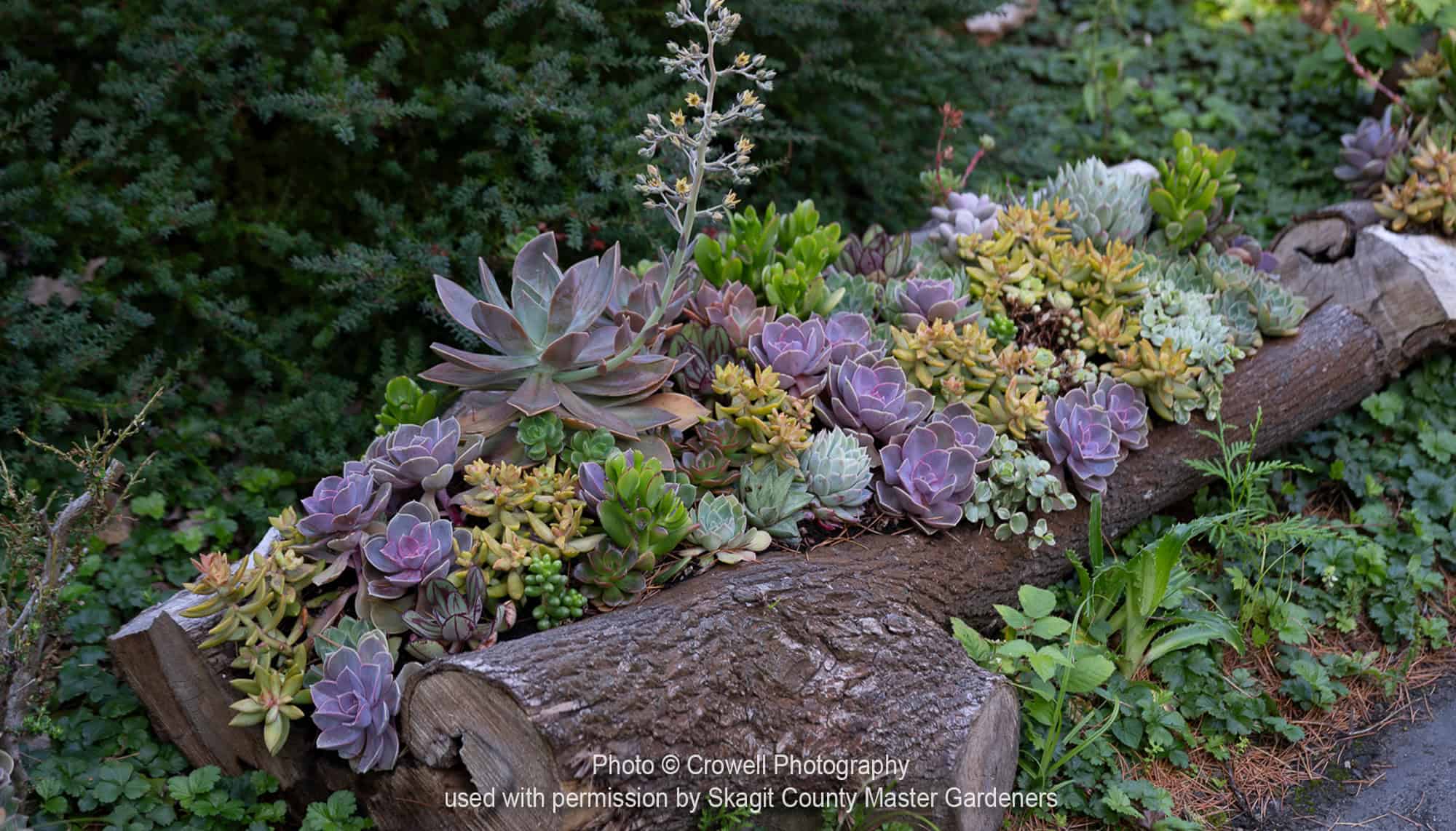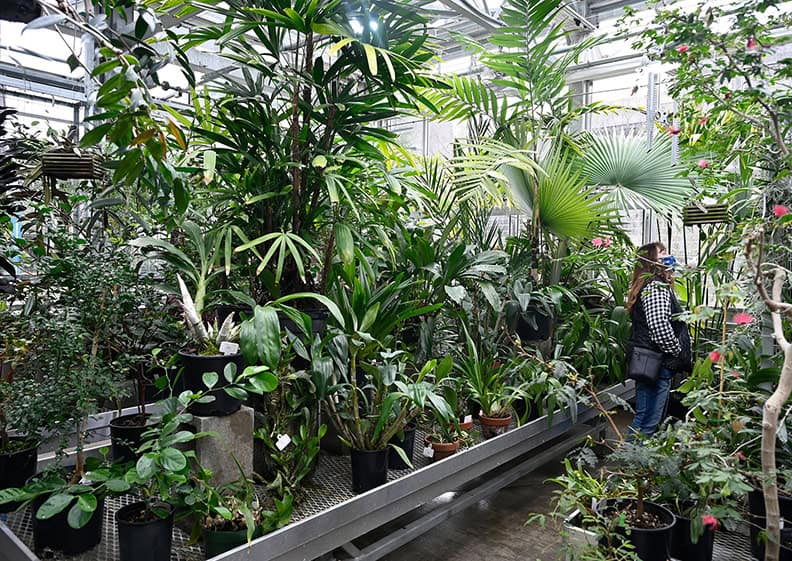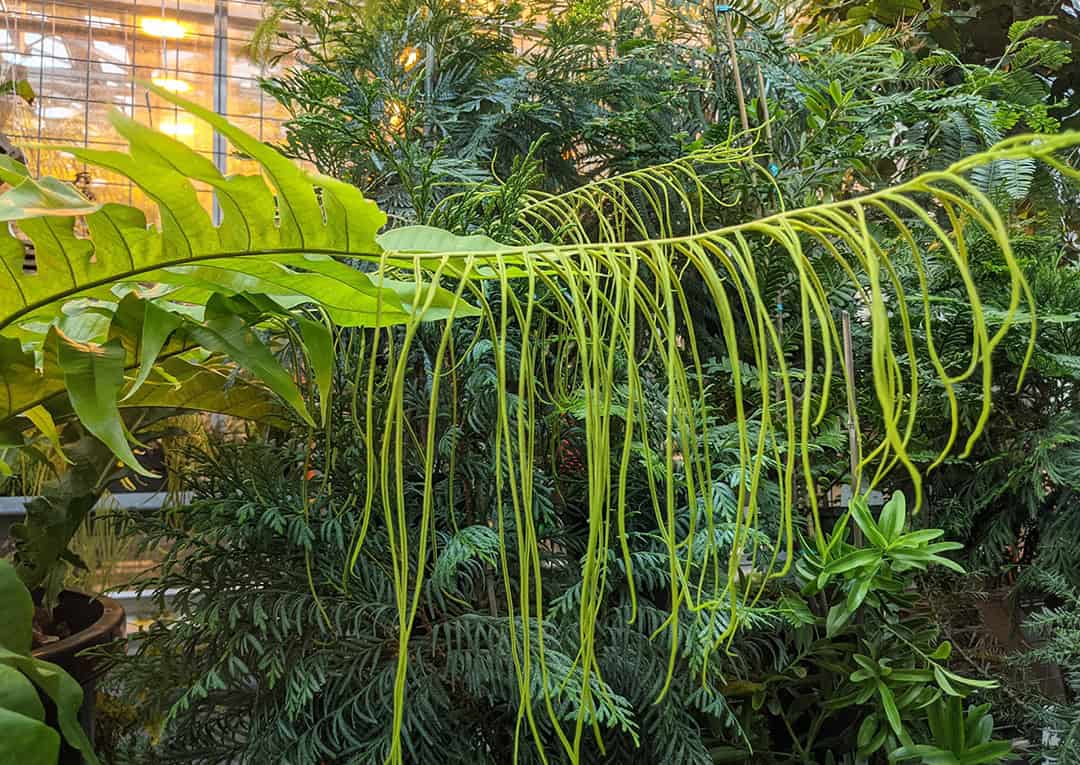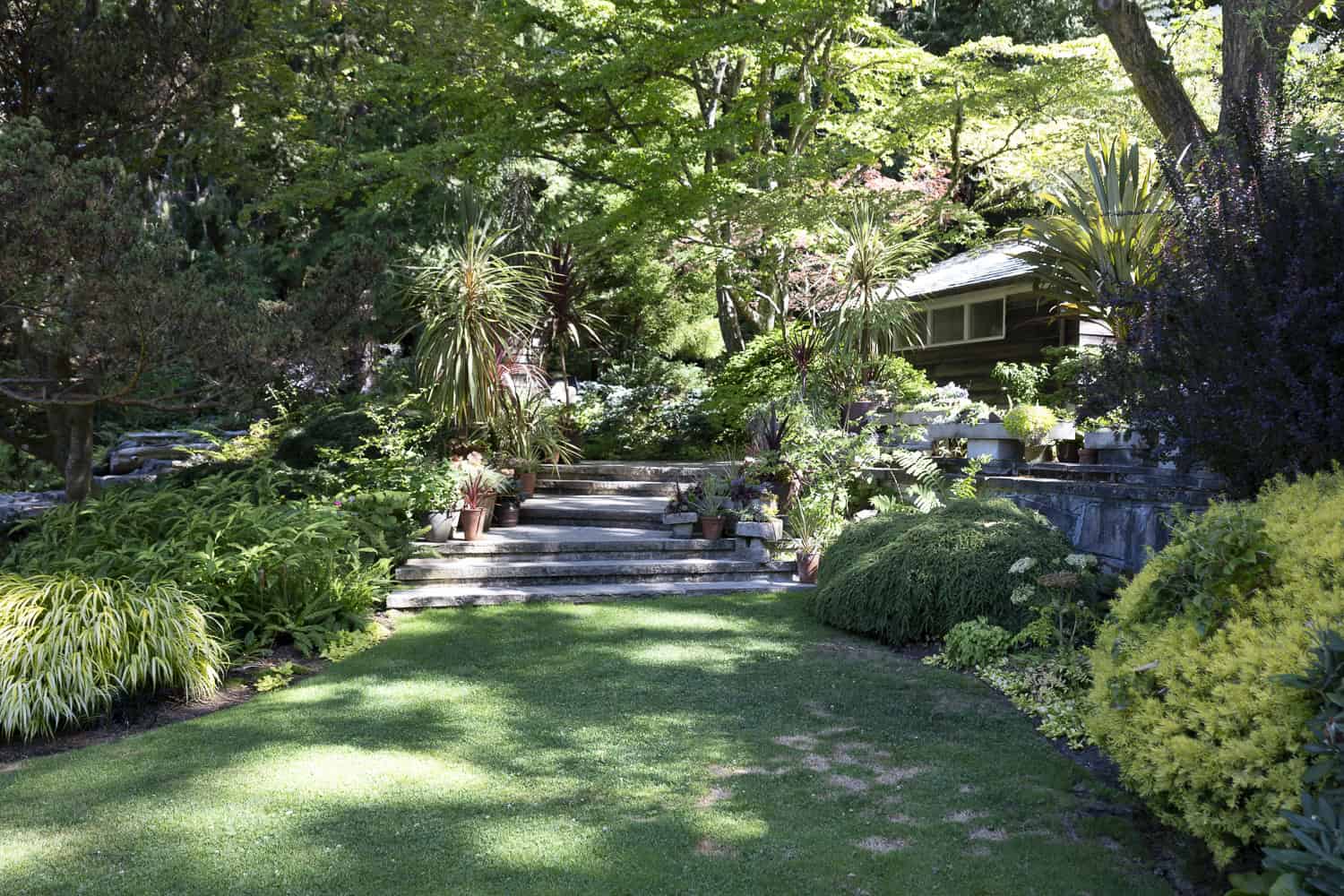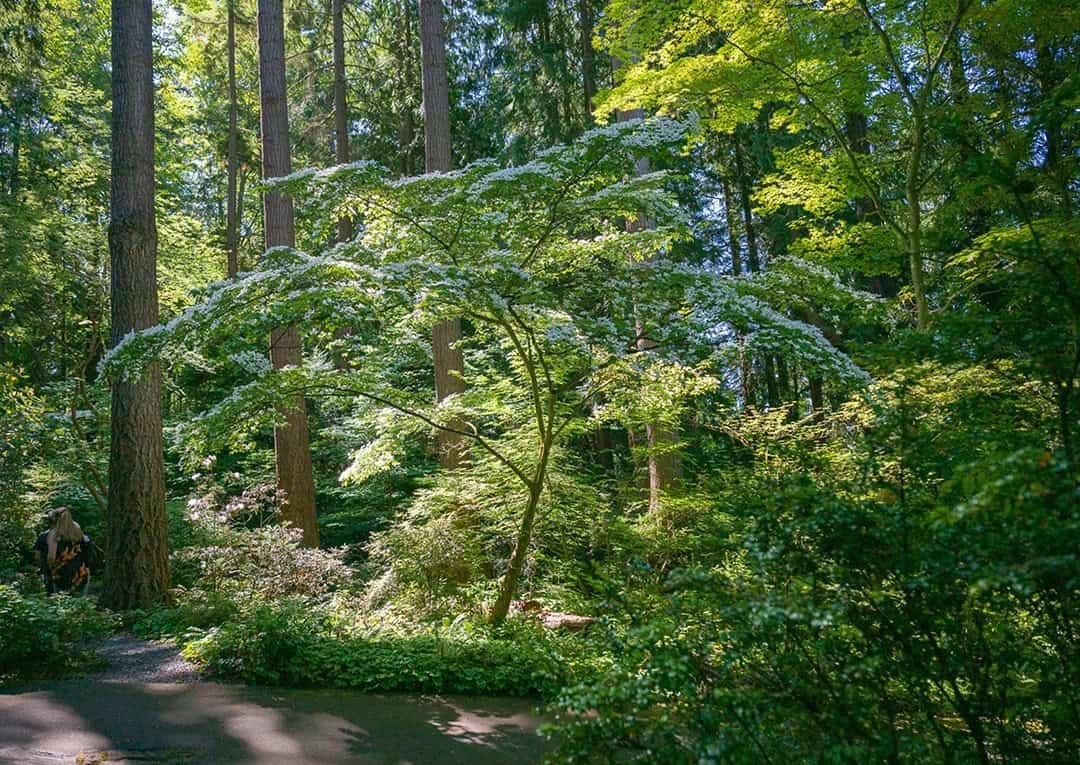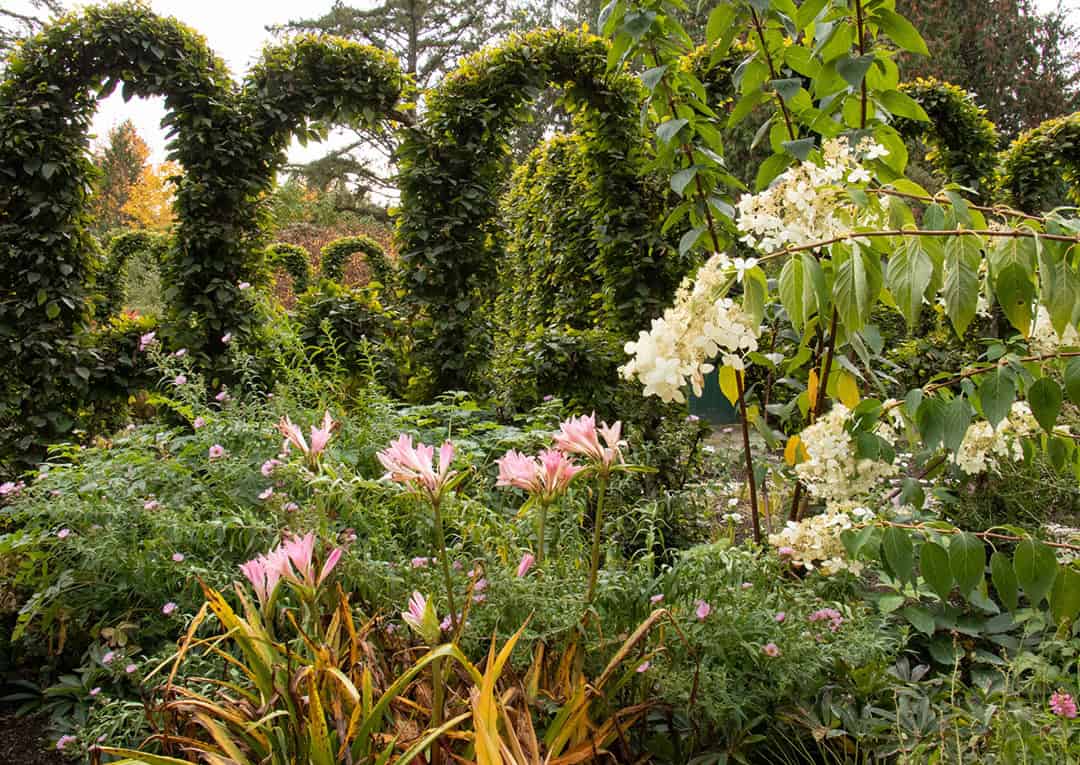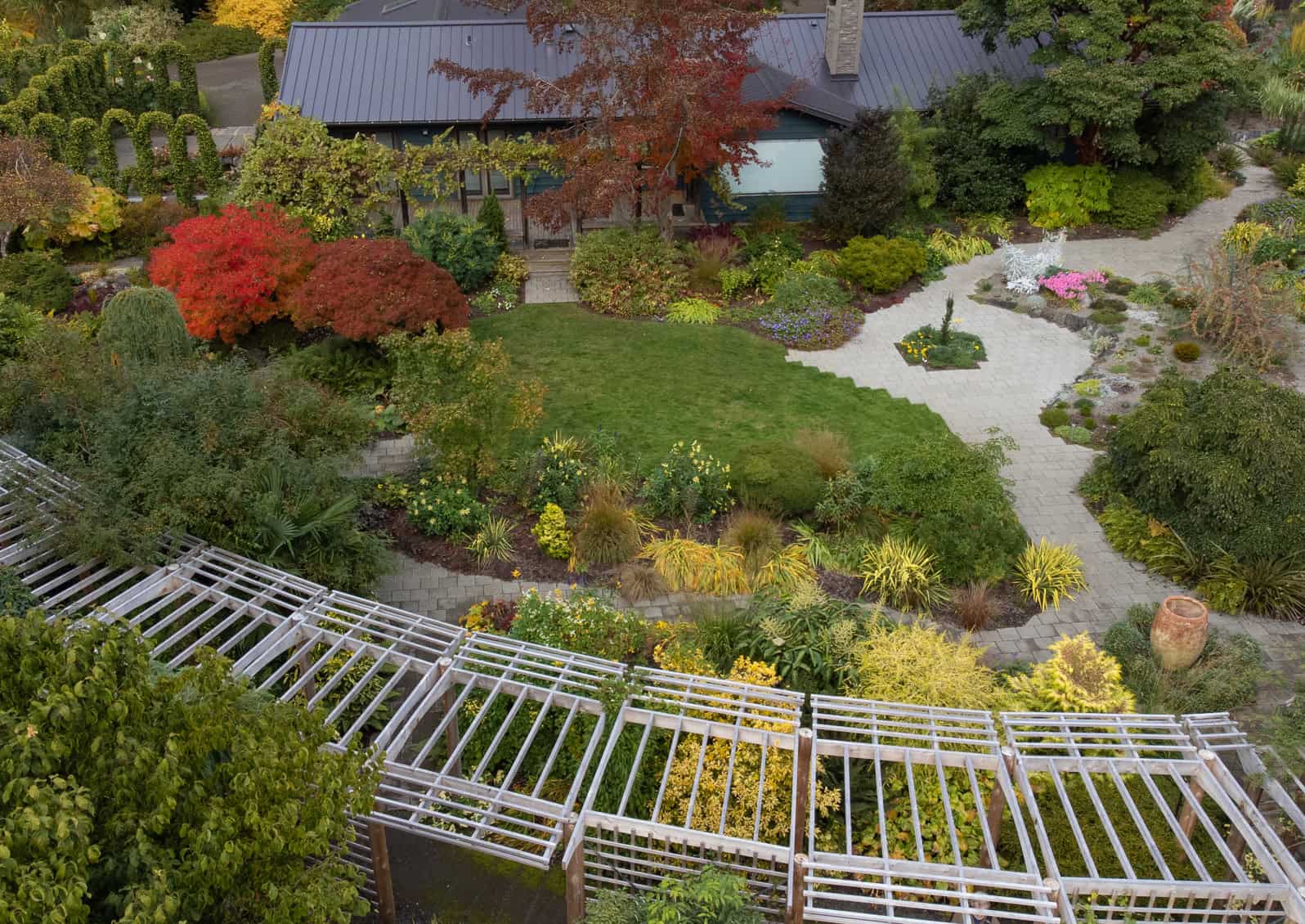

large garden with people walking on paths

Post: February 6, 2026

Subscribe to the Blog >

Getaways: Public Gardens provide inspiration from coast to coast

Master gardeners share ideas for gardens to visit across the country

By Skagit County WSU Extension Master Gardeners

Visiting a special garden in another part of the country can provide ideas, inspiration, and an education for all gardening enthusiasts. It’s no surprise that master gardeners often incorporate a garden visit into their travel itineraries, drinking in the beauty and diversity of the natural landscape in places near and far.

Of course, the focus is often on the anticipated beauty of blooms and color from spring to fall; however, many gardens host special events and features during the holidays and winter that offer lovely after-dark variations on trees, plants, and water features.

A column published this time last year focused on gardens in the Pacific Northwest. This time, several Skagit County WSU Extension Master Gardeners expand their horizons to include interesting garden destinations across the United States, from Maine to California, and in British Columbia. Details for each garden include website links, contact information, and logistics to help prepare for a visit.

Chinese building beside pond in large garden

The Chinese Garden at the Huntington is one of the largest classical-style Chinese gardens outside of China. Photo © Pexels.com | Utsukushii

path through large display garden

The themed gardens and conservatories at the Huntington feature over 84,000 plants, with extensive collections of rare plants. Photo © Pexels.com | Maxie T.

Huntington Gardens

By Ginny Bode, Skagit County WSU Extension Master Gardener

Huntington Gardens, north of Los Angeles, offers a breathtaking blend of art, history, and nature. It is difficult to choose what to explore first – the stunning themed gardens, world-class art collections, or rare manuscripts.

Originally the San Marino Ranch, the estate was acquired in 1903 by Henry E. Huntington, a railroad and real estate tycoon. He and his wife, Arabella, created a place for their passions: Art, rare books, and plants. Since 1919, the Huntington has been in a public trust for education and enjoyment.

The entrance fee offers more than can be experienced in a day and includes the 130-acre botanical garden and conservatories, as well as the rare manuscripts and art collection. The living plant collection alone encompasses 84,000 individual plants, which are tended for education, conservation, and research.

The Huntington’s desert plant collection is known as one of the world’s largest and oldest collections of cacti and other succulents – and is worth the visit alone. The new Desert Conservatory showcases both old-world succulents and new specimens, such as the echeveria (Crassulaceae family) with its large rosette leaves.

In winter, 80 species of camellias and 1,200 cultivated varieties begin to bloom, peaking in January throughout the Japanese Garden, North Vista, and Garden of Fragrance.

The three-acre curated Rose Garden was updated in the 2010s, including the concrete trellis trees working alongside the classic sculptures and pergolas. The 2,500 individual roses are auditioned for show and smell, as well as their ability to perform well without the use of insecticides or fungicides. The initial bloom begins in March and extends through November.

The serene landscapes extend west with a view of the Pacific Ocean in the distance. Vibrant flora and a tranquil atmosphere provide a perfect escape, making it an inspiring destination for plant and art lovers year-round.

Visit the Huntington Gardens website
Location: 1151 Oxford Road, San Marino, CA, 91108
Hours and tours: Online ticket reservations daily.
Admission: $28 – $34
Contact information: 616-405-2100

Butchart Gardens

By Ginny Bode, Skagit County WSU Extension Master Gardener

Butchart Gardens on Vancouver Island, near Victoria, BC is a gem of a garden get-away. A visit can be made either by car and ferry, or by boat or float plane, accessing via the dock located below the Japanese Garden on Brentwood Bay. Those who remember visits from decades ago will not be disappointed-now in its 122nd year, Butchart Gardens continues to be over-the-top-beautiful.

Designed in a depleted limestone quarry next to her husband’s cement processing plant, Jennie Butchart had an idea in 1904. She didn’t stop until it was fulfilled, using the couple’s personal wealth to create what is now a National Historic Site of Canada and drawing approximately one million visitors annually.

building with striped awnings and colorful rows of flowers in front
Open year around, Butchart Gardens is a show garden rather than a botanical garden. Photo © Ginny Bode
pond surrounded by dense bushes and trees
Designed in a depleted limestone quarry, Butchart Gardens features a collection of themed gardens including the Sunken Garden, Japanese Garden, Rose Garden, and Italian Garden. © Ginny Bode

Butchart Gardens isn’t one single style but a collection of themed gardens, including the Sunken Garden, Japanese Garden, Rose Garden, and Italian Garden. A show garden rather than a botanical garden, Butchart Gardens is a prime example of horticultural artistry, rotating annuals alongside permanent features to create vibrant, ever-changing floral tapestries for seasonal impact.

Visiting in the fall is as beautiful as spring and summer, with fewer crowds to navigate. Though busy when we arrived in mid-afternoon (after docking the boat), we enjoyed the golden light of the day with very few others after the buses left at 5 p.m. The combinations of dahlias and verbena, or begonias and coleus, grow in large swaths of color to create inspiring combinations for planters and small areas in my own garden.

Surprisingly, most of the 55-acre garden is hand-watered, with only steep hillsides and grassy patches on timed watering systems. The garden is cared for by a team of more than 50 full-time gardeners, which swells to more than 500 summer employees. Since visiting, several fellow master gardeners have told of their visits during the “off” season and how beautiful the garden is year-round. Now I understand why the garden sells year-round passes. During the December holidays, the gardens are bathed in more than 300,000 twinkling lights and other features, including the “Twelve Days of Christmas,” for evening viewing.

Visit the Butchart Gardens website
Location: 800 Benvenuto Ave, Brentwood Bay, BC, Canada
Hours: Open year-round, with varying daily and seasonal hours.
Admission: $44.25 CDN
Contact Information: 866-652-4422

building in garden with plant covered roof
UBC Botanical Gardens, Vancouver, BC © Nancy Crowell | crowellphotography.com
cement troughs filled with alpine plants
The Lohbrunner Alpine Garden at the UBC Botanical Gardens, Vancouver, BC features alpine plants growing in from each continent. © Nancy Crowell | crowellphotography.com

University of British Columbia Botanical Garden

By Diana Wisen, Skagit County WSU Extension Master Gardener

The University of British Columbia (UBC) Botanical Garden is the oldest university botanic garden in Canada. Visiting UBC Botanical Garden is a real treat for serious plant lovers. The garden was started in 1916 to collect, study, and showcase the wide variety of plants from the temperate regions of the world, particularly North America and Asia.

This science-based garden, about a 25-minute drive west of downtown Vancouver, BC, is known for its extensive collections of several species, including acer (maple), magnolia, sambucus, styrax, and rhododendrons, among others. These wild-collected specimens are for research as well as educating the public. Used for UBC research, this huge garden is designed to show natural habit and is not what you would call a park type or display garden. UBC offers self-guided tours as well as guided group experiences and team building (collaborative group activities).

Included in the tour options is the Nitobe Memorial Garden, a 2.5+ acre, traditional Japanese stroll garden and authentic tea house located at the University of British Columbia.

The UBC Botanical Garden gift shop is one of the best garden shops – a true shopper’s paradise. As the garden is in Canada, remember that most seeds or plants may not be transported across the border.

Visitors will gain a deeper appreciation for the great diversity and wide variety of plants that thrive in our temperate climate. Visit the UBC Botanical Garden website for current fee schedules. 

Visit the UBC Botanical Garden website
6804 SW Marine Drive, Vancouver, BC, Canada  V6T 1Z4
Hours: Vary by season with special winter events.
Admission: Varies by season and age.
Contact Information: 604-822-4208. Email: garden.info@ubc.ca

Photo © Sarah Zabel, Salal Chapter, Native Plant Society.

Appreciating Native Plants and Incorporating Them into Your Garden
Tuesday, February 17, 2026 1 p.m.
— Free, no registration required —

Native plants do more than just look pretty in our landscapes. They provide services to the other plants and animals in our gardens – and to us gardeners too. This presentation, by Sarah Zabel and Nan Maysen, is about the role that native plants play in our backyards and offers ideas and inspiration for creating thriving communities of plants in various garden settings, along with their tag-along fauna!
Sarah Zabel is co-manager of the Salal Chapter of the Native Plant Society’s Native Plant Garden and has a life-long interest in native plants stemming from her hiking days. 
Nan Maysen had a 40-year career in environmental education including her own business, Natural Landscapes Design. She has been active with the Washington Native Plant Society since 1992.
at the NWREC Sakuma Auditorium
16650 State Route 536, Mount Vernon, WA

driveway with mansion in the distance
Winterthur Museum is home to an extensive collection of American furnishings and decorative arts. Photo © Pexels.com
pink and red azaleas blooming in woods
Azalias blooming in the Winterthur Gardens Photo © Unsplash

Winterthur Museum, Garden & Library

By Diana Wisen, Skagit County WSU Extension Master Gardener

The garden is the artistic vision of its creator, Henry Francis du Pont (1880-1969), and is surrounded by nearly 1,000 acres of meadows, farmland, and waterways. The views in every direction are important to the whole. The paths are an integral part of the overall design, curving rather than straight, following the contours of the land, passing around trees, and drawing walkers into the garden.

Winterthur is a unique home, garden, museum, and library created by du Pont and located in Delaware’s Brandywine Valley near Wilmington. The museum, garden, and library are best known for du Pont’s extensive collection of American home furnishings and decorative arts, which is considered by many to be the best in the country. Du Pont expanded the original home to 175 rooms to house his collection.

The naturalistic gardens, woodlands, and meadows offer 25 miles of hiking trails. Tours are offered, and visitors can also take a narrated tram ride. It’s a peaceful and quiet place, especially beautiful in spring. For a taste of the beauty at Winterthur go to YouTube and type in Winterthur Museum.

Visit the Winterthur website
Location: 5105 Kennett Pike, Winterthur, DE  19735
Hours: Vary by season with special winter events. The gardens can be explored on foot, or guests may take a narrated tram ride from March through December.
Admission: Varies by season and age.
Contact Information: 800-448-3883

When planning to explore the Brandywine Valley, you may also want to visit Longwood Gardens in nearby Kennett Square, PA, and the Wyeth Museum.

Longwood Gardens at Kennett Square. Photo © Roman Desisenko | Unsplash

Longwood Gardens – Kennett Square

By Diana Wisen, Skagit County WSU Extension Master Gardener

Longwood Gardens is a world-renowned botanical garden like no other that defies verbal description. In short, you have to see it to believe it. To maximize the experience, it’s best to study the garden website for several hours when thinking about visiting it. It is more than a garden with more than 10,000 different plant species and varieties, combined with mind-boggling showmanship.

The grounds feature 1,100 acres of gardens, woodland, meadow, conservatories, casual and fine dining, many kinds of musical experiences, fountains, model trains, and breathtaking seasonal displays. Ask anyone who has seen the hanging chrysanthemum globe or the poinsettia trees. You may want to plan for two days and visit other sites in the area.

Visit Longwood Gardens website
Location: 1001 Longwood Road, Kennett Square, PA  19348
Hours: Vary by season with special winter events.
Admission: Admission is by time. Tickets purchased in advance.
Contact Information: 610-388-1000 or questions@longwoodgardens.org

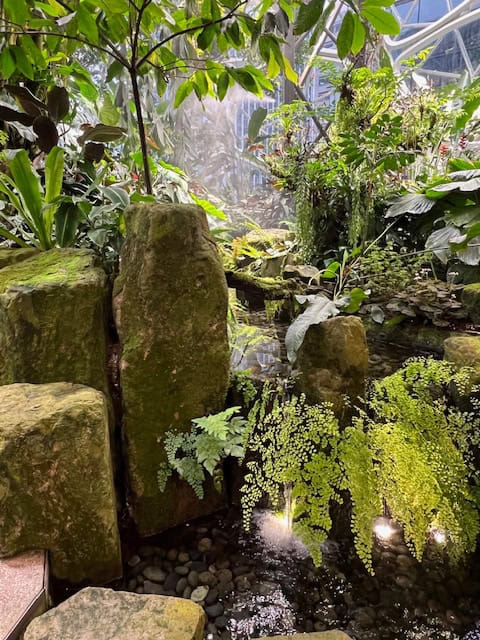
waterfall in greenhouse
Kennett Square | Longwood Gardens Photo © | Unsplash

New England Botanic Garden at Tower Hill

By Kari Ranten, Skagit County WSU Extension Master Gardener

Set on 200 acres about an hour’s drive from Boston, the New England Botanic Garden at Tower Hill is home to 18 distinct gardens – from formal to woodlands – in what is described as a “living museum.” The garden was founded in 1842 by the Worcester County Horticultural Society as “a place for people to experience the wonder of plants, learn about the natural world, and make joyful connections.” The public was invited into the garden in 1986 and now features a landscape crisscrossed with walking trails and accessible pathways. Water features, including ponds and fountains, are found throughout the gardens, which also offer many places to view the beautiful Wachusett Reservoir, the second-largest body of water in the state of Massachusetts.

read and yellow flowers blooming in front of a pergola
Coneflowers and dahlias show their colors as the summertime sky threatens the rainstorm ahead at the New England Botanic Garden at Tower Hill. © Kari Ranten
large cement urn on path in woods
A trail through the five-acre woodland native plant garden at the New England Botanic Garden at Tower Hill features artwork surprises such as the ‘Friendship Urn,’ a replica of one originally displayed in Taunton, England. Photo © Kari Ranten
moss covered path through ferns and maples
A natural staircase featuring several varieties of ferns, maples and hydrangea © Kari Ranten

A summertime visit to the garden yields views of colorful annuals and perennials, a test vegetable garden including heirloom tomatoes, water features, greenhouses, and the welcome cool of the woodland walk. The entire garden is dotted with interesting artwork, including the “Friendship Urn” in the woodland area, a replica of one originally displayed in Taunton, England, designed for the Massachusetts garden to honor two great English landscape garden designers, Henry Hoare and Sir Charles Tynte.

The garden showcases artwork throughout the year and, in summer 2025, featured “Art in Motion,” a collection of 17 fascinating stainless steel kinetic sculptures crafted by artist and engineer George Sherwood. Check the website for upcoming exhibitions that complement the gardens’ beauty.

Visit the New England Botanic Garden
Location: 11 French Drive, Boylston, MA, 01505
Hours: Open daily: 10 a.m. to 3 p.m. Check the website for special holiday hours for the garden’s annual “Night Lights” celebration.
Admission: Varies by day of the week and age.
Contact Information: 508-869-6111

The Ware Collection of Blaschka Glass Models of Plants

By Diana Wisen, Skagit County WSU Extension Master Gardener

The internationally acclaimed display of “flowers” at the Ware Collection of Blaschka Glass Models of Plants at the Harvard University School of Natural History is a must visit while you are in Boston. It is worth making the effort to go see these “flowers that never fade,” a most astonishing and hard-to-believe exhibit you will ever see. The exhibit features life-size models so perfect that you will think you are looking at real plants. The collection features 847 flowers plus other glass models, such as a bee pollinator on a particular plant, and how both behave at the moment. Or the effect fungi are having on a rose, infecting it with disease. In all, the collection includes more than 2,000 glass models. This collection was created by the Blaschka father-and-son duo, Leopold and Rudolf, in Dresden, Germany, and was financed by the Ware family between 1887 and 1936. You have to see it to believe it. Check out the website for more information, including how the glass plants and flowers were made. It’s a good one to put on your East Coast bucket list.

Visit the Harvard Museum of Natural History website
Location: 26 Oxford Street, Cambridge, MA 02138
Hours: Open daily, 9 a.m. to 5 p.m. (excluding holidays)
Admission: General admission to the Harvard Museum of Natural History gives access to all exhibits, including the Glass Flowers Gallery. Tickets can only be purchased at the admissions desk and the museum shop.
Contact Information: 617-495-3045


roses blooming with person working in the background
Photo © Skagit County Master Gardener Foundation

Hands on Rose Pruning Workshop
Saturday, March 7, 2026 2-4 p.m.
— $10 registration fee, limited group size —
The Discovery Garden at 16602 State Route 536, Mount Vernon

Proper pruning can improve roses’ appearance and overall health. Learn the right way to prune roses: hybrid teas, climbers, and landscape roses. Skagit County WSU Extension Master Gardeners will lead this two-hour, hands-on instruction in the Discovery Garden’s Rose Garden. Learn when the best time of year to prune roses, the right tools, how to sterilize tools, and techniques for ensuring healthy, long-lasting roses. No prior gardening or pruning experience is necessary.

Rain or shine! This activity is fully outdoors. Bring your clean and sharp bypass pruners, garden gloves, and dress appropriately for the weather. This is a hands-on outdoor workshop! Participants will work in small groups, space is limited.

Free parking is available at the Discovery Garden. Meet in the Pavilion, a short walk from the entrance on level ground. Workshop cost is $10 (cash and checks only). Advance registration and payment is required. Participants will need to sign a liability waiver on site before starting the workshop.

To register and for more information including reduced rate tickets for those with financial need contact Sue Moulton at (360) 395-2356 or sue.moulton@wsu.edu.

Colorful perennials growing on hillside
Colorful perennials fill a natural landscape at the Coastal Maine Botanical Garden.© Kari Ranten
sculptural birds beside pond in garden
Artwork, including schools of ceramic fish by Maine artist Tyson M. Weiss, is woven into the natural landscape of Coastal Maine Botanical Garden. © Kari Ranten

Coastal Maine Botanical Garden

By Kari Ranten, Skagit County WSU Extension Master Gardener

The splendor and variety of plants, coupled with the whimsy of the giant trolls found in the Coastal Maine Botanical Garden, make return trips to this venue inspirational every time, every season.

Started as a grassroots effort among friends, the garden is now the largest botanical garden in New England, with more than 300 acres along the Mid-Coast of Maine near the picturesque community of Booth Bay.

The buildings and central gardens are ADA-compliant, while the paths throughout the rest of the large campus range from gravel to trails. A shuttle runs throughout the gardens during open hours with convenient drop-off and pick-up locations.

Focal points for various gardens feature ponds, a focus on the five senses, rhododendrons, dahlias, irises, lawns, arbors, a children’s garden, a native butterfly house, and Burpee Kitchen Garden. In the woodland area, where trails offer views of the saltwater inlets and natural flora and fauna, a Fairy House Village encourages creativity among visitors of all ages.

waterfall in garden
Water features create soothing sound and cooling mist during a summer visit to the Coastal Maine Botanical Garden. Photo © Kari Ranten
whimsical giant troll carved and built out of tree bark
Roskva, one of five giant whimsical trolls known as the “Guardians of the Seeds” by Danish artist Thomas Dambo, stands guard near the entrance of the Coastal Maine Botanical Garden. © Kari Ranten

An added draw is the collection of five giant, whimsical trolls, known as the “Guardians of the Seeds,” by Danish artist Thomas Dambo. The famed artist uses recycled wood to create the enormous trolls, tucked into the garden’s forests. Each has a name, a story, and teachings that put focus on sustainability and caring for the Earth. The troll that welcomes visitors is Roskva, which stands for the trunks and is described like this: “Roskva is the heaviest, hardest, and strongest of the trolls. Every day, Roskva climbs towards the sky, and every year she grows taller and wider. If a troll forgets something, they can always ask Roskva – she counts the seasons and remembers everything that happens around her.”

Dambo’s trolls are featured in installations around the world, with several located in the Pacific Northwest, including Ballard, Issaquah, West Seattle, Bainbridge Island, and Vashon Island.

Visit the Coastal Maine Botanical Garden website
Location: 105 Botanical Gardens Drive, Boothbay, ME, 04537
Hours: The gardens are open 9 a.m. to 5 p.m. daily from May 1 to October 19. “Gardens Aglow,” featuring thousands of colorful lights, runs evening hours from late November through early January, with advance ticket sales required.
Admission: Varies by age.
Contact Information: 207-633-8000

Skagit County WSU Extension Master Gardener Discovery Garden

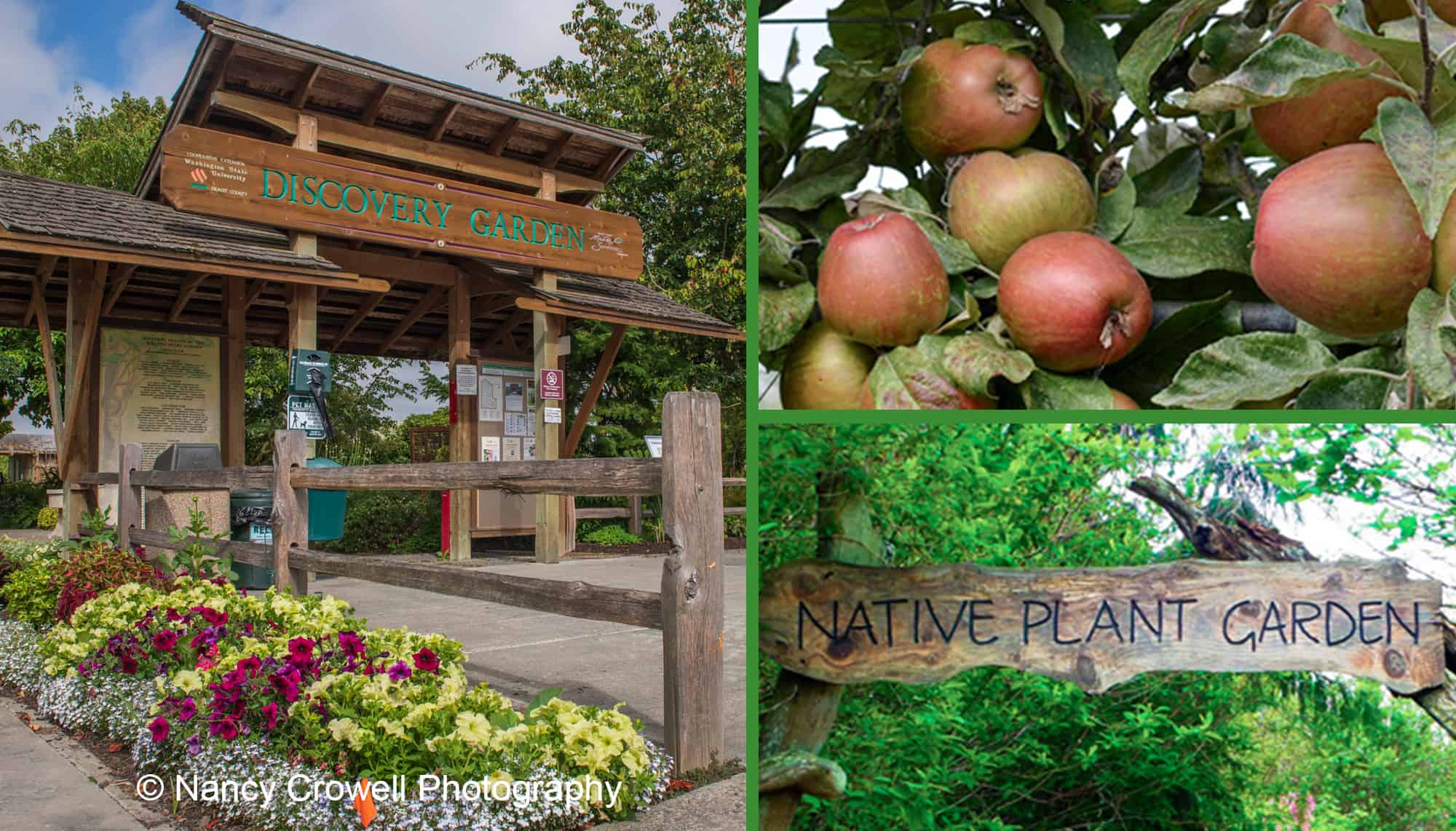
Close to home is the Skagit County WSU Extension Master Gardener Discovery Garden located on Memorial Highway (SR 536), west of Mount Vernon. The garden is open daily from dawn to dusk at no charge. For information, or to take a virtual stroll around the Discovery Garden’s garden room, visit our website. First-time visitors are often surprised by the extensive collection found in the 1.6 acre garden. The well-maintained paths wind through 33 garden rooms, including a koi pond, an herb garden, a vegetable garden, and many benches for resting. Each garden focuses on specific plants that thrive in the Skagit Valley.

The Discovery Garden, which opened 30 years ago, is maintained by 150 volunteer master gardeners and is designed to inspire and educate the public. An annual open house is held in the garden from 10 a.m. to 2 p.m. on the last Saturday in June, featuring a plant clinic and children’s activities.

These are just a few of the hundreds of beautiful gardens that await in every corner of the continent. Each unique destination will help educate and inspire visitors by illustrating the region’s flora and fauna, which are as unique as the region itself.

ABOUT THE AUTHORS: Diana Wisen has been a master gardener since 1991; Ginny Bode, since 2022, and Kari Ranten, since 2024.


Questions about home gardening or becoming a master gardener may be directed to Skagit County WSU Extension Office, 11768 Westar Lane, Suite A, Burlington, WA 98233; by phone: 360-428-4270; or via the website: www.skagit.wsu.edu/mg

Washington State University Extension helps people develop leadership skills and use research-based knowledge to improve economic status and quality of life. Cooperating agencies: Washington State University, US Department of Agriculture, and Skagit County. Extension programs and policies are available to all without discrimination. To request disability accommodations contact us at least ten days in advance.


dark purple flowers with snow on petals

Post: January 16, 2026

Subscribe to the Blog >

Bring Winter Color to Your Garden with Hellebores

Transform your winter landscape with these exquisite perennials

Jessamyn Tuttle

By Jessamyn Tuttle, Skagit County WSU Extension Master Gardener

Even though we’re lucky enough to have mild, mostly green winters here in the Pacific Northwest, we’re already starting to get a little starved for flowers by January. If you’d love to see some color in your winter garden other than green and brown, consider planting some hellebores, a perfect way to get your flower fix. A well-behaved perennial that comes in a range of colors, hellebores can start blooming as early as December and continue the show through March.

There are about 15 species of hellebore, none of which are native to the United States. The most common garden species are Helleborus niger and Helleborus orientalis. H. niger is commonly called Christmas rose, because it starts blooming as early as December. A very sturdy plant with waxy leaves, it tends to be just under a foot tall, with masses of single white flowers with yellow stamens. H. orientalis, called Lenten rose, blooms later, usually late January through mid-March, and tends to be taller, from 1 to 1.5 feet high, with downward-facing blooms. Both species are hardy in zones 4-9 and prefer shade.

Black H. orientalis

Hybridizers have developed hellebore cultivars with deep-purple, almost black flowers like this H. orientalis in author’s garden. Photo © Jessamyn Tuttle

Helleborus foetidus, author's garden.

H. foetidus is a showy plant with deeply dissected leaves and small pink and green bell-like flowers on stems. Photo © Jessamyn Tuttle

A bit less commonly grown is H. argutifolius, also called Corsican hellebore or holly-leaved hellebore, which is the largest of the hellebores at 3′ tall and up to 5′ wide, with showy stalks of white flowers. It’s happy in part shade to full sun, requires good drainage, and is fully drought-tolerant once established. A caulescent (stemmed) species, the flowers form at the end of the leaves instead of coming up directly from the base, and when bloom is over, the entire leaf stem can be cut. This category also includes H. foetidus, or stinking hellebore (not as smelly as the name would suggest), a showy plant with deeply dissected leaves and small pink and green bell-like flowers.

Helleborus orientalis with epicedium and native bleeding heart.

Helleborus orientalis with Epidmedium and native bleeding heart in author’s garden. Photo © Jessamyn Tuttle

H. orientalis with primroses and bleeding heart.

Helleborus orientalis with primroses and bleeding heart in author’s garden. Photo © Jessamyn Tuttle

Most hellebore flowers tend to come in pink and purple tones, but include pure white, green, purple so dark it’s nearly black, and even yellow. Many have freckles or smudges, and there are double-flowered varieties for extra showiness. Hellebores had a resurgence of popularity in the 1990s. Since then, there have been considerable improvements in the quality and variety of plants, with new cultivars and strains coming out every year. One of the best is a hybrid strain called Winter Jewels®, developed by Northwest Garden Nursery in Oregon. These hellebores have fine foliage and elaborate flowers, like ‘Cotton Candy’, a double baby pink with dark pink freckles, and ‘Cherry Blossom’, a strawberry-streaked flower with a ruffled center like an Elizabethan collar. There’s also a yellow with raspberry veining and speckles called ‘Golden Sunrise’.

Other popular hybrids include ‘Ivory Prince’, a very tough, early-blooming plant with dark burgundy-pink buds that open to upward-facing, creamy white flowers, and ‘Monte Cristo’, with white/peach/pink flowers contrasting with blue/gray foliage. Another stunning variety is ‘Anna’s Red’, from the Frostkiss® series, with rich pink flowers that darken to burgundy and dark leaves marbled with cream.

Hellebores do best in bright shade and can tolerate a range of soils. Like all plants, they should be well watered for their first summer in the ground, but then are moderately drought-tolerant, although most varieties appreciate regular summer water.

white flowers with fuchsia speckles

Helleborus orientalis in author’s garden. Photo © Jessamyn Tuttle

Helleborus x hybridus 'Windcliff Double Strain' Photo © Jessamyn Tuttle
Helleborus x hybridus ‘Windcliff Double Strain’ Photo © Jessamyn Tuttle

Helleborus x hybridus ‘Windcliff Double Strain’
Photo © Jessamyn Tuttle

Plants grow in gradually expanding clumps and can reseed but are generally not invasive. The flowers remain decorative for some time after full bloom but can be cut off to prevent reseeding and encourage foliage growth. Like a sword fern, new growth comes out of the center of the clump as the previous season’s leaves fall to the ground. Since hellebores are very susceptible to botrytis, a fungal disease, and to keep things tidy, cut off old leaves as the new flowers rise in the winter or early spring. Plants can be divided to propagate them, but they prefer being left alone and will often take an extra year to bloom again if disturbed.

When planting new hellebores, make sure to put them where you can see them bloom in winter. Plant in combination with spring bulbs, especially early daffodils and crocus, and other winter-blooming plants like cyclamen and witch hazel for a fabulous winter garden, or mix with other tough shade plants like sword fern and Epimedium for year-round interest in a dark corner. They make a beautiful groundcover under deciduous trees, where the flowers can shine before the trees leaf out, providing them with summer shade. They can even do well in containers as long as you don’t mind the lack of summer flowers.

Hellebores at Washington Park Arboretum, Seattle, WA Photo © Jessamyn Tuttle

All hellebores, like many other plants in the Ranunculaceae family, are toxic to people and animals if ingested. However, this is rarely a problem because the leaves are tough and a bit prickly. Still, it also means that deer very seldom interfere with them. In addition to being deer-proof, hellebores seldom have trouble with insect or slug damage. Although aphids can occasionally crop up, they can be washed off with a blast of water from a hose and seldom do lasting damage.

Because many hellebores start putting up flower stalks in January, there’s always a risk that they’ll get snowed on or frozen. While this won’t hurt the plant, it can sometimes result in damaged stems. Usually, they’ll just pop right back up after the snow melts, but if stems are broken, cut the flowers and bring them inside to float in a shallow bowl of water for a beautiful table display. Bringing them in as cut flowers also lets you admire them up close without getting down on hands and knees in the muddy yard.

If you’re just starting to be interested in hellebores, take advantage of local nurseries holding special hellebore days, or visit garden shows and public gardens to see huge swaths of hellebores in full bloom in February and March, then take that inspiration back to your own garden to make next winter spectacular.

Creamy white flower with burgundy center
‘Spanish Flare’ from the Honeymoon® series Photo © Jessamyn Tuttle
white flower with purple edged petals and purple center
Winter Jewels® series ‘Cherry Blossom’ with a ruffled center. Photo © Jessamyn Tuttle
multi-colored hellebores floating in bowl of water
Hellebores are lasting cut flowers. Photo © Jessamyn Tuttle

Resources:

Hellebores: Winter Jewels. Portland Nursery Blog, Retrieved at: https://www.portlandnursery.com/perennials/hellebore-winter-jewels

Our Hellebores. Northwest Garden Nursery Retrieved at: https://northwestgardennursery.com/our-hellebores/

Bunting, A. (2025) Hellebores: Care, Varieties, and Tips for Your Garden. The Pennsylvania Horiticultural Society Retrieved at: https://phsonline.org/for-gardeners/gardeners-blog/hellebores-care-varieties-tips

Poisonous to Livestock: Helleborus niger – Christmas Rose. Cornell University, Ithaca, NY Retrieved at: https://poisonousplants.ansci.cornell.edu/christmasrose/christmasrose.html

Plant Finder: Helleborus orientalis. Missouri Botanical Gardens, St. Louis, MO Retrieved at: https://www.missouribotanicalgarden.org/PlantFinder/PlantFinderDetails.aspx?kempercode=d100

Great Plant Pics: Corsican Hellebore. Elisabeth Carey Miller Garden. Retrieved at: https://www.greatplantpicks.org

Caulescent Hellebores… A Hint of Silver, a Touch of Platinum. Pacific Horticulture. Retrieved at:  https://pacifichorticulture.org

ABOUT THE AUTHOR:
Jessamyn Tuttle is a Skagit County WSU Extension Master Gardener, Class of 2017. She is co-manager of the Perennial Plant House in the Discovery Garden on Hwy 536 west of Mount Vernon.


Questions about home gardening or becoming a master gardener may be directed to Skagit County WSU Extension Office, 11768 Westar Lane, Suite A, Burlington, WA 98233; by phone: 360-428-4270; or via the website: www.skagit.wsu.edu/mg

Washington State University Extension helps people develop leadership skills and use research-based knowledge to improve economic status and quality of life. Cooperating agencies: Washington State University, US Department of Agriculture, and Skagit County. Extension programs and policies are available to all without discrimination. To request disability accommodations contact us at least ten days in advance.


Post: December 6, 2025

Subscribe to the Blog >

Hoe! Hoe! Hoe! Gifts for gardeners

Choose tools, gadgets, and technology for gardeners based on their interests

By Kari Ranten, Skagit County WSU Extension Master Gardener


Kari Ranten

The holidays provide a great opportunity to give your favorite gardener something to serve as a helping hand to support their hobby.

While the ideas ranging from old school to high tech are endless, think about what the gardener in your life enjoys most and hone in on the tools of the trade that will help them in their growing endeavor. Do they want to start seeds indoors? Are they interested in propagating plants? Do they want to learn about pruning? Are they left-handed? What about tools for maintaining the garden? How about garments for the garden? Do they like to use technology?

To assist in your search for the perfect gift, here are a few ideas for tools, gadgets, and technology that can be procured at a local garden center or nursery, hardware store, or online.

A logbook or calendar can be a handy way to plan for the coming season, record when and where planting took place, what seeds or starts were used, and track progress and success to aid growing seasons to come. Photo ©: Adobe Stock
An air-tight seed-saving system to help organize seeds by type, planting season, color, location, and other factors is another handy gift idea. Photo ©: Adobe Stock
Rather than guessing, moisture meters are inexpensive and handy for keeping plants properly watered in the greenhouse or garden. © Adobe Stock

The gardener interested in starting seeds or propagating plants ahead of the spring season can always use a few supplies:

  • A log book or calendar can be a handy way to plan for the coming season and then record when and where planting took place, what seeds or starts were used, and track the progress and success to aid in growing seasons to come.
  • Seeds, of course. Winter is a fun time to explore seed options and look forward to the possibilities presented by the coming growing season. To provide your gardener with options to peruse and dream over, order up a few seed catalogs from purveyors specializing in the Northwest growing environment.
  • An air-tight seed saving system to help organize seeds by type, planting season, color, location, and other functions is another handy gift idea. Throw in some plant markers or tags to identify what’s sprouting and, ultimately, transplanted to the garden.
  • A seed starting operation will benefit from a few basics, including trays for planting, proper seed-starting soil, and, of course, seeds. Several companies offer kits with everything a gardener needs to use soil blocking or other seed starting techniques, including some with self-watering options.
  • For the seed starting trays, include humidity domes with space to keep the seedlings warm and moist and allow them to grow a bit after sprouting. A succession of small pot sizes will also support the plant growth progression.
  • Depending on the space available – from a corner shelf in the garage to a full-on greenhouse setup – heat mats and lights come in all sizes with timers and programming options. Again, some companies offer small-scale seed starting kits, including LED lights, suitable for a shelf or tabletop in the house.
  • A fan, such as a small battery-operated or electrical device, is helpful for air circulation for starting seeds and cuttings.
  • For those who want to propagate plants from cuttings, such as geraniums, fuchsias, houseplants, and more, include the items for seed starting, plus some small, sharp clippers for trimming stems for planting.
  • A soil thermometer and/or moisture meter can be handy too.

serrated two-edged garden knife with wood handle
An overwhelming choice among Skagit County Extension Master Gardeners for a must-have garden tool is a hori hori knife. Photo ©: Skagit County Master Gardeners
hand holding 8-inch battery operated chain saw next to thick branch
Hand-held battery-operated chainsaws are available in a variety of models and weights for cutting and pruning tree and shrub limbs. Photo ©: Ginny Bode
The V-shaped
The V-shaped “Root Slayer” shovel is a great help when dividing, moving, or removing plants. Photo ©: Hallie Kitner

What will be helpful for pruning?

  • To trim back grasses or cut small tree or shrub limbs, lightweight handsaws, and hand-held battery-operated chainsaws are available in a variety of models. Be sure to evaluate whether the blade is suitable for the intended use and the size of the limbs that will require trimming.
  • On a smaller scale, a nice set of small, straight-blade, hand-held pruners make a great stocking stuffer. The more sets of pruners a gardener has, the merrier!
  • If your favorite gardener is left-handed, manufacturers offer pruners and other hand tools tailored to their needs.

What’s most helpful to maintain the established garden? There are a variety of ways to look at garden maintenance, which can be aided by the right tools.

  • An overwhelming choice among Skagit County Extension Master Gardeners for a must-have garden tool is a hori hori knife. This tool can be handy for weeding, planting bulbs, dividing perennials, cutting roots, and more. Be sure to include a sheath for safe transport in the garden and storage.
  • For weeding, a stirrup hoe aids in the task, separating roots and leaves with a scrubbing action, allowing the gardener to remain standing for the job.
  • For dividing, moving, or removing plants, the “Root Slayer” gets high marks from Skagit County Extension Master Gardeners and others. The tool is a V-shaped shovel with serrated edges that helps cut through roots and soil.
  • A garden cart or wagon always comes in handy for moving plants, pots, soil, or delivering garden debris to the compost pile.
  • Watering is an important job for the gardener, and a variety of tools:
    • Watering cans in the appropriate sizes for doing the job manually. The gardener should have at least one with a long, extended spout to reach into small spaces and make sure everything gets moisture.
    • Hoses in the required length to reach plants that will routinely need watering are helpful, along with the proper attachment or wand to reach pots, hanging plants, and beds.
    • If a gardener is interested in an automated watering system, do some research into potential DIY options or consider hiring a professional to install a system.
  • Combination garden kneeler and stools have become popular to improve accessibility and comfort when weeding and planting.

padded kneeling bench in garden with weed bucket and tools
Kneeler benches or stools improve accessibility and comfort when weeding and planting. Photo ©: Ginny Bode
two smiling gardeners standing side by side wearing overalls
Overalls are a popular choice for the busy, bending-over, hard-working gardener. Photo ©: Nancy Crowell | Crowellphotography.com
person wearing apron with gardening tools in pocket
Garden aprons or tool belts provide easy access to tools for lighter garden chores. Photo ©: Adobe Stock

What are the best garden garments?

  • Garden gloves are always welcome, and preferred materials can vary by the season. From waterproof models for fall and winter to lighter-weight options for summer, a gardener can always use another pair.
  • It may seem cliché, however, overalls are a popular choice for the busy, bending-over, hard-working gardener. Bib overalls offer comfort, flexibility, and breathability along with a plentiful number of pockets for tools, tough, soil-resistant fabrics in plain colors and fun patterns, and reinforcement at the knees.
  • For overalls or shirts that go with them, many gardening garments offer UPF sun protection, which is a nice feature to prevent sunburn.
  • An apron with pockets for lighter duty gardening chores is also useful.
  • On the sun-protection front, a wide-brimmed hat for the garden is a must, to keep the rays off the neck and face.
  • If you don’t have your gardener’s size, remember that a gift card is a one-size-fits-all solution.

For the gardener who enjoys technology:

  • A wide variety of small weather stations for the home are available for those who want to know about rainfall, humidity, barometric pressure, wind speed and direction, and temperatures in their garden that include a real-time wireless feed to deliver data to your phone and indoor console.
  • Monitors for the greenhouse can provide information on temperature, humidity, and more. Similar systems are available for watering systems.
  • Compact countertop seed starting and herb growing units can bring the gardening to the kitchen all year round.
  • Apps for the phone include a wide range of options from alerting gardeners to an impending frost, reminders to water, and a fertilizer calculator.

As you can see, there is no shortage of gift ideas to support your favorite gardener. Happy holidays!

hand holding phone with plant app on screen
Apps for the phone help the gardener with everything from identifying plants and diagnosing diseases to receiving alerts about an impending frost and a fertilizer calculator. Photo ©: Adobe Stock

Resources for more information:

Compagnucci, S. (2025) This $28 Garden Tool Cut My Weeding Time in Half. The New York Times Wirecutter. https://www.nytimes.com/wirecutter/reviews/garden-weeding-tool-stirrup-hoe/

Kumar, G. (2016) Propagating Shrubs, Vines, and Trees from Stem Cuttings. Oregon State University Extension. PNW 152. https://extension.oregonstate.edu/catalog/pub/pnw-152-propagating-shrubs-vines-trees-stem-cuttings 

Kumar, G., Larsen, F. and Shekel, K. (2009) Propagating Plants from Seed. Oregon State University Extension. PNW 1i70. https://extension.oregonstate.edu/catalog/pub/pnw-170-propagating-plants-seed  

Murgel, J. (2025) Simple Plant propagation: How to divide plants and conquer hearts. Colorado State University Extension. https://engagement.source.colostate.edu/how-to-propagate-plants-expert-tips-for-dividing-cutting-seeding/

Rennie, A. (2023) The Best Pruning Saws to Keep Your Trees and Shrubbery Neat and Tidy. Popular Mechanics. https://www.popularmechanics.com/technology/g37534000/best-pruning-saws/?utm_source=google&utm_medium=cpc&utm_campaign=mgu_ga_pop_md_pmx_hybd_mix_us_18210260609&gad_source=1&gad_campaignid=18210338342&gbraid=0AAAAADCyiSnp36hSYM9-vTgcGCyaBuRp_&gclid=CjwKCAiA24XJBhBXEiwAXElO32ME6lb9-RnIcoJjMZNEzFZ0Tt6rqib8jwRXSsu-C6ukVibPZ1eHhBoCpzEQAvD_BwE

ABOUT THE AUTHOR:
Kari Ranten is a retired journalist and health care communicator who became a certified Skagit County WSU Extension Master Gardener in 2024.


Questions about home gardening or becoming a master gardener may be directed to Skagit County WSU Extension Office, 11768 Westar Lane, Suite A, Burlington, WA 98233; by phone: 360-428-4270; or via the website: www.skagit.wsu.edu/mg

Washington State University Extension helps people develop leadership skills and use research-based knowledge to improve economic status and quality of life. Cooperating agencies: Washington State University, US Department of Agriculture, and Skagit County. Extension programs and policies are available to all without discrimination. To request disability accommodations contact us at least ten days in advance.


Post: November 21, 2025

Subscribe to the Blog >

Dreaming and decision-making for a greenhouse

Questions and options to consider if a greenhouse is right for you

By Kari Ranten, Skagit County WSU Extension Master Gardener


Kari Ranten

The short days of the coming winter have gardeners missing the abundant growth, harvest, and busy days of the summer just past. Many are already dreaming about the potential of the upcoming growing season.

At this time of year, characterized by shortened days and gray skies in the Northwest, the opportunities for spring seem endless: What to grow? What seeds to buy? What were the favorites from seasons past that could be wintered over? Is there something new to try? More vegetables? More flowers? Something tropical?

With all of this potential, it makes sense that many gardeners’ thoughts turn to ways to fill the gardening void of winter. The likely answer may be to add a greenhouse to extend the growing season or make gardening a more year-round enterprise.

“When people make something by hand – with their own hands – it takes on a different level of value. So, it is with the food and flowers that we grow with our own hands. Having a greenhouse enables you to enjoy this therapy on a daily basis in any season,” writes Shane Smith, author of Greenhouse Gardener’s Companion, Growing Food & Flowers in Your Greenhouse or Sunspace (2000). Smith’s book is considered by many to be a must-have for those who desire or use a greenhouse. The Chicago Review Press notes Smith’s book is “The most comprehensive book on greenhouse gardening available today.”


The extension of the joy of gardening throughout the year is certainly a big draw. However, adding a “hobby” greenhouse requires considerable planning, decision-making, and resources. Winter may be just the season to spend time researching the idea of a greenhouse and to learn more about a potential project for the coming year. It takes some time to evaluate the right option for your specific goals, location, and budget, as well as address the myriad of questions that will come up. This column will pose some of the key questions you will want to ponder before moving forward with a greenhouse or other structure, such as a lean-to, cold frame, or tunnels. (Beddes, et al. 2022)

The most fundamental questions to start with are: What do you want to grow? How do you plan to use a greenhouse? Answers to these questions will help you get started as you dig into the details of location, space, materials, size, power, and lighting needs for a growing space.

A greenhouse can be used in a variety of ways. Before making a decision, know that each option presents a decision-making path to get to the ultimate plan for a structure that is right for you.

person using tools to assemble a greenhouse frame
Many considerations go into planning for a greenhouse. What will you grow? How big will it be? What materials will you use? These considerations and more will help you make the best decision for your wants and needs. Photo: © Adobe Stock

Here are a few considerations:

Want to start seeds? The first use that naturally comes to mind when thinking about adding a greenhouse is its use as a venue to get a head start on seeding flowers and vegetables, including tomatoes, squash, beans, and others, in early spring. Here, you will need to consider whether you want a heated or unheated space, based on the plants you plan to start.

“Because seeds like warm temperatures to germinate (often in the 65 to 75°F range), you will have to provide heat and light to help get your seeds to germinate. This can be done with LED grow lights and a heat mat, but that also means that you will need electricity in your greenhouse.” (Marshall, 2022).

Greenhouses come in all shapes, sizes, and materials. Know what you want to grow and plan a structure that meets your budget and needs. Photo: © Adobe Stock
Ideally, the location of your greenhouse will afford a south or southwest exposure to meet the daily sunlight needs of a greenhouse, which acts as a collector of solar heat. Photo: © Adobe Stock
The cold frames located beside this greenhouse are a type of season extender that protects plants on chilly nights in spring and late fall, extending the growing season at both ends. Photo: © Adobe Stock

Extending the season? A greenhouse can also be used as a season extender beyond summer, with fall planting of vegetables such as lettuce, spinach, and other greens, for harvest and enjoyment throughout the winter months. Heat and light requirements will also apply in this case. (Beddes, et al. 2022).

Protecting fragile plants? Suppose you want a protected place for delicate plants to spend the winter out of the cold, including cuttings of favorite perennials such as fuchsias, clematis, or herbs. In that case, a greenhouse can be a handy solution. Additional candidates may include geraniums and other annuals you want to hold over for another season. Some may not require a greenhouse; instead, they may need a garage or basement (Howard, 2025).

Tropical plants require a different environment than growing vegetables. Knowing which types of plants you want to grow helps you make decisions. Photo:© Adobe Stock

Tropical ideas? A greenhouse can be a year-round place for plants that may need a slightly warmer environment than our Zone 8b provides (https://planthardiness.ars.usda.gov/), such as citrus trees and orchids. “For example, it is said that George Washington grew lemon, limes, pineapples, and other tropical fruit in a greenhouse in 1787 at Mount Vernon. Glasshouses, as they were originally called, became the rage in England and later in America. They eventually came to be called greenhouses because the plants inside stayed green all winter long.” (Marshall, 2022)

Free-standing or lean-to? Designs and materials? Take advantage of resources on design options and materials to build with, including fiberglass, plastic, polycarbonate, and glass. Floor materials can also vary, including a slab, pavers, or gravel. Many do-it-yourself kits are available on the market, offering a wide range of sizes and amenity options. Design plans are also available online, offering options for building with recycled materials, including windows, doors, shelving, and other reusable building supplies.

Master Gardener Anita Johnson located a raised bed growing area adjacent to the side of the greenhouse. Photo: © Anita Johnson
Anita used a long extension cord to operate a fan in the greenhouse until a couple of years ago, when she hired an electrician to trench and put in a remote electrical outlet near the greenhouse. Photo: © Anita Johnson
Access to power and water is helpful when locating a greenhouse. Photo: © Anita Johnson

Power? Heat? Lights? Ventilation? Research the climate and weather patterns where you live and match them with the desired use for the space to determine if you need access to power for heating, lighting, fans, or ventilation. An extension cord from the house may be enough. Otherwise, running power to the facility may be the right choice. Options can include space heaters, heat mats, and grow lights, which can be set to timers and scaled as needed. Technology also enables in-home, real-time monitoring linked to your cell phone, allowing you to view 24/7 conditions in the greenhouse, including humidity and temperature. Thermally activated automatic vents can also be installed and adjusted for temperature control. A drip watering system on a timer is also an option, or you can rely on rain barrels and watering cans.

Where will you put the greenhouse? How big should it be? A greenhouse requires a level area (or space that can be leveled) and meets the size and light needs. Many greenhouse owners caution gardeners to be honest about the space they need, based on their goals for use, to avoid an undersized project. Also, consider whether storage for gardening items, as well as plants, is needed.

What is the correct exposure? Ideally, the space will afford a south or southwest exposure to meet the daily sunlight needs of a greenhouse, which acts as a collector of solar heat. (Smith, 2000).

What about shelving or spaces to hang baskets? Plants, including seed starts and succulents, require more shelf space compared to plants in large pots. Pay attention to the materials used in greenhouse construction or the kit to make sure additional shelving or a bar for hanging plants is included or can be easily added. Gardeners recommend allowing for maximum flexibility to move plants, lights, and heat mats around as needed, while avoiding overcrowding.

Have a budget based on your decisions: With all these considerations in mind, they must match up with the project budget. “Before spending time and money, it is best to define your crop production goals, budget, and local climate challenges.” (Beddes, et al. 2022).

It takes work! Remember, once in place, the greenhouse requires ongoing maintenance, cleaning, watching for evidence of pests (like aphids, scale, etc.), disease (fungal and bacterial) and over- or under-watering (like edema or damping off), as well as regular time and attention – even with timers and automation.

For now, enjoy the dreaming and promise of spring.

Resources for more information:

Extending the garden Season from Utah State University Yard and Garden Extension. https://extension.usu.edu/yardandgarden/research/extending-the-garden-season

The Hobby Greenhouse by Oklahoma Cooperative Extension Service. https://extension.okstate.edu/fact-sheets/the-hobby-greenhouse-2.html

References:

Beddes, T., Caron, M., Hansen, S., and Gunnell, J. (2022) Extending the garden season. Utah State University Yard and Garden Extension. https://extension.usu.edu/yardandgarden/research/extending-the-garden-season

Chicago Review Press. (2025) https://www.chicagoreviewpress.com/greenhouse-gardener-s-companion–revised-and-expanded-edition-products-9781555914509.php

Howard, D. (2025). How to Overwinter Plants: Protect Geraniums, Roses, Herbs & Tropicals From Frost. The Old Farmer’s Almanac. https://www.almanac.com/how-overwinter-plants

Marshall, R. (2022) A Greenhouse for Everyone. Massachusetts Horticultural Society. https://www.masshort.org/blog/a-greenhouse-for-everyone 

Schnelle, M., Dobbs, S., Needham, D., and Dole J. (2017) The Hobby Greenhouse. Oklahoma State University Extension Fact Sheet HLA-6705. https://extension.okstate.edu/fact-sheets/the-hobby-greenhouse-2.html

Smith, S. (2000) Greenhouse Gardener’s Companion: Growing Food & Flowers in Your Greenhouse or Sunspace. Fulcrum Publishing. Golden, CO.

ABOUT THE AUTHOR:
Kari Ranten is a retired journalist and health care communicator who became a certified Skagit County WSU Extension Master Gardener in 2024.


Questions about home gardening or becoming a master gardener may be directed to Skagit County WSU Extension Office, 11768 Westar Lane, Suite A, Burlington, WA 98233; by phone: 360-428-4270; or via the website: www.skagit.wsu.edu/mg

Washington State University Extension helps people develop leadership skills and use research-based knowledge to improve economic status and quality of life. Cooperating agencies: Washington State University, US Department of Agriculture, and Skagit County. Extension programs and policies are available to all without discrimination. To request disability accommodations contact us at least ten days in advance.


Post: November 7, 2025

Subscribe to the Blog >

Compost structures combine science, nature, and art

How to take an artistic approach to compost structures

By Kari Ranten, Skagit County WSU Extension Master Gardener


Kari Ranten


Showing home gardeners how to compost yard and garden waste successfully is a cornerstone of the teaching priorities embraced by the WSU Extension Master Gardener program. It’s an age-old concept of allowing naturally occurring microbes to convert leaves, grass clippings, and other garden materials into a soil amendment and home for beneficial insects, worms, and other creatures.

“Gardeners have used compost for centuries to improve their soil and help plant growth. Incorporating compost into light, sandy soil helps it hold both moisture and nutrients, while adding it to heavy soil improves drainage.” (Rosen et al. 2018).

About Master Gardener Herta Kurp

Herta Kurp has served as a Skagit County WSU Extension Master Gardener volunteer since 1995 and, in addition to helping lead the composting program, is responsible for many of the creative installations throughout the Discovery Garden. Her projects include the archways at the main entrance and northwest corner of the garden; the plant house shade structure; a tall fence camouflaging the greenhouse and various benches, trellises, fences, and gates to individual gardens.

She also created the design for the dogwood sculpture near the main entrance, which was fabricated by the Skagit Valley College 2022-23 Weld Club. She also designed and helped construct the new worm chalet at the Skagit County WSU Extension office. Kurp grew up in Germany, where she developed a deep appreciation for agriculture and the environment. She studied architecture, came to the United States while in her 30s, and owned her own architectural firm specializing in residential design. Her latest projects have focused on building creative, attractive, and small-scale compost structures in the garden.

smiling woman in garden working
Master Gardener Herta Kurp | Photo © CrowellPhotography.com

The process also reduces the burden on the environment. “Composting reduces the flow of wastes to landfills or burn piles and produces valuable organic matter for the soil at the same time… Composting is a simple, yet important way to improve our communities and the environment.” (Cogger et al. 2017)

Despite the proven benefits, a compost pile may not be the homeowner’s favorite thing to tend to or look at all year long. Gardeners often contain compost in an enclosure using wire or wood fencing, cement blocks, bricks, or a commercially available bin to prevent the materials from spreading or blowing away.

The good news is: There are more artistic options. The Skagit County Master Gardeners’ Discovery Garden provides examples of small-scale composting structures that take an attractive and creative approach, thanks to longtime Master Gardener Herta Kurp.

compost tower with twigs and vines woven through wire cage holding compost leaves
Some of Herta’s composting creations are built out of simple wire structures with twigs and vines woven in for interest. © Crowell Photography.com
twig and vine structure in garden
Other structures, built from pruning waste, are designed to blend into the surrounding environment like this one in the Meadow. © Crowell Photography.com
This structure in the Children's Garden is designed to be a photo op for adventuresome kids and adults. © Crowell Photography.com
This structure in the Children’s Garden is designed to be a photo op for adventuresome kids and adults. © Crowell Photography.com

Kurp has been involved with the Discovery Garden since the mid-1990s, before trees were planted and structures built. She helped shape the plan and built environments of the garden and led the composting program. Until the past couple of years, a centralized system of bins was in use to support composting for the entire 1.5-acre garden.

More recently, Kurp and other master gardeners have started to explore the use of smaller composting stations within the 30 different garden “rooms” at the garden. So far, about 10 percent of the material generated for compost has been redirected to the individual gardens’ smaller compost stations, creating efficiency and points of interest.


Know & Grow:
Creating Outdoor Holiday Arrangements

Free, no registration required
Just in time for the holiday season, Skagit County Extension Master Gardener Karen Bruce will demonstrate how to create a festive outdoor container display using a variety of readily available greenery and berries from the landscape, such as evergreen branches from fir, pine, cedar, spruce, and other greenery. If you have greenery to share with others, you may bring some along for attendees to take home for an arrangement.

Join us for this free, pre-holiday event!

Tuesday, November 18, 2025 – 1 pm – 2:30 pm

NWREC Sakuma Auditorium  16650 State Highway 536, Mount Vernon


K&G IMG_7390

At the Discovery Garden, Kurp has always focused on her keen interest in composting, permaculture, and caring for the environment, while also nurturing her creative side through hands-on design and building structures. The outcome is the development of a series of informal “habitat heaps” within individual gardens that carry an artistic flair, using materials readily available within the garden.

Kurp collects items pruned from the garden during routine maintenance and uses those supplies to construct interesting compost structures that blend into the garden landscape. Twigs, vines, branches, and raspberry canes are turned into small-scale compost piles, creating a natural, artistic look that blends into the landscape. This approach supports the insects, birds, and other creatures of the garden, is less expensive, and more attractive.


© Kari Ranten


“This stirred my imagination and creativity,” she said. “We can use all of the materials that would go into a burn pile or compost. The structure itself is organic and can become compost in the end.”

In the Meadow area of the Discovery Garden, a tall structure built of larger branches complements a nearby 15-foot tree snag that was intentionally left to support the environment. On a late spring day, a fledgling robin took a break on the compost structure during an early flying lesson. 

In other areas, a teepee shape is built and enhanced with wreaths made of dogwood branches that are pliable when first pruned and easily fashioned into a circle.

“It becomes a part of the personality of the garden and every season it looks different,” Kurp said of the natural structures. “In winter, the structure comes to the fore, like the skeleton of the garden. In other seasons, it blends more into the surrounding growth, providing a screen for the compost pile.”

The artistic compost piles have a serious, science-based task, but also create “whimsical, playful” shapes in the garden, she said. “We have some nice examples, and it’s a good demonstration, which is what we are all about at master gardeners. It’s an invitation to be creative in the garden in a new way.”

paper with line drawings of compost structures.
True to her artistic training, Herta tests her ideas on a sketch pad before building. © Herta Kurp
structure build of branches and twigs in garden
The composting structures standout during some seasons, during other seasons they blend into the background. © Crowell Photography.com
twig and brush compost structure
This compost structure in Meadow at the Discovery Garden provides easy composting for leaves and garden debris. © Crowell Photography.com

Visit the Discovery Garden, which is open to the public daily from dawn until dusk, to see examples of a variety of composting options:

  • The creative compost structures made of branches, twigs, vines, and stumps can be found in Naturescape, the Children’s Garden, and the Meadow.
  • The main, centralized compost station features a series of bins where master gardeners separate branches and green material, which is chopped into smaller pieces to expedite organic breakdown. Interpretive signs provide information, and master gardener volunteers are often on hand on Tuesday mornings from March through October to explain the process.
  • A few small, classic wire enclosures are tucked into individual gardens, including one along the path in the Fall/Winter garden with explanatory signage that showcases the different colors of the layers of compost as it breaks down, with the dark mulch at the bottom and the latest additions on top.

Resources:

Resources are readily available about how to get started with home composting; the benefits, different methods (including hot and cold), and storage structures include:

References:

Cogger, C., Sullivan, D., and Bary, A. (2017) Backyard Composting. Washington State University Extension Home Garden Series. #EB1784E. https://wpcdn.web.wsu.edu/wp-extension/uploads/sites/2056/2019/04/eb1784e-Backyard-Composting.pdf

Rosen, C., Brown, D., Mugaas, R. and Halback, T. (2018) Composting in Home Gardens. University of Minnesota Extension. Retrieved at: https://extension.umn.edu/managing-soil-and-nutrients/composting-home-gardens

Shell, L. (2020) How to Make Compost at Home. Based on HG 35 Backyard Composting. University of Maryland Extension Retrieved at: https://extension.umd.edu/resource/how-make-compost-home/

ABOUT THE AUTHOR:
Kari Ranten is a retired journalist and health care communicator who became a certified Skagit County WSU Extension Master Gardener in 2024.


Questions about home gardening or becoming a master gardener may be directed to Skagit County WSU Extension Office, 11768 Westar Lane, Suite A, Burlington, WA 98233; by phone: 360-428-4270; or via the website: www.skagit.wsu.edu/mg

Washington State University Extension helps people develop leadership skills and use research-based knowledge to improve economic status and quality of life. Cooperating agencies: Washington State University, US Department of Agriculture, and Skagit County. Extension programs and policies are available to all without discrimination. To request disability accommodations contact us at least ten days in advance.


25-1015_Header

Post: October 17, 2025

Subscribe to the Blog >

Conifers in the Homescape

Selecting and caring for conifers will provide year-round beauty and function

By Alison Hitchcock, Skagit County WSU Extension Master Gardener

Alison Hitchcock

Conifers make a valuable addition to any garden, providing a variety of landscape uses: hedging, windbreaks, ground covers, or specimen focal points. They provide year-round color, texture, and a range of appealing attributes. Once established, conifers require very little care, rarely need fertilizer, resist most insects and diseases, and pruning becomes an optional task.

The term conifer is derived from the Latin words “con” and “ferre, referring to the cone, and the term “to bear”. Broadleaved trees such as holly, laurel, or eucalyptus reproduce with flowers and fruits; conifers reproduce through cones. Both pollen (male) and seed (female) cones are formed; all are wind-fertilized. Most conifers are monecious (Greek, one house) with male and female cones occurring on the same tree, but several genera are diecious (two houses). The age at which a conifer bears cones varies, but it usually takes at least 10 years before cones appear. Maturation can vary from 1 to 3 years. Some dwarf varieties never develop cones.

Know & Grow: Conifers in the Home Landscape

Free, no registration required
Listen to Master Gardener Alison Hitchcock speak on caring for conifers in the home garden. Alison Hitchcock has been a Skagit County WSU Extension Master Gardener since 2001. Prior to retirement, she worked for the Department of Natural Resources as the Northwest Regional Silviculturist.

Tuesday, October 21, 2025 – 1 pm – 2:30 pm

NWREC Sakuma Auditorium  16650 State Highway 536, Mount Vernon

© Naoki Suzuki | Unsplash

While the majority of conifers are considered evergreen (foliage retained more than one growing season), there is a small group of conifers: larch, bald cypress, and dawn redwood that lose their needles every year, i.e., deciduous. Despite the term, conifers do not keep all their leaves indefinitely. Needles become less efficient as they age, accumulate surface debris, and receive lower levels of sunlight due to interior foliage. These unproductive leaves are shed over time, though the needle life span will vary by species. Pines rapidly shed needles every 3-4 years; spruce and fir needles turn yellow and drop gradually; yews turn yellow and drop in the late spring or early summer of their third year. Sequoias, redwoods, and arborvitae shed small branchlets. We witness the flagging of western red cedar each autumn as older foliage dies.

Norway spruce with female and male cones. Photo ©: Sairus Patel, Stanford University
Selected Conifer species
Tree and Site Selection
When selecting a conifer, there are several things to consider: function, size and space needs, sunlight, and soil needs. Numerous cultivars of all shapes and sizes are available from local nurseries and garden centers to meet the needs of your garden design.

A cultivar represents a deviation from normal characteristics common to a species. Though some cultivars are the result of human hybridization, most cultivars arise from mutations that give rise to dwarf and giant forms, variegated foliage, weeping, and prostate habits. If the unique traits are maintained over multiple generations, plant biologists can give a cultivar a new name and propagate it through grafts and cuttings.

When selecting a conifer, one must anticipate the tree’s mature size and space needs. The American Conifer Society has established four size categories for conifers: Miniature, Dwarf, Intermediate, and Large, to aid in landscape design. Once established, growth may vary slightly due to local environmental conditions, but registered cultivars should maintain their described size. It is essential to note that any conifer will continue to increase in size at the stated rate beyond 10 years. If your tree becomes too large, corrective measures are limited to perpetual pruning, relocation, or removal. In most cases, severe pruning will destroy the conifer’s natural charm, although some plants may recover over time. Often, removing and replacing a large tree is easier, although removal can be costly.

American Conifer Society chart

Shade Tolerance of Selected Conifers
Tolerant

  • Hemlock
  • Yew
  • Western red cedar
  • Redwood
  • Chamaecyparis
  • Sitka spruce

Intermediate

  • Douglas-fir
  • Sequoia
  • Blue spruce
Intolerant

  • Pine
  • Juniper
  • Noble fir

Very Intolerant

  • Larch


Shade and soil conditions can be particularly important when selecting the right conifer. Shade-tolerant species are able to thrive and reproduce under low light levels, while intolerant species require full sunlight and little or no competition. Most conifers prefer full sun and evenly moist, well-drained, neutral to acid soil. The few species that tolerate wet soils include Atlantic white cedar, dawn redwood, and some spruces. Drought-tolerant species include juniper, cypress, and pine.

Pruning and Shearing
The pruning needs of conifers are minimal if plants are chosen to fit their allotted space. Always prune a conifer for a particular purpose: removal of diseased or dead wood, control of size, and control of shape. Though the techniques sound similar, there are essential differences between pruning and shearing. Pruning refers to the selective removal of branches for the health and proper size of a plant. Shearing removes foliage to create a uniform surface or shape without regard to branch structure. Pruning cuts encourage growth throughout the plant, while shearing is generally limited to the current year’s growth.
Conifers blocking windows. Photo ©: Pexels.com
Whorled-branched conifer Photo ©: Alison Hitchcock
Random-branched conifer Photo ©: Robert M Mutch Jr. | North Carolina State Extension Service

When to prune or shear is mainly dependent on conifer branching patterns, either whorl-branched or random-branched. Whorl-branched (determinate) conifers put on one flush of growth each spring. Buds at the tips of the tree flush in the spring, elongate until sometime in July, and then set new buds in the fall for the following spring. Random-branched (indeterminate) conifers produce new growth from buds at the tips of the branches and from dormant buds further back on the stem than the whorled-branched species. The result is that random-branched conifers can be cut back more severely and still produce new growth.

General guidelines for pruning:

  • Remove dead, diseased, or broken branches anytime.
  • Prune all conifers, except pine, before new growth starts in the spring or during the semi-dormant period in mid-summer after growth has stopped.
  • If shearing, begin in late spring or early summer after new growth begins.
  • Do not prune evergreens in late summer or early fall; new growth will not harden off and will be subject to winter injury.
  • Do not prune into the inactive center because new branches will not form to conceal the stubs.
  • For prostrate or open-grown trees, selectively prune individual branches rather than shearing the whole plant.

Pruning into dead center Photo ©: Alison Hitchcock


Pruning of Douglas fir leader. Developing Quality Christmas Trees in the Pacific Northwest © Oregon State University Extension | Chad Landgren


Pruning Whorl-branched Conifers
(Douglas fir, spruce, true fir, true cedar, pine)

Whorl-branched trees will not form new buds on old wood, so do not cut back to the brown, aged stems. To control height or branch length, always cut back to a side branch or dormant bud. Pruning the outermost branch tips back to a bud will also encourage fullness. For a formal shape, shear in summer after new growth has expanded but before new buds form in the fall. To replace a lost leader, support the uppermost lateral branch to a vertical position with a splint and remove after one growing season.

Unlike other whorl-branched conifers, a pine’s current year’s shoots (candles) should be pruned in late spring. To slow growth or produce a more compact shape, pinch one-third to one-half of each candle; to maintain size, remove most of each candle. Shearing is not recommended for pines.

Pruning Random-Branched Conifers
(Juniper, Arborvitae, Chamaecyparis, yew, hemlock)

Pruning to maintain shape is best done in early spring so that new growth covers the cut ends. Snip branch tips back lightly. Hand pruning rather than shearing creates a more natural shape, but plants can be sheared in early summer once the tree stops growing.

Sheered topiary Photo David McElwee | Pexels.com

Yew and hemlock are exceptions to most conifers in that new growth will develop on old wood, and they are forgiving of poor pruning and very suitable for hedging. To maintain size, prune in late winter or early spring before new growth begins. Avoid trimming the tops of hedges until the desired height has been reached. If shaping for fullness or a formal hedge, lightly trim back the outermost new growth using hand pruners or hedge shears. Shearing of new growth can continue into early summer.

Incorporating conifers into your garden design not only enhances visual interest but also promotes a resilient landscape with minimal upkeep. By carefully considering their size, light, and soil requirements these remarkable plants can thrive in your garden. Whether used as hedges, focal points, or ground covers, conifers will provide lasting beauty and functionality to your outdoor space. 

Resources and References:

American Conifer Society, accessed April 25, 2025, <https://www2.conifersociety.org/

Welch, H., (1966) Dwarf Conifers – A Complete Guide. Charles T. Branford Company, Newton, Massachusetts

Landgren, C. (2025) Developing Quality Christmas Trees in the Pacific Northwest , Oregon State University Extension. https://extension.oregonstate.edu/forests/christmas-trees

Bird, R. (1994) Ornamental Conifers. Quintet Publishing Limited, London, UK.

Hartman, J., Pirone, T., and Sall, M. (2000) Pirone’s Tree Maintenance. 2000. Oxford University Press, New York, NY.

ABOUT THE AUTHOR:
Alison Hitchcock has been a Skagit County WSU Extension Master Gardener since 2001. Prior to retirement, Alison worked for the Department of Natural Resources as the Northwest Regional Silviculturist.


Questions about home gardening or becoming a master gardener may be directed to Skagit County WSU Extension Office, 11768 Westar Lane, Suite A, Burlington, WA 98233; by phone: 360-428-4270; or via the website: www.skagit.wsu.edu/mg

Washington State University Extension helps people develop leadership skills and use research-based knowledge to improve economic status and quality of life. Cooperating agencies: Washington State University, US Department of Agriculture, and Skagit County. Extension programs and policies are available to all without discrimination. To request disability accommodations contact us at least ten days in advance.


colorful flowers in garden with sun setting on the water in background

Post: September 19, 2025

Subscribe to the Blog >

The Joys of a Cut Flower Garden

How to plan, grow, and protect a wide variety of beautiful blooms

Editor’s Note: Author Karen Bruce is passionate about growing a cut flower garden. Over the past ten years, she has honed her skills and enlarged her Camano Island garden to be able to cut 100 – 150 blooms each week for events and giving to others. Like so many cut flower gardeners, she is grateful for the beauty of the flowers blooming and the joy she finds in sharing the results of her passion with others.


By Karen Bruce, Skagit County WSU Extension Master Gardener


Karen Bruce

A cut flower garden brings not only colorful flowers throughout the growing season, but also bees, butterflies, hummingbirds and other beneficial visitors that come to enjoy the blooms. Gardening in general can teach us lessons if we pay attention. A cut flower garden’s lessons are vibrant in color and design. Planning a cutting garden begins in the fall with an assessment of this year’s garden and gathering seeds for next season.

The cut flower garden can consist of both annuals and perennials. Annuals grow and bloom for one year (occasionally they can overwinter but typically do not). Annuals can be planted from seed (most economical) or with starts or plugs from your local nursery, online sources, or the Master Gardener Plant Fair! Examples of annuals are sunflowers, zinnias, lisianthus, snapdragons, statice, Queen Anne’s lace, stock, and amaranthus.

Chantilly Bronze and Madame Butterfly Bronze snapdragons © Photo: Karen Bruce

‘Chantilly Bronze’ and ‘Madame Butterfly Bronze’ snapdragons © Photo: Karen Bruce

Love-lies-bleeding Amaranth and Green Tails Amaranth © Photo: Karen Bruce
‘Love-lies-bleeding’ Amaranth and ‘Green Tails’ Amaranth © Photo: Karen Bruce

Perennials come back year after year; their initial investment is higher, but they will produce flowers that can be cut for many years. Examples of perennials that grow each year are alstroemerias, hydrangeas, hypericum berries, peonies, weigela, and astilbe.

Bulbs, tubers, and corms, if properly cared for, will come back each year. Examples of these are daffodils, tulips, anemones, ranunculus, lilies, gladiolas, and dahlias.

Bracken Sarah dahlia © Photo: Karen Bruce
‘Bracken Sarah’ dahlia © Photo: Karen Bruce
Hops plant growing in garden. © Photo: Karen Bruce
Floral arrangement with lilies, dahlias, peach hypericum berries, apricot alstroemeria, ‘Spring Bouquet’ viburnum greenery © Photo: Karen Bruce
So you want to start a cutting garden of your own.
Things to consider when deciding what and how much to purchase:

  • Why are you growing cut flowers? Is it for personal enjoyment? Are you creating bouquets and arrangements for special events such as weddings or memorial services? Are you growing to sell your flower bouquets at a farmer’s market or other venue?
  • Are you are growing flowers for a special event next year? What colors, varieties and how many stems do you need? Consider the event date and which flowers will be in bloom at that time.
  • What is your budget? Seeds can be purchased for as low as $4 to $6 per packet. Established plants will cost more but may be more predictable.
  • How much space do you have? Will you incorporate the plantings into an existing garden? Are you going to create raised beds to grow your plants? Do you have a fenced area to protect your plants from deer or other critters?
  • Do you have a greenhouse or area to start seeds, or do you need to purchase seeds that can be directly sown into your garden space?
  • How much time and energy will you have to devote to your cutting garden?
    • Do you have the several months of time it takes to tend the growing seedlings?
    • Will you be around to take care of your plants, or do you have extensive travel plans?
    • Do you have adequate watering available?

Answers to these questions and your goals for your flower garden will help you plan for the season ahead.

Bells of Ireland © Photo: Karen Bruce

Bells of Ireland © Photo: Karen Bruce

Peach Hypericum berry bush © Photo: Karen Bruce

Peach Hypericum berry bush © Photo: Karen Bruce

091925_vert-Pic 10-9365

Hops plant growing in garden. © Photo: Karen Bruce

There are many books available that can provide you with information about flowers you can grow to create beautiful cut bouquets. It is a good idea to look for an author who lives in your general growing area who will have an idea of what grows well in your gardening zone. A local favorite is Floret Farm’s Cut Flower Garden: Grow, Harvest, and Arrange Stunning Seasonal Blooms by Erin Benzakein, a well-known flower farmer and writer. Benzakein’s flower farm is located right here in Skagit Valley, and her New York Times best-selling book provides information on all types of flowers, along with photos of each flower. She also covers topics such as soil, tools, and techniques for seed starting and caring for your flowers once they have been harvested.

Floral arrangement with hops, Procut Plum sunflower, lisianthus, astrantia, dahlia, and salal greenery. 
© Photo: Karen Bruce
Floral arrangement with hops, Procut Plum sunflower, lisianthus, astrantia, dahlia, and salal greenery.
© Photo: Karen Bruce

This Month in Your Garden

– September –

  • Prune bamboo culms to thin your bamboo. Prune older (without sheaths), leaning, or damaged culms and cut them close to the ground. Prune any culms encroaching into an undesired area, and don’t forget root pruning to contain your grove.
  • Stop dead-heading your roses and allow them to begin developing rose hips. The shortening hours of sunlight, along with allowing the rose hips to develop, lets the rose bush know it has done its job of making seed and can now prepare for dormancy. Remove wilted petals and any leaves with black spot, rust or mildew to keep any developing fungus away from plant.
  • Deadhead perennials that self-seed, such as calla lilies, Shasta daisy, and crocosmia to prevent propagation.

Planning for next year’s cutting garden begins in the fall with the process of journaling and collecting pictures of what was successful, then making lists and ordering seeds, bulbs, tubers, corms, and plant starts and plugs.

In looking back at May/June, some favorite flowers were:

  • Sweet peas
  • Peonies – all colors
  • Lilies
  • Ranunculus – ‘Champagne’ and ‘Chamallow’

In assessing the July/August flower gardens, some current standouts this year are:

  • Dahlias – Peach/coral and blush colors such as ‘Café au Lait’, ‘Sweet Nathalie’, ‘Castle Drive’, ‘Clearview Peachy’, ‘Nicholas’, ‘Ferncliff Copper’, and ‘Breakout’ are beautiful for event bouquets
  • Snapdragons – This year, favorites are the ‘Madame Butterfly’ bronze/white and the ‘Chantilly’ pink snapdragons.
  • Bells of Ireland
  • Zinnias – The ‘Queeny’ series and ‘Benary’s Giant Mix’ provide big blooms in a variety of beautiful colors.
  • Lisianthus – Because lisianthus can be challenging to start from seed, ordering plugs helps make growing them less anxiety producing. Farmer Bailey  is an online brokerage for starter plants and plugs for cut flower varieties suited to the United States. Here, lisianthus begin blooming in late August. If you want to try your hand at growing lisianthus from seed, check out > https://skagitmg.org/how-to-grow-lisianthus/
  • Alstroemerias
  • Veronica
  • Hypericum Berries – The peach hypericum (Hypericum inodorum ‘Kolmades’) or Magical® Desire St. John’s wort works well with other flowers from a cutting garden.

And don’t forget to have an ample supply of greenery to add to the look, color, and texture of an arrangement. These can include:

  • Eucalyptus
  • Viburnum ‘Spring Bouquet’
  • Salal

October/November blooms will include chrysanthemums that are starting to form buds now. One of the first to bloom is a golden decorative chrysanthemum called ‘Honeyglow’.

Light pink lisianthus (or prairie gentian) © Photo: Karen Bruce
Floral arrangement with pink dogwood and mock orange © Photo: Karen Bruce
Every gardener benefits from reviewing and documenting successes and challenges.
To have continual blooms from June to October requires planning. Flower gardeners, such as myself, who grow flowers for events and sharing require 100 – 150 blooms per week. How is this possible you ask? Many flowers are cut-and-come-again. This means that you can cut from the plant, and new growth will provide additional flowers. For cut-and-come-again flowers to be successful, you must continually cut blooms from the plant and/or deadhead the ones that you do not use. Examples of cut-and-come-again flowers are dahlias, zinnias, cosmos, scabiosa, sweet peas, strawflower and statice.

Most cut flowers need to be planted in a sunny location with six to eight hours of sun per day. They also need to be watered on a consistent basis. A drip watering system saves time and avoids the need for much hand-watering. The consistency and deeper watering that comes from a drip system is helpful. Cut flowers also need regular fertilizing. Some years, annuals like snapdragons can survive our temperate winters. This past winter, many snapdragons survived, so that was an added success, providing many beautiful blooms earlier than usual in early May. As the snapdragons that overwintered finished blooming, the snapdragon seedlings started in the greenhouse provided new blooms later in the season.

Staking and plant supports are critical to protect flower stems from unexpected wind and rain storms.

Save the seeds of the flowers you like, this will increase your seed stock for next year at no additional cost. Some of the easiest seeds to save are sweet peas. After sweet peas are finished blooming, they form a pod that looks like a pea pod. When this pod turns brown and the outside feels like sandpaper, pick the pods and store them in a paper bag. If you open the pod, there will be several dark brown seeds per pod. Save these seeds to plant early next year. Other easy seeds to save are scabiosa, Bells of Ireland, Queen Anne’s lace, and zinnias. Be aware, some flowers, like zinnias are cross-pollinated and the seeds may result in a mix of colors and traits in the new plants. Learn more about seed saving at: Seed Saving 101

The greatest challenges to a cut flower garden tend to be deer, bunnies and slugs

If your property is situated next to the woods, you may have many resident deer. Gardeners protect their beloved flowers in various ways. The surest preventive measure is to build a fence around the areas devoted to flowers (and edibles.) For this gardener, a seven-foot-high fence was a good first start. Some gardeners even erect two parallel fences to thwart the most athletic deer. After discovering that the local deer do not seem to eat my dahlias, my dahlia beds are outside of the fence. Often, not all plants can be planted inside a fence, and scent-based repellents like Liquid Fence may also be helpful. Learn what deer like to eat and spray repellent around those plants about once a week (and after a rain) during the growing season. For more information see Washington State University fact sheet > Deer Damage

Conifer_K&G
Know & Grow: Conifers in the Home Landscape

Free, no registration required
Listen to Master Gardener Alison Hitchcock speak on caring for conifers in the home garden. Alison Hitchcock has been a Skagit County WSU Extension Master Gardener since 2001. Prior to retirement, she worked for the Department of Natural Resources as the Northwest Regional Silviculturist.
Tuesday, October 21, 2025
1 pm – 2:30 pm
NWREC Sakuma Auditorium
16650 State Highway 536, Mount Vernon


Rabbits can also be a problem and some years can be worse than others. Fencing can work, but only if the fencing material is buried 6-12 inches deep and stands at least 2 to 3 feet high. Chicken wire cages around plants are helpful but also must be buried like fencing. Applying a pet- and child-safe rabbit repellent, such as Liquid Fence, is helpful, though it may take several weeks of attention. It also helps to have a dog or cat roaming the property to chase them away. WSU’s Hortsense website offers more tips and methods for protecting plants from rabbits> Rabbits

Healthy slug and snail populations are ever-present in western Washington gardens. Sluggo and Sluggo Plus are organic iron phosphate products that can be your best friend. Neither is harmful to animals or children and have been the effective way to deal with slugs and snails when applied according to their label directions. Some gardeners manage slugs and snails with early morning or late evening garden checks, manually picking and disposing of them. For more information check out:

As summer is winding down and fall approaches, I am thankful for the flower season and the joy it has provided, as the giver and to those receiving flowers this season. Start small if you have never grown flowers before. See what you like and keep track of what grows well in your space and microclimate. Flowers provide joy to many and you will not be disappointed!

RESOURCES AND REFERENCES :

Benzakein, E. (2017) Floret Farm’s Cut Flower Garden: Grow, Harvest, and Arrange Stunning Seasonal Blooms. Chronicle Books, San Francisco, CA.

Oregon State University Extension Service. 10-Minute University™. (2025). Oregon Master Gardener™ Association – Clackamas County Chapter in Cooperation with Oregon State University Extension Service University. Managing Slugs and Snails. https://extension.oregonstate.edu/sites/extd8/files/documents/12281/managingslugssnails.pdf

Washington State University (WSU) College of Agricultural, Human, and Natural Resource Sciences (CAHNRS). (2025). WSU Extension Hortsense Fact Sheet. Vertebrate: Deer Damage. https://hortsense.cahnrs.wsu.edu/fact-sheet/deer-damage/

WSU. CAHNRS. (2025). WSU Extension Hortsense Fact Sheet. Vertebrate: Rabbits. https://hortsense.cahnrs.wsu.edu/fact-sheet/rabbits/

ABOUT THE AUTHOR:
Karen Bruce has been a Skagit County WSU Extension Master Gardener since 2019. She is co-manager of the Cottage Garden at the Discovery Garden on SR 536, west of Mount Vernon.


Questions about home gardening or becoming a master gardener may be directed to Skagit County WSU Extension Office, 11768 Westar Lane, Suite A, Burlington, WA 98233; by phone: 360-428-4270; or via the website: www.skagit.wsu.edu/mg

Washington State University Extension helps people develop leadership skills and use research-based knowledge to improve economic status and quality of life. Cooperating agencies: Washington State University, US Department of Agriculture, and Skagit County. Extension programs and policies are available to all without discrimination. To request disability accommodations contact us at least ten days in advance.


retriever in yard
AMGPost_header5

Pets and Home Gardens

Protecting your pets from the plants and your plants from your pets!

Subscribe to the Blog >

By Deborah Leitner, Skagit County WSU Extension Master Gardener


Deborah Leitner

Several years ago, when we adopted our beloved black lab Shadow from the Seattle Humane Society, I had visions of my new best friend spending hours with me in the garden, frolicking by my side, as I weeded, puttered, planted, pondered, and pruned my way through my fenced-in urban backyard oasis. Shortly after we got him home, it became clear that Shadow had a different plan.

Shadow’s propensity for joyful exuberance posed specific gardening challenges, as he loved to dig, eat strawberries and vegetables, and generally disturb any carefully laid out plans. Some plants were lost, but I found a new focus in creating an environment where he could frolic and play, and we could enjoy him while not stressing too much if any plant or shrub got injured in the process. Both pets and gardening require planning, patience, and a healthy dose of reality.

What to Avoid
The ASPCA (American Society for the Prevention of Cruelty to Animals) offers a comprehensive list of toxic plants for dogs, cats, and horses on their website. (See reference below.) This website also provides a complete list of safe and non-toxic plants for pets.

Examples of toxic plants that are common in Pacific Northwest backyards include:

Daffodils: The flowers, leaves, and bulbs can cause abdominal pain, vomiting, and diarrhea. In severe cases, cardiac arrhythmias and respiratory problems may occur.

Lily of the Valley: Dogs who eat lily of the valley may experience cardiac arrhythmias, decreased heart rates, and seizures.

Tulips and hyacinths: The bulbs are toxic. Mild cases show drooling and some vomiting. If dogs eat too many, they may show an increase in heart rate.

Azaleas: These can be fatal if your dog even chews on leaves.

The above list is not meant to be all-inclusive but rather a sampling of the most commonly encountered toxic plants in urban backyards. For more detailed lists, check out the WSU and ASPCA references below.

Also, many houseplants are toxic to both cats and dogs. Be sure to keep your indoor plants well out of reach of pets. A few of the most toxic plants include aloe, philodendron, pothos, jade plant, and asparagus fern. If you need help identifying your houseplants, the master gardeners at the WSU Extension Plant Clinics in Burlington or Anacortes or the Farmer’s Market booths in Mount Vernon or Sedro Wooley are excellent resources for identification of plants.

According to the ASPCA, it is a myth that dogs and cats instinctively avoid toxic plants. If you see your dog or cat eating a plant and are unsure if it is harmful, it is best to contact your vet as soon as possible. The ASPCA Animal Poison Control Center is also available 24 hours a day, 365 days a year, at (888) 426-4435 to answer any questions in an emergency.

terrier dog with fence in background
Dogs love running the fence line and saying hi to neighbors. Save your plants from being trampled by leaving a space between plants and the fence line. Photo © Adobe Stock
If your pets live indoors, it is important to identify your plants and know which are toxic to pets. Photo © Adobe Stock
What to Plant
There are many plants that both do well in the Pacific Northwest and are safe for dogs. The following list highlights some of the safe plants that are commonly found in PNW backyards:

Shrubs: Abelia is a hardy shrub that can tolerate many challenges, including being sprayed with dog urine. Green Mountain boxwoods, cypresses, and Rocky Mountain Juniper are good hedge options. Mature shrubs are more resistant to dog damage.

Trees: Camellias, magnolias, and Japanese maples are all good choices

Perennials: False goat’s beard (Astilbe,) ornamental grasses, red hot pokers (Kniphophia,) goat’s beard, echinacea, and rudbeckia all seem to tolerate the paw traffic.

Annuals: Sunflowers, fuchsia, pansy, and petunia are all safe for dogs. 

Herbs: Organically grown edible herbs are a good option. 

Native plants: Salal, evergreen huckleberry, Oregon grape, and western sword ferns are all hardy natives that are safe for dogs. 

Other plants: Japanese aralia, hardy geranium, coreopsis, and nasturtiums are all dog-friendly plants

If you have a fence, try leaving a few feet between the fence and your plants. Dogs love running the fence line, chasing squirrels, saying hi to neighbors, and protecting their humans. You are saving your plants from being trampled by giving them space to do so.

dog sitting by red hot poker plants

Perennials such as red hot pokers (Kniphophia), goat’s beard, echinacea, and rudbeckia all seem to tolerate paw traffic.  Photo © Adobe Stock

If your pets have room to roam outside, it is critically important to identify the plants growing where they roam. Poison-hemlock is highly toxic to humans and animals and should be removed following WA Noxious weed control guidelines Learn more here: https://www.nwcb.wa.gov/images/weeds/poison_hemlock_brochure.pdf . Photo © Adobe Stock

If your pets have room to roam outside, it is critically important to identify the plants growing where they roam. Poison-hemlock is highly toxic to humans and animals and should be removed following Washington State Noxious Weed Control guidelines. Learn more here: Poison Hemlock Prevention  Photo © Adobe Stock

Fertilizing and Mulching
Commercially prepared, organic compost on garden beds is a safe choice for dog owners. A risk is involved if using homemade compost, as mold and fungi may be present in the decomposing material containing neurotoxins. Arborist wood chips are an excellent option for mulching, but some dogs (like mine) love to eat the chips, posing other risks.

Two mulches to avoid are cocoa mulch and pine needle mulch. Cocoa mulch contains theobromine, a toxin that is dangerous to dogs. Pine needle mulch can damage your pet’s stomach lining.

If you fertilize your lawn, be sure to read the label carefully. Many products say they are safe for use around pets, but they still recommend that you keep pets off the recently fertilized grass for up to 48 hours. Consider using a mulching lawn mower, leaving the cut grass in a place where it will break down and add nitrogen back to the lawn. Another option is to let your lawn go dormant in the summer, knowing it will return to life in the fall.

Got Slugs?
If you garden in the PNW, you are likely familiar with slugs. Our most famous native slug, the banana slug, is mainly seen in the forest, eating away at decaying matter. Slugs, specifically native slugs, have their place in the greater scheme of things; they are vital to the decomposition of organic matter and provide food for birds, snakes, frogs, and other animals. However, most slugs the home gardener encounters are not native, having been introduced from Europe. Once introduced, they made themselves right at home and drive the home gardener crazy.

Commercial slug products containing metaldehyde are highly toxic to pets, birds, wildlife, and humans, and should be used with a tamper-proof bait station, if used at all. Poisoning occurs even if a small amount is ingested. Products containing iron phosphate are considered safer for people and pets, but should be used cautiously, as poisoning can still occur if your pet ingests large amounts. If you choose to use the products containing iron phosphate, read the instructions carefully, and consider putting a barricade such as a small fence or wire basket around the plant in question to prevent your dog or cat from getting near the product.

Some gardeners use broken shells, lava rock, or other rough materials to deter slugs from the area without using chemicals. Placing copper bands around plants or planting lavender, mint, or rosemary may discourage slugs and snails from entering the garden.

A safer alternative is to trap the slugs using bait. Bury a container such as a margarine tub containing yeast mixed in water (beer works well for this method), so the slug will fall into the trap and drown. You will need to monitor the trap and replace the bait regularly. Baited traps don’t discriminate by species, however. Other small wildlife can meet their end by falling into the trap. It’s a good idea to remove the trap during the day so that Fido isn’t tempted to indulge, and then set the trap out again in the evening.

Many gardeners prefer controlling slugs manually. It is time-consuming, but tried and true. Fill a jar with soapy or salty water, pick the slugs from the plants, deposit them in the jar, seal them, and wait a few days. Then flush the contents down the toilet. Over time, your slug population will substantially diminish, and your pets and other wildlife will be safe from chemical (and alcohol) poisoning. Learn more about managing slugs at: skagitmg.org/managing_slugs_snails/

Overall, the toxicity of slug bait is a significant concern for pet owners. Prompt intervention is crucial if poisoning is suspected, and preventive measures can help ensure the safety of your pet.

black dog on grass

Shadow living the good life. Photo © Deborah Leitner

Shadow never lost his youthful exuberance and propensity for mischief in the garden. He lived a joyful life, but sadly, at age 13, it was time to say goodbye. It took a while to be ready for a new canine companion, but Shadow’s successor, Teddy, was found at the Skagit Valley Humane Society. Or you might say Teddy found us because we certainly didn’t expect to come home with a 10-year-old black lab mix. But discovering the joy of living with a mature senior dog, Teddy is a good match. Teddy is not interested in gardening but loves being a backyard companion.

Companion Planting
Know & Grow
The Science Behind 
Companion Planting
Tuesday, May 20, 2025
1 pm – 2:30 pm
NWREC Sakuma Auditorium
16650 State Highway 536, Mount Vernon

Based on research by horticultural scientists such as Dr. Linda Chalker-Scott and Dr Jeff Gillman, you will learn natural ways to prevent or lessen pest and disease problems in your garden. Use plant combinations, polyculture, and other science-based practices for a healthier garden. Master Gardener Rae Barto will share these findings and advice.

OH-25-graphic
Mark Your Calendar:
Annual Three Garden Open House

Saturday, June 28, 2025
10 am – 2 pm
Discovery Garden
16602 State Route 536 (Memorial Highway)
Mount Vernon, WA 98273
Fun Activities for Kids  ~  Plant Sale
Water Conservation Experts  ~  Noxious Weed Information
30+ Garden Rooms  ~  Plant Clinic and Gardening Help
Native Plants  ~  Pollinators
Talk to Fruit Tree Experts

Interested in becoming a Master Gardener?

WSU is introducing a new program called Washington Green School which will include WSU Extension Master Gardener training. Beginning this fall, Green School will offer two distinct tracks in its online course: one for individuals looking to enhance their gardening skills through research-based horticultural and environmental stewardship, the Washington Gardener course, and another for those who wish to take it further by becoming a WSU Extension Master Gardener Program volunteer.

Learn more about the training at: https://greenschool.extension.wsu.edu/

Applications to become a Skagit County WSU Extension Master Gardener are due by August 15, 2025 to be in the Class of 2026.
Apply at: https://extension.wsu.edu/skagit/mg/apply/

REFERENCES AND RESOURCES:

Chaulker-Scott, L. (2007) Wood chip mulch: Landscape boon or bane? Retrieved at: https://s3.wp.wsu.edu/uploads/sites/403/2015/03/wood-chips.pdf

Animal Poison Control. American Society for the Prevention of Cruelty to Animals. Retrieved at: https://www.aspca.org/pet-care/animal-poison-control

Toxic and Non-Toxic Plant List – Dogs. American Society for the Prevention of Cruelty to Animals. Retrieved at:https://www.aspca.org/pet-care/animal-poison-control/dogs-plant-list

Toxic and Non-Toxic Plant List – Cats. American Society for the Prevention of Cruelty to Animals. Retrieved at: https://www.aspca.org/pet-care/animal-poison-control/cats-plant-list

Plants toxic to dogs. Cornell University College of Veterinary Medicine. Retrieved at: https://www.vet.cornell.edu/departments-centers-and-institutes/riney-canine-health-center/canine-health-information/plants-toxic-dogs

Plant toxicity and Pets. Texas A & M University Extension. Retrieved at: https://travis-tx.tamu.edu/about-2/horticulture/ornamental-plants/plant-toxicity-and-pets/

Poisonous Plants & Your Pets. (2024) Spokane County WSU Extension. Retrieved at: https://s3.wp.wsu.edu/uploads/sites/2076/2024/07/C094-Poisonous-Plants-and-Your-Pets.pdf

ABOUT THE AUTHOR:
Deborah Leitner is a Skagit County WSU Extension Master Gardener class of 2007. Along with caring for the Discovery Garden, she can often be found helping answer questions at the Plant Clinic in Burlington.


Questions about home gardening or becoming a master gardener may be directed to Skagit County WSU Extension Office, 11768 Westar Lane, Suite A, Burlington, WA 98233; by phone: 360-428-4270; or via the website: www.skagit.wsu.edu/mg

Washington State University Extension helps people develop leadership skills and use research-based knowledge to improve economic status and quality of life. Cooperating agencies: Washington State University, US Department of Agriculture, and Skagit County. Extension programs and policies are available to all without discrimination. To request disability accommodations contact us at least ten days in advance.


pink and blue hydrangeas blooming in garden with bird house
AMGPost_header5

Hooray for Hydrangeas

Gardeners are quick to show you their favorite hydrangeas, but many question how and when to prune them

              Subscribe to the Blog >

By Diana Wisen and Janine Wentworth, Skagit County WSU Extension Master Gardeners

photos of two women

Authors Diana Wisen and Janine Wentworth

Hydrangeas, with their stunning blooms, have been captivating flower enthusiasts for centuries. The ability of some varieties to change color based on soil pH adds an element of magic. They can be big and bold or lacey and layered. All varieties grow well in sunny locations, perhaps with some afternoon shade-all varieties like acidic, moist, humus-rich soil that drains well. While hydrangeas can tolerate neglect, they do better if watered in the high heat of summer. Additionally, a layer of arborist chip mulch spread well beyond the outer drip line of the branches will help retain moisture.

How to Prune Hydrangeas
Hydrangeas do well in the Pacific Northwest, thriving in our climate and native soil. They do not need to be pruned to do well, but many homeowners like a more tidy look, which requires pruning. Others prune to keep their hydrangea varieties smaller than their normal growth habit. Sometimes, severe winter cold causes damage to the current season’s buds, and you may want to remove the damage. The best time to do all of this is in the spring before they leaf out.
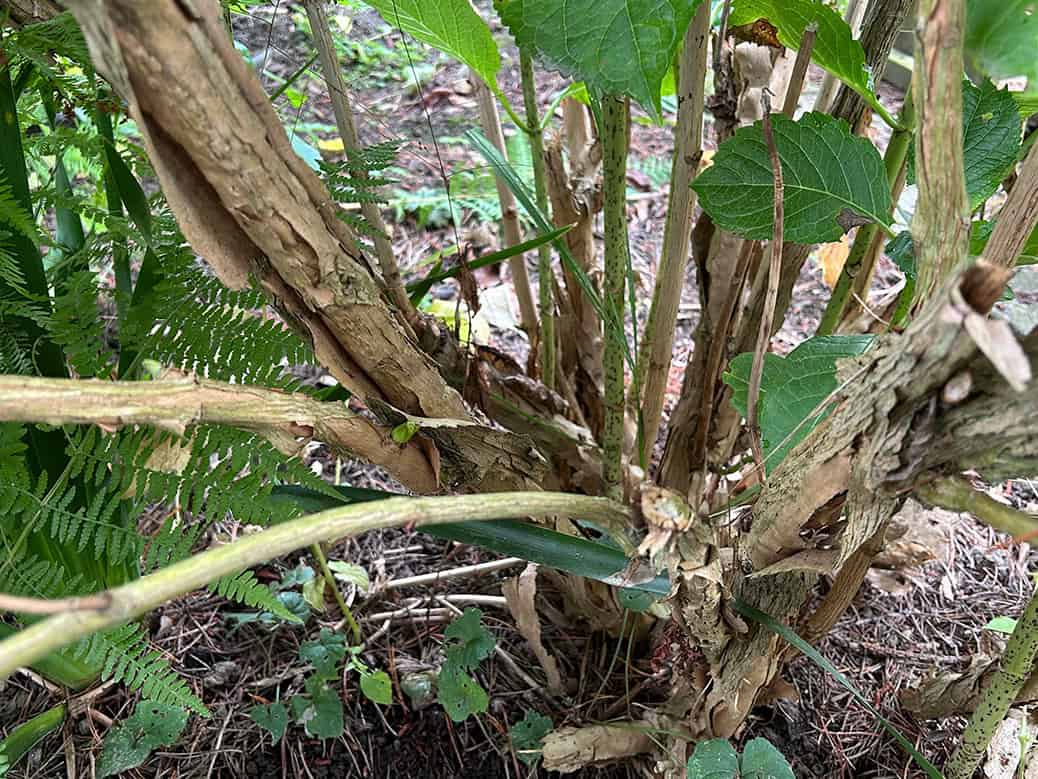
Older stems often look dead, but they are not. You can cut the dead wood on any hydrangea back to the ground. Dead stems and those that are too crowded can be pruned close to the base of the plant. © Skagit County Master Gardeners
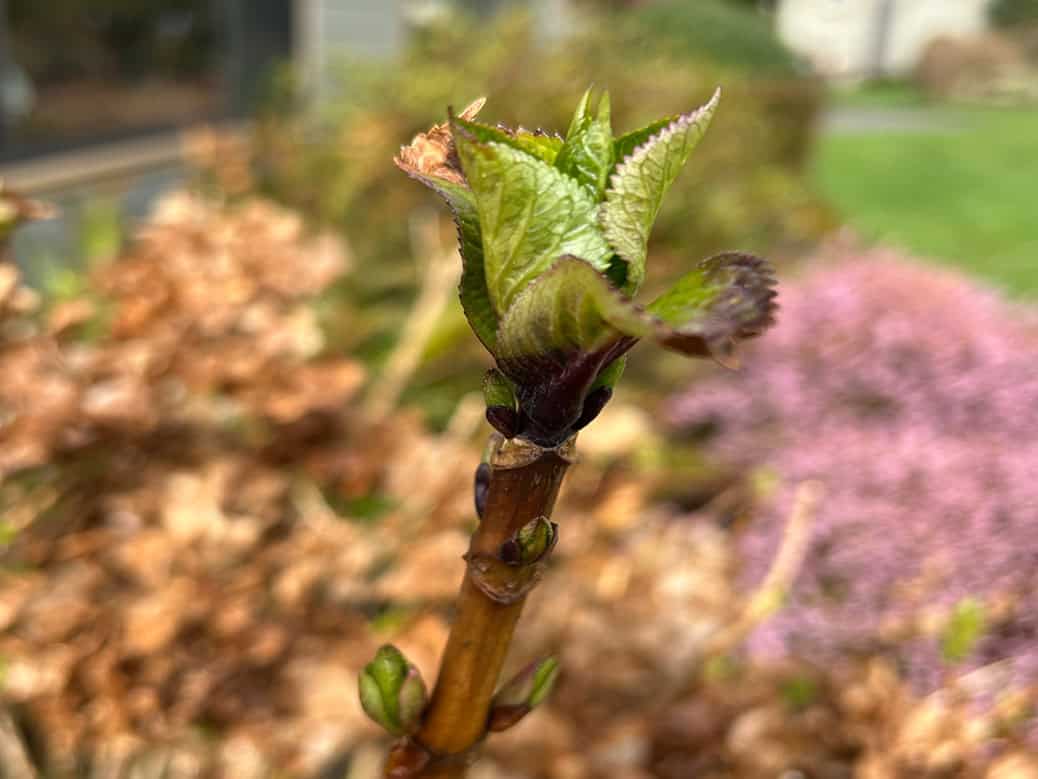
Many hydrangeas require no pruning, but if you choose to prune them, you need to know if it is a variety that blooms on last year's shoots (old wood) or the coming season's shoots (new wood.) © Skagit County Master Gardeners
Many hydrangeas require no pruning, but if you choose to prune them, you need to know if it is a variety that blooms on last year’s shoots (old wood) or the coming season’s shoots (new wood.) © Skagit County Master Gardeners

The first step to pruning any hydrangea is to know what kind it is. Different kinds are pruned differently, and if you don’t know what kind you are pruning, you may be cutting off all the potential flowers by pruning at the wrong time. Save the plant tag and learn to recognize the variety you have. That is the key to a successful start.

Hydrangeas start blooming in mid-summer and bloom for a long time. There is no need to prune in winter. In fact, leaving on the dead flower heads can protect emerging buds from freezing. Hydrangeas are deciduous, but their leaves hang on well into fall. Leave them where they fall on the soil.

Learning to recognize dead wood can be tricky with hydrangeas. Older stems often look dead, but they are not. Dead stems are usually three or more years old. On some specimens, the dead stems may even be ten years old. To identify dead wood, look for stems with no buds or leaves. These can be cut back to the base of the plant. If you are unsure, start cutting from the tip of the branch and look for a greenish interior on the stem, or scrape the bark with your fingernail. If it’s brown, crisp, and very dry, it’s dead. You can cut the dead wood on any hydrangea back to the ground. You can also prune out wayward-looking stems or those that are too crowded.

large blue purple flower

The most common kind of hydrangea is H. macrophylla or bigleaf hydrangea, of which there are two types: mophead and lacecap. © Crowell Photography
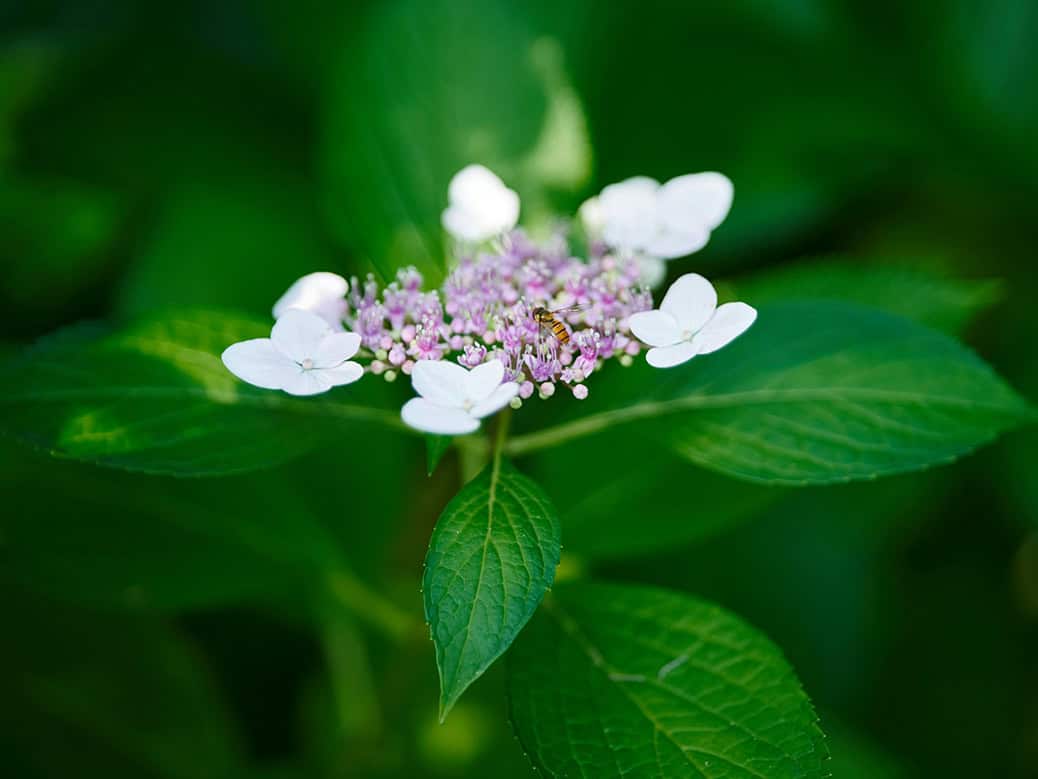
A lacecap hydrangea has flatter inflorescences or flower clusters with small sterile flowers around the edges and tiny fertile flowers in the center, giving it a delicate lacy appearance© Pexels.com | Dayong Tein

A lacecap hydrangea has flatter inflorescences or flower clusters with small sterile flowers around the edges and tiny fertile flowers in the center, giving it a delicate lacy appearance© Pexels.com | Dayong Tein

Now for the Differences
The most common kind of hydrangea is H. macrophylla, or bigleaf hydrangea, of which there are two types: mophead and lacecap. All bigleaf hydrangeas bloom on wood formed the previous year and on buds set last summer. When all danger of a hard frost is past in late spring, remove the dead flower heads by cutting back to a pair of healthy fat buds, which will be your flowers. Slender buds are the leaves. Even if you choose not to remove or prune the dead flower heads from last season, H. macrophylla will still bloom just fine.

The standard bigleaf hydrangea wants to be big and tall genetically. It is difficult to reduce the size of a mature hydrangea. If pruned hard, it will grow back to its original height but have weak stems and no flowers that year. It is better to cut select older stems to the ground to reduce the size of the plant. Doing this will shorten your plant and will necessarily sacrifice flowers. Some newer cultivars have been bred to stay small. These may be a better choice for your landscape than constantly pruning to reduce the size of a large hydrangea.

A popular mophead type is ‘Nikko Blue’. The flowers are big, rounded heads consisting of all sterile flowers. If the blossoms begin to turn pink and you prefer blue, make the soil more acidic by adding aluminum sulfate to the soil in the early spring. It may take more than one year and additional servings of aluminum sulfate to achieve blue blossoms. Note: Concrete sidewalks or foundations can leach lime into the soil resulting in pink hydrangea blossoms. However, some hydrangea varieties are naturally pink and will not turn blue in acid soils.

A popular lacecap hydrangea is ‘Mariesii’, with flatter inflorescences, or flower clusters, with small sterile flowers around the edges and tiny fertile flowers in the center, giving it a delicate lacy appearance. Lacecaps do not typically grow as tall as their mophead cousins.
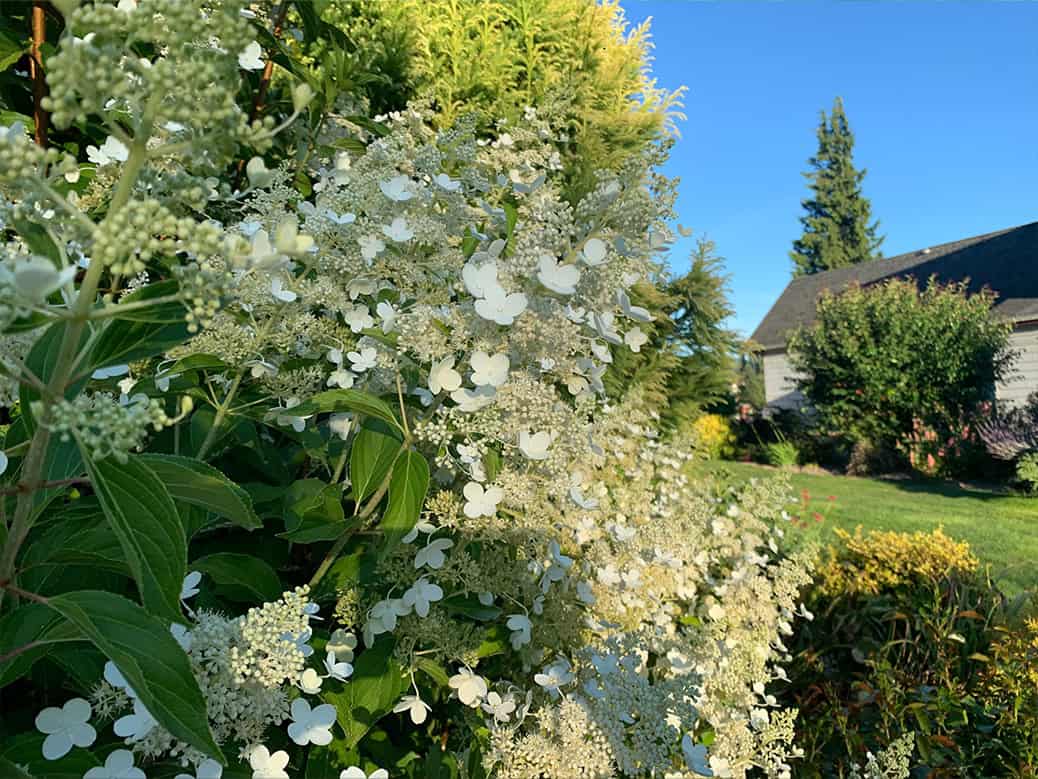
Panicle hydrangea flowers are large, cone-shaped, up to 12 inches, blooming on sturdy stems, sometimes up to 10 feet tall. Panicle hydrangeas are best pruned in early spring to promote new flowering wood. © Ginny Bode, Photographer
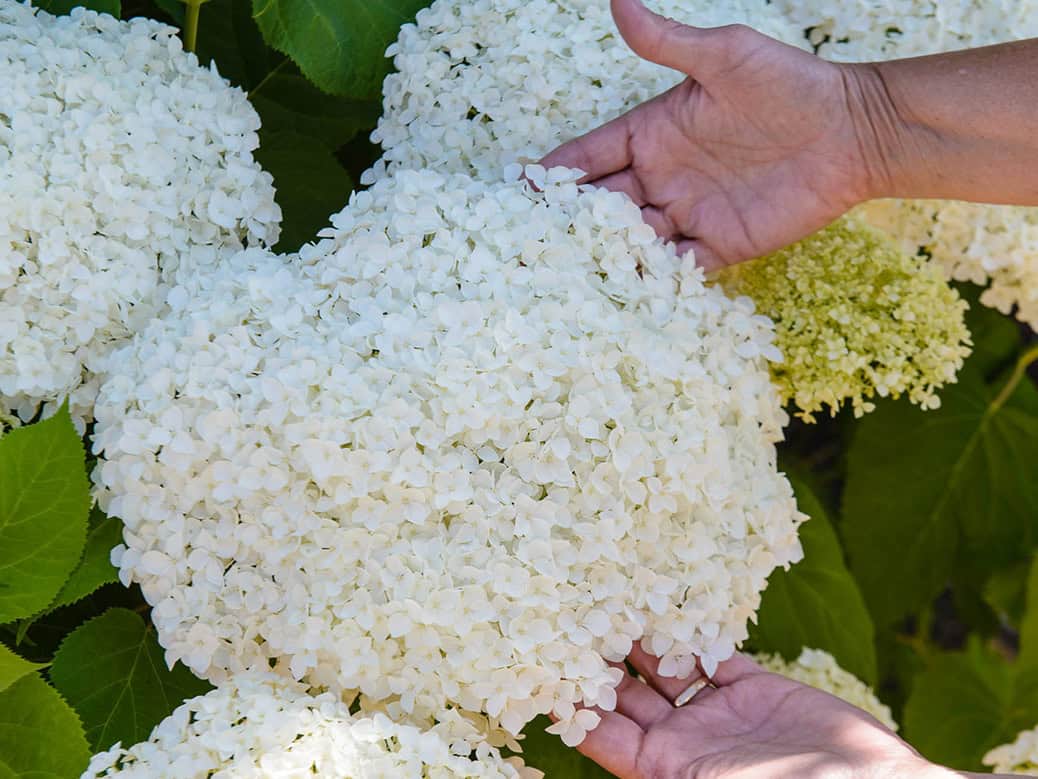
Panicle hydrangea flowers are large, cone-shaped, up to 12 inches, blooming on sturdy stems, sometimes up to 10 feet tall. Panicle hydrangeas are best pruned in early spring to promote new flowering wood. © Ginny Bode, Photographer

Smooth hydrangeas (H. arborescens) like this cultivar 'Annabelle' have large snowball-like clusters and bloom on new growth of the current season so it can be pruned to the ground in early spring, leaving 2-4 inches. © Crowell Photography

Smooth hydrangeas (H. arborescens) like this cultivar ‘Annabelle’ have large snowball-like clusters and bloom on new growth of the current season so it can be pruned to the ground in early spring, leaving 2-4 inches. © Crowell Photography

Another popular hydrangea is H. paniculata. ‘Limelight’ and Grandiflora ‘PeeGee’ are popular panicle cultivars with many more on the market. Panicle hydrangea flowers are large, cone-shaped, up to 12 inches in length, and bloom on sturdy stems, sometimes to 10 feet tall. Flower color varies from creamy white to pale green, transitioning to pink hues as they mature later in the summer.

Panicle hydrangeas bloom on new wood, meaning the flower buds form on stems growing this season. Thus, you should prune all the previous season’s stems to two or three pairs of buds in the spring, which will bloom in the coming summer, giving you a low structure. You can also do selective pruning and cut some older stems way back while leaving some a little longer. If you don’t prune it all, the flowers will be so high up that you will not be able to enjoy them after a few years. Panicle hydrangeas are best pruned in early spring to promote new flowering wood.

Another kind of hydrangea is H. arborescens, or smooth hydrangea. An old and still popular cultivar is ‘Annabelle’. It has large snowball-like clusters of white flowers, which are white regardless of soil acidity. The flowers may fade to a soft pink near the end of the season.

Smooth hydrangeas flower on new growth of the current season, so stems can be pruned to 2-4 inches from the ground in early spring. Most have a rounded growth habit to 5 feet in height and width. There are newer cultivars on the market that are bred to stay smaller.
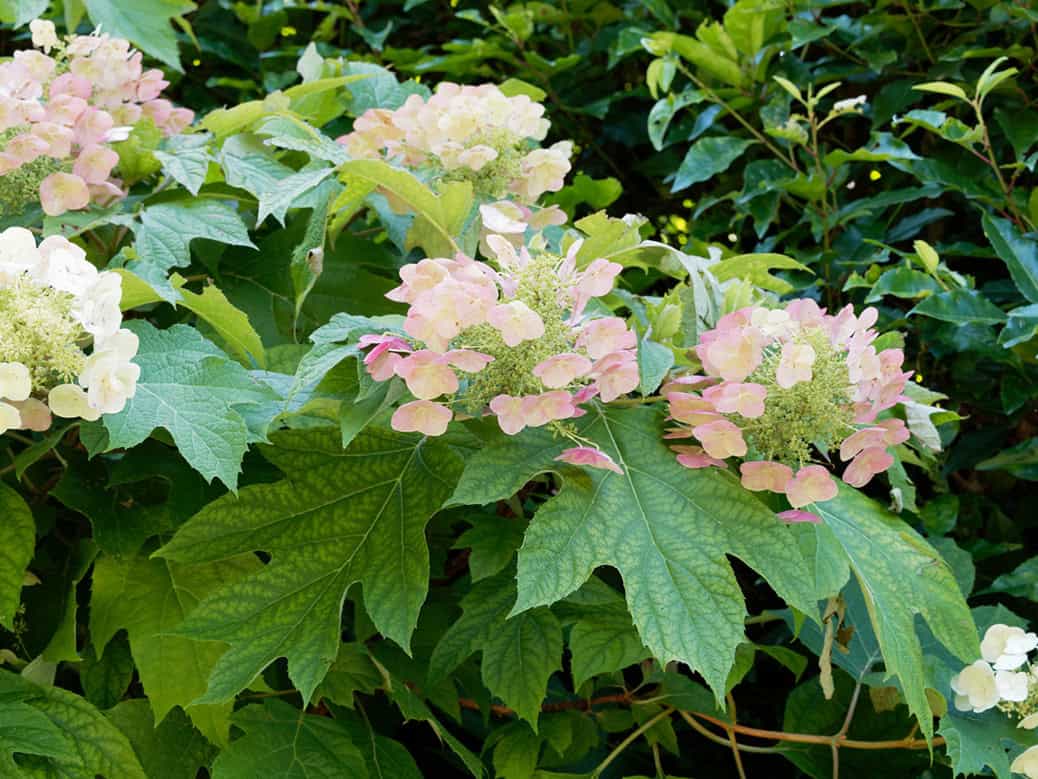
oak leaf hydrangea bush with pink and white flowers
The flowers and leaves of the oakleaf hydrangea put on a spectacular display throughout summer and fall, and they are easy to care for. © Adobe Stock
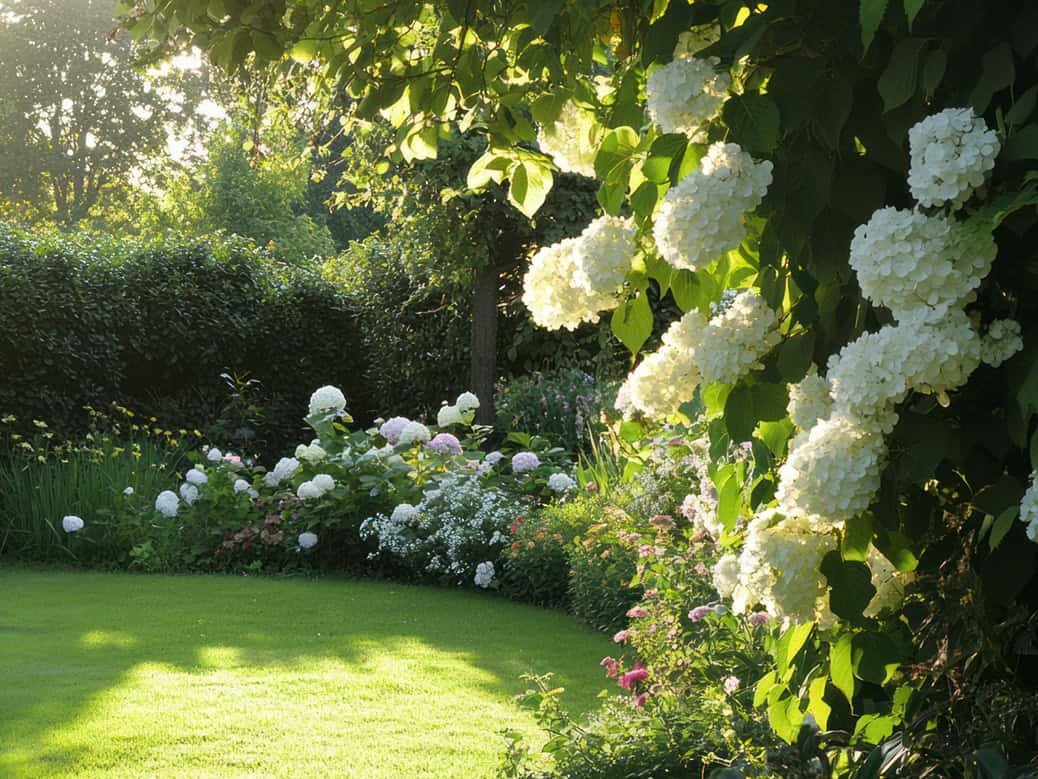
garden scene with hydrangeas climbing on arbor
Climbing hydrangeas can take a bit to begin blooming, but once established, they need very little pruning.© Adobe Stock

A hydrangea gaining popularity in the Pacific Northwest is H. quercifolia, commonly known as oakleaf hydrangea. Though native to the Southeastern United States, oakleaf hydrangeas do exceptionally well in the PNW and are known for spectacular fall color. The flowers and the leaves turn rich shades of red, orange, and purple in the fall and can last several months for additional seasonal interest. Its leaves look like large oak leaves and stay on the plant well into fall.

Oakleaf hydrangeas are one of the easiest hydrangeas to care for. They do not need to be pruned except to keep them out of a walkway. Plant them where they can have plenty of space to look their magnificent best, because over-pruning makes for weak, floppy stems. Plant them in full sun for good color.

H. anomala petiolaris
, commonly called climbing hydrangea or hydrangea vine, needs support such as a tree trunk or fence to cling to; otherwise, it will spread among neighboring plants and be challenging to care for. Be patient; climbing hydrangeas are slow to begin blooming, sometimes waiting 3 to 5 years to begin flowering. They need very little pruning, and once established, climbing hydrangeas bloom on new shoots. You can deadhead the spent flowers if you wish. However, this variety can grow to 50 feet tall or more, so plan accordingly. And be forewarned-deer love to eat this kind of hydrangea

There are other kinds of hydrangeas: H. serrata and H. aspera, commonly known as mountain hydrangeas, are native to Japan and Korea. These are not widely planted in the Pacific Northwest. Mountain hydrangeas bloom on the previous year’s wood.

New cultivars are constantly being developed. A little over 20 years ago, a remontant (reblooming in same season) hydrangea was discovered in Minnesota. Years of intensive breeding trials resulted in a new, reblooming bigleaf hydrangea cultivar branded Endless Summer®. The world of hydrangeas changed dramatically with this cold hardy hydrangea that would reliably bloom on both old wood and new wood the same summer, offering an extended season of fresh blooms. Since then many cultivars of repeat blooming hydrangeas have been released. These reblooming hydrangeas should be pruned only after the first blooming period.

Hydrangeas are a beautiful, easy-care additions to your landscape, providing cut or dried flowers and color to the landscape throughout their long bloom season. The stunning varieties require minimal pruning if planted in the correct location for size and growth habits. Always read and save the plant tag. Study your plant and learn its growth habit by observation throughout the season. Using these basic tips, your hydrangeas should bloom successfully year after year.

Listed below you will find a number of excellent resources for learning more about hydrangeas, including a book by Dr. Michael Dirr who identified the first reblooming hydrangea and worked with it to develop the cultivars branded under the name Endless Summer®.

 

Mark Your Calendar: Always the Saturday Before Mother’s Day

We’re growing 3,500 tomato plants, and over 3,000 flower and vegetable starts along with edible and ornamental perennials for you to bring home and plant your garden this season.

RESOURCES:
Crosbie, C. (2007) Easy Pruning: Simple Steps to Success. Royal Horticultural Society and DK Publishing

Turnball, C. (2021) Guide to Pruning. (3rd Edition) Sasquatch Books

Kourik, R. (1987) Hands on Gardener – Pruning. Workman Publishing, New York, New York.

Joyce, D. (1999) Pruning & Training. Eyewitness Garden Handbooks. DK Publishing.

Bird, R. (2006) Pruning Trees, Shrubs, and Climbers. Anness Publishing.

Reich, L. (2010) The Pruning Book. The Taunton Press.

Dirr, M. (2024) “Hydrangeas for American Gardens.” Timber Press.

ABOUT THE AUTHOR:

Diana Wisen has been a Skagit County WSU Extension Master Gardener since 1991 and is the coordinator of the Hardy Fuchsia Garden at the Discovery Garden.

Janine Wentworth is a Skagit County WSU Extension Master Gardener, Class of 2018. She is the coordinator of the Front Door Garden, the most recent addition to the Discovery Garden on SR 536 west of Mount Vernon.


Questions about home gardening or becoming a master gardener may be directed to Skagit County WSU Extension Office, 11768 Westar Lane, Suite A, Burlington, WA 98233; by phone: 360-428-4270; or via the website: www.skagit.wsu.edu/mg

Washington State University Extension helps people develop leadership skills and use research-based knowledge to improve economic status and quality of life. Cooperating agencies: Washington State University, US Department of Agriculture, and Skagit County. Extension programs and policies are available to all without discrimination. To request disability accommodations contact us at least ten days in advance.
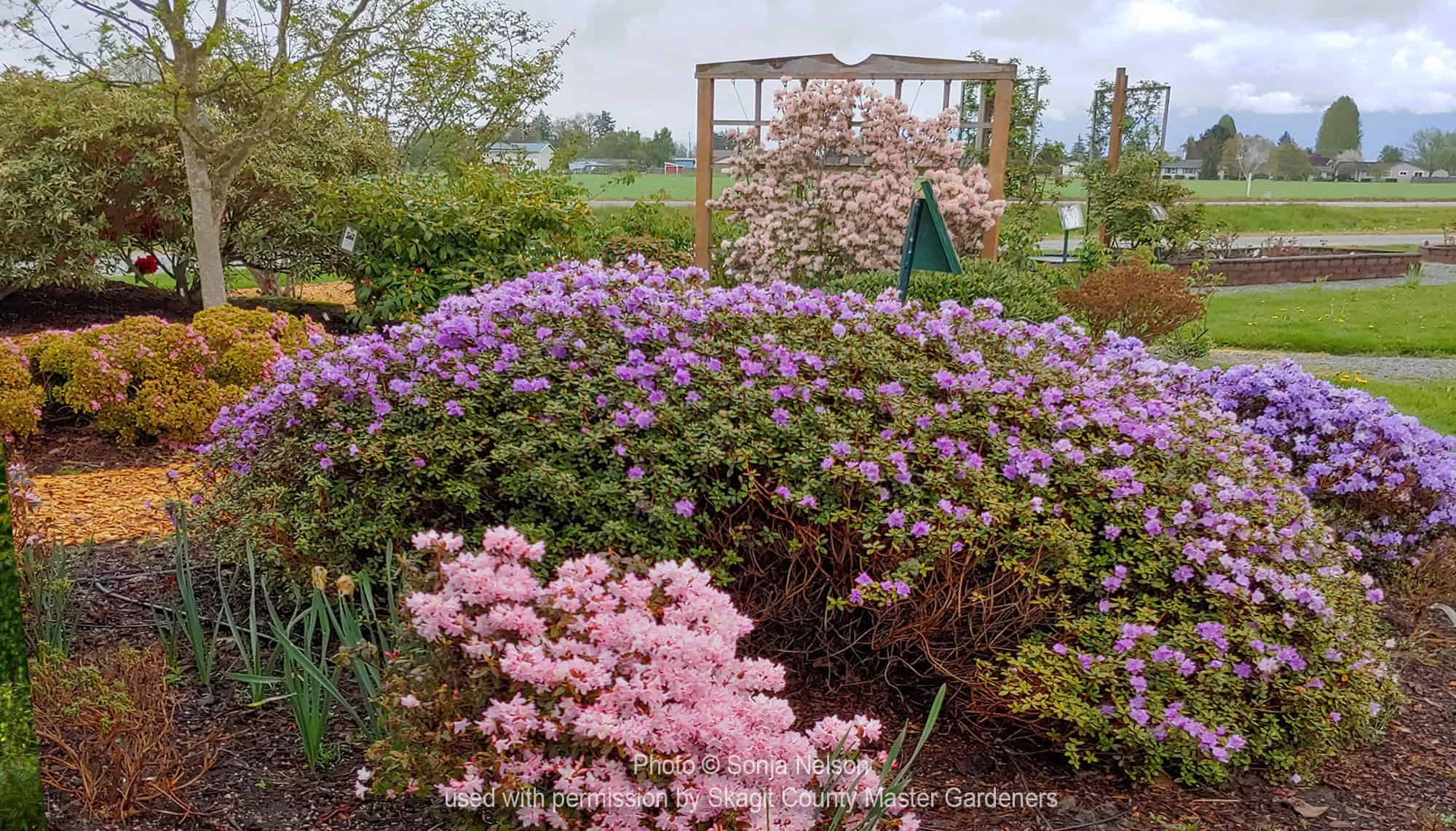


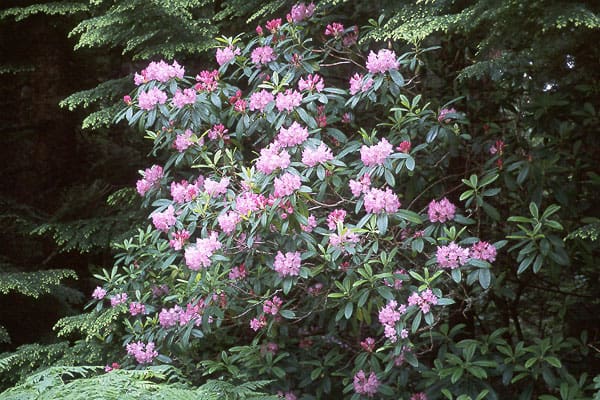
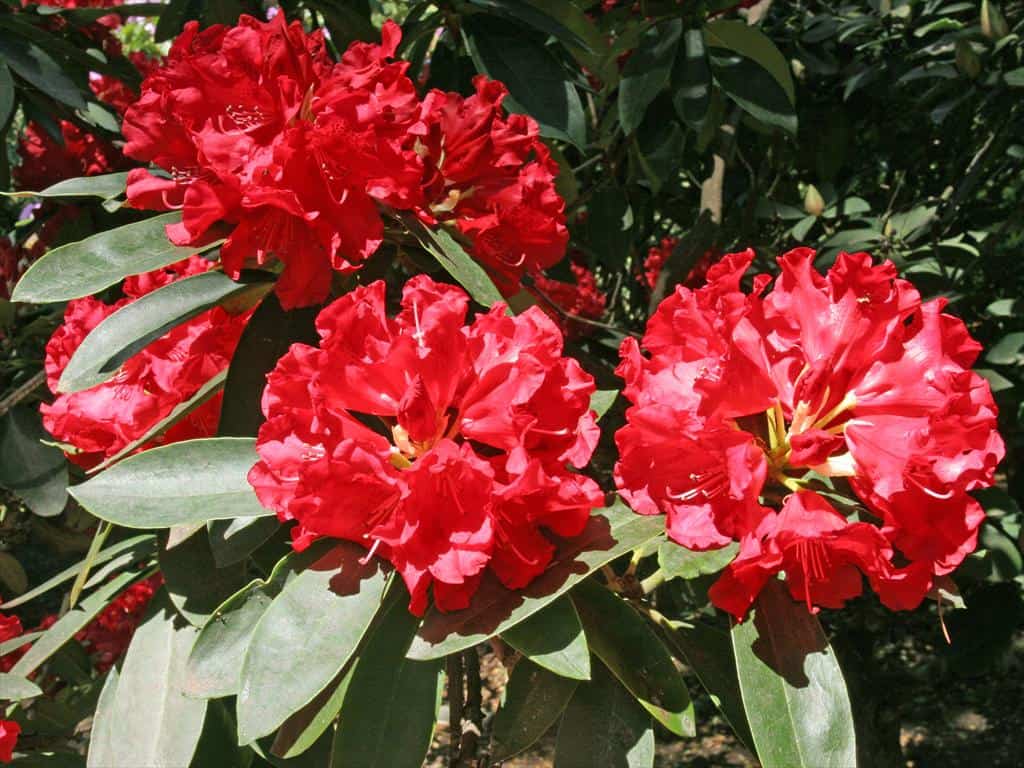
© Sonja Nelson
AMGPost_header5

Warmer Summers Impact Local Rhododendrons

From sun scorch to lace bug, local gardeners protect their beloved rhododendrons with these conscientious tips.

              Subscribe to the Blog >

By Sonja Nelson, Skagit County WSU Extension Master Gardener

Author Sonja Nelson

Rhododendrons in our gardens, along with the native state flower Rhododendron macrophyllum, the Western or Pacific rhododendron in our woodlands, are facing the vagaries of climate change here in the Pacific Northwest as well as worldwide. Gardeners in our moderate climate can no longer assume our benevolent climate will continue its unstinting support for the genus Rhododendron. According to the World Meteorological Organization, the average global temperature in 2024 was the warmest year on record at about 2.7° F or 1.55° C above preindustrial levels. Higher temperatures do not bode well for rhododendrons. They like moderation!

Rhododendrons have a long history in the Pacific Northwest. Native Americans used the flowers of rhododendrons in their dance rituals long before western plant hunter Archibald Menzies identified the R. macrophyllum. Menzies was the surgeon-botanist for Captain George Vancouver on board the British ship ‘Discovery’ in 1792. The R. macrophyllum, or Western rhododendron, was sent to King George III and introduced to the Kew Gardens in London. The discovery brought together the British and American plant people who eventually produced a creative milieus communities of rhododendron enthusiasts that made the rhododendron the “King of Shrubs” on both sides of the Atlantic.
References to the Western rhododendron (Rhododendron macrophyllum) date back to native Americans using rhododendron flowers in their dance rituals long before the late 1700s. © Photo: Sonja Nelson

References to the Western rhododendron (Rhododendron macrophyllum) date back to native Americans using rhododendron flowers in their dance rituals long before the late 1700s. © Photo: Sonja Nelson

One hundred years after Menzies documented finding the Western rhododendron, the state of Washington sought a representative flower to display in the 1893 Chicago World Fair exhibit. The Washington State Fair Commission asked the state’s women to decide. A letter-writing campaign began, pitting the native rhododendron against, among others, the clover. (The vote was Western rhododendron 7,704 and clover 5,729.) It was officially designated the Washington State flower in 1959.

However, between the time the Western rhododendron was presented at the Chicago World Fair, rhododendron species from Asia, particularly the Himalayas, had been discovered by dedicated British plant hunters and sent back to Britain to adorn gardens there with their vibrant colors and to hybridize. Many Asian species and hybrids were also brought to America, where nurseries introduced them to the Pacific Northwest. Gardeners welcomed them with enthusiasm and love. And the rhodies loved them back with their stunning performance!

Meanwhile, Washington state’s native Western rhododendron grew in its native woodlands as the quietly attractive relative of the more flamboyant Himalayan species. In the 1970s the Western rhododendrons regained popularity as gardening with native plants became popular with the backing of  WSU Extension and the Washington Native Plant Society. In 1979, the First World Climate Conference declared climate change a global issue, and rhododendron gardeners’ concern turned to the native Western rhododendron and its environment, along with concern for their rhododendron species and hybrids from afar. The natural environment of the Pacific Northwest, so well suited for much of the genus Rhododendron, was becoming jeopardized by temperature increases and other disturbances to its blissful climate.

The Western or Pacific rhododendron is native to the woodlands of the Pacific Northwest. Image © Oregon State University
One of the most sun-hardy of all rhododendrons, the Jean Marie Rhododendron is noted for its large trusses of deep red, trumpet shaped flowers. © WSU Clark County

The complexity of a warming climate makes it difficult to predict precisely how rhododendrons will be impacted by our specific climate and what to do if it does. For instance, if temperatures increased enough to leave visible sun spots on the leaves of rhododendrons, the rhododendrons could simply be moved to a site with partial shade. However, the effect of a warming climate on plants is not always straightforward.

One solution to protect rhododendron gardens from climate change damage is to find varieties-both species and hybrids-that are tolerant of temperature increase and ensuing weather extremes.

A member of the American Rhododendron Society, C.J. Patterson of Massachusetts, has focused his interest in rhododendrons on finding drought-tolerant rhododendrons for East Coast gardens. He writes that “rhododendrons, in general, are mostly very resistant to dry conditions once they are established,” citing R. carolinianum, R. maximum, and R. catawbiense as drought tolerant. He says one of the most drought-tolerant rhododendron hybrids is the hybrid ‘PJM’ (R. minus var. Carolinian Group x R. dauricum) and other hybrids of the same cross.

The director of the German Rhododendron Society, Hartwig Schepker, supports the idea that the genus Rhododendron is diverse enough to cope with the challenges posed by extreme climate conditions, saying we find them or create new hybrids that will be up to the job.

Another rhododendron expert is Glen Jamieson, the editor of the Journal American Rhododendron Society, who often writes about the impact of climate change on rhododendrons, which, he says, has been relatively minor annually. In coming publications, he plans to summarize the weather impacts on his garden in British Columbia over the past 40 years, where there have been extreme cold, heat, precipitation, and wind events-all of which can be attributed to a changing climate.

Since it is difficult, if not impossible, to predict precisely the effects of climate change on rhododendrons in the future, conscientious basic care is the best way to help them survive hard times in the future. Washington State University lists watering, fertilizing, and mulching as basic care.

Basic Care for Rhododendrons
Washington State University Extension recommends this regimen of basic care:

Watering

  • Water rhododendrons at least once a week, or when the top inch of soil feels dry.
  • Avoid waterlogged soil, which can damage rhododendrons.
  • Water well in the fall to prepare for winter

Fertilizing

  • Use a fertilizer made for acid-loving plants.
  • Fertilize in the spring when buds swell and in the fall after flowering.
  • Follow the product label recommendations.


Mulching

  • Use coarse organic mulch, like wood chips, to cover the root zone.
  • Keep mulch at least 4 inches deep, but don’t let it touch the base of the plant.
  • Mulch helps conserve water, reduce weeds, and moderate soil temperatures

Other Tips

  • Plant rhododendrons in well-drained acidic soil
  • Avoid dense or compacted soil
  • Provide shade or semi-shade
  • Prune out dead flowers
  • Avoid overhead watering
  • Maintain good air circulation
  • Prevent injury to reduce the chance of infection
  • Clean up and destroy fallen leaves

A Unique Opportunity to Observe Local Climate Change Impact
The coordinators of the various gardens within the WSU Extension Master Gardener Discovery Garden west of Mount Vernon were questioned about possible damage in their gardens due to recent summers with high temperatures. Five coordinators reported no change, and four coordinators reported slight changes. Ironically, six coordinators reported damage from unusual cold spells. The Rhododendron Garden coordinator, however, reported extensive damage to a large planting of small-leaved rhododendrons due to warming temperatures.

Lace bug symptoms on rhododendron leaves © WSU Hortsense Photo by: C.R. Foss
Photo © Sonja Nelson

Rhododendrons are divided into two natural divisions: the lepidotes and the elepidotes. Small-leaved rhododendrons belong to the lepidote division based on the tiny scales on the undersides of their leaves. Elepidotes do not have scales and tend to be large-leaved.

Sun scorch on the leaves of rhododendrons has long been an occasional problem for gardeners, but the warming caused by climate change has introduced a new, insidious avenue for damage–the rhododendron lace bug (Stephanitis rhododendri). Believed to have migrated from California, lace bugs have taken advantage of the longer growing season in the Pacific Northwest and can complete their life cycle, where, in 2023, in the Rhododendron Garden, it laid eggs and, as a result, destroyed a planting of rhododendrons.

Rhododendron lace bug (Stephanitis rhododendri Horvath) © Insect Images Photographers: Seastone, L. and B. Parks

Rhododendron lace bug (Stephanitis rhododendri Horvath) © Insect Images Photographers: Seastone, L. and B. Parks

Azalea lace bug (Stephanitis pyrioides) © Photo: Jim Baker, North Carolina State University, Bugwood.org

Azalea lace bug (Stephanitis pyrioides) © Photo: Jim Baker, North Carolina State University, Bugwood.org

The lace bug affected rhododendrons with small leaves, mainly in the island meadow section of the Rhododendron Garden, namely hybrids ‘Ramapo,’ ‘Ginny Gee,’ and ‘Patty Bee.’

The rhododendron lace bug has one generation per year. It overwinters as eggs laid on the underside of leaves. Nymphs are about 1/8 inch long and are spiny. Adults are about 1/8 inch long and whitish tan with lacy-looking wings. Damage is usually apparent by early to mid-July. The lace bug sucks on the undersides of leaves and causes stippling on the upper surface of the leaves and tar-like deposits of excrement on the lower surface. Repeated infestations may result in yellowed, sickly plants. Spraying the undersides of the plants to remove the lace bugs was considered impossible because the leaves grow so densely and so close to the ground; thus the affected plants were removed. New planting will take place in 2025.

The related azalea lace bug (Stephanitis pyrioides) has four to five life cycles annually. It infects rhododendrons also but has not been found in the Rhododendron Garden section of the Discovery Garden. Both types of lace bug overwinter.

Lacewing insect © Insect Images: Photographer: Johnny N. Dell

The lace bug is not to be confused with lacewing insects (Chrysoperla species) which are native to the Pacific Northwest and important natural predators providing biological control of aphids.

Treatment for Lace Bug
For non-chemical treatment, Washington State University recommends hand removal of adults and nymphs regularly to limit the amount of visible damage. This can be done with a strong spray of water.

If you choose to use a chemical treatment, two recommended pesticides that are legal in Washington are:     

  • Safer Brand BioNEEM Multi-Purpose Insecticide and Repellent Concentrate [Organic] Active ingredient: azadirachtin [EPA registration number: 70051-6-42697]
  • Safer Brand Garden Defense Multi-Purpose Spray Concentrate [Organic]
    Active ingredient: clarified hydrophobic extract of neem oil [EPA registration number: 70051-2-42697]

The best time to treat is May and June. For more information, download the WSU fact sheet on rhododendrons and lace bugs @ (https://hortsense.cahnrs.wsu.edu/fact-sheet/rhododendron-rhododendron-lace-bug/).

The Rhododendron Garden in the Discovery Garden allows the public to view plants as they grow in our specific climate. The damage to some of the small-leaved rhododendrons is sad to see, but it gives gardeners the knowledge to make necessary changes in their gardens to keep them beautiful.

Soon, spring will once again bring forth the eye-catching, luscious blooms on the rhododendron hybrids planted in our gardens and the quietly elegant blooms of our native Western rhododendron at the edges of our woodlands.

REFERENCES AND RESOURCES:
Dale-Crunk, B. (2024) Personal communication.

NASA https://climate.nasa.gov/vital-signs/global-temperature/?intent=121

Skagit Climate Science. Air Temperature and Precipitation Retieved at: (http://www.skagitclimatescience.org/skagit-impacts/temperature-and-precipitation-and-ecosystems/#nw-is-warmer).

Washington State University. (2024) Rhododendron: Rhododendron and Lace Bug Retrieved at: (https://hortsense.cahnrs.wsu.edu/fact-sheet/rhododendron-rhododendron-lace-bug/).

Pojar, J. and MacKinnon, A. (1994) Plants of the Pacific Northwest, B.C. Ministry of Forests and Lone Pine Publishing

Nelson, S. (Compiler) (2001) The Pacific Coast Rhododendron Story American Rhododendron Society. Binford & Mort Publishing, Portland, Oregon.

University of Washington: Pruning and Caring for Rhododendrons. https://depts.washington.edu/hortlib/pal/pruning-and-caring-for-rhododendrons/

Washington Native Plant Society (2022) Coast Rhododendron: Washington’s State Flower Retrieved at:https://www.wnps.org/blog/coast-rhododendron-washington-state-flower?highlight=WyJyaG9kb2RlbmRyb24iXQ==

World Meteorological Organization (2025) January 2025 sees record global temperatures despite La Niña Retrieved at: https://wmo.int/media/news/january-2025-sees-record-global-temperatures-despite-la-nina


ABOUT THE AUTHOR:
Sonja Nelson is a Skagit County WSU Extension Master Gardener, Class of 2009.

Questions about home gardening or becoming a master gardener may be directed to Skagit County WSU Extension Office, 11768 Westar Lane, Suite A, Burlington, WA 98233; by phone: 360-428-4270; or via the website: www.skagit.wsu.edu/mg

Washington State University Extension helps people develop leadership skills and use research-based knowledge to improve economic status and quality of life. Cooperating agencies: Washington State University, US Department of Agriculture, and Skagit County. Extension programs and policies are available to all without discrimination. To request disability accommodations contact us at least ten days in advance.
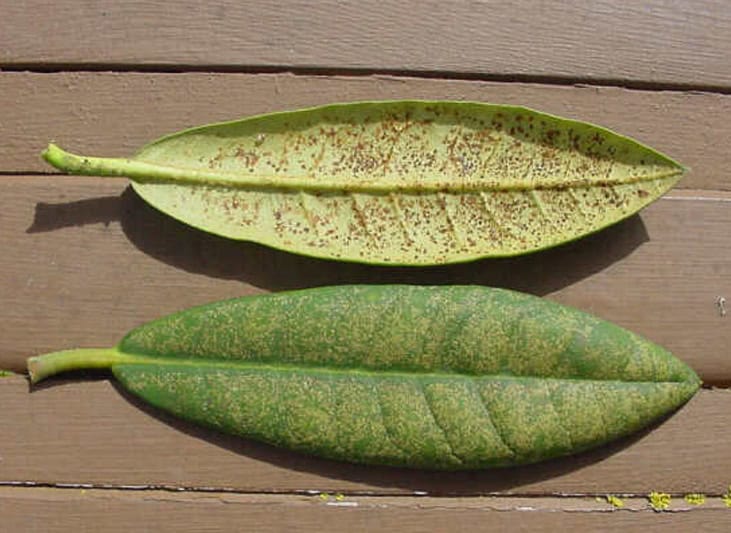


AMGPost_header5
Bamboo in UBC Botanic Garden, Vancouver BC
© Crowell Photography

Is Bamboo for You?

If you love bamboo, be a good neighbor and understand how to select, grow, and maintain the plant.

              Subscribe to the Blog >

By Kay Torrance, Skagit County WSU Extension Master Gardener

Bamboo is alternatingly loved and hated by home gardeners. Typically, gardeners are firmly planted in one camp or the other. Full disclosure: I love bamboo. With its soft green glow and exotic sculpted leaves rustling in the breeze, the impact of bamboo in a garden can be transforming. It invokes tranquility and quiet contemplation. Bamboo is unlike any other plant in the garden.

Bamboo resists drought, deer, pests, and disease.  As a landscape plant, it is self-mulching and evergreen. It grows well in poor soil. With all this going for it, why do so many cringe at the thought of growing bamboo? Bamboo has a reputation for being invasive and difficult to maintain. Is that a tired stereotype? Bamboo is not maintenance-free, few plants in the garden are. It requires at least annual maintenance and more extensive care every 3-4 years. Much less than a fruit tree but more than a cactus.

Often, bamboo is planted as a fast-growing evergreen privacy border, with the expectation that no pruning or maintenance will ever be needed once it is grown. Is that reasonable for any plant? Before planting, was the selected bamboo evaluated to see if it had a clumping or running habit? Whether it was short or timber-sized? The key to being in zen with your bamboo is understanding how to select, grow, and maintain the plant.

Phyllostachys Edulis 'Moso' is a common timber variety growing in Arashiyama
Bamboo Forest in Kyoto Japan. Photo © Bobbi Lemme

Phyllostachys Edulis ‘Moso’ is a common timber variety growing in Arashiyama Bamboo Forest in Kyoto, Japan. Photo © Bobbi Lemme

Phyllostachys nigra 'Black Bamboo' showing the smaller canes from the purchased nursery pot in the back and the new larger green culms produced two years later. Photo © Kay Torrance

Phyllostachys nigra ‘Black Bamboo’ showing the smaller canes from the purchased nursery pot in the back and the new larger green culms produced two years later. Photo © Kay Torrance

What is Bamboo?
Bamboo is the tallest member of the grass family. Believed to originate in China, over a thousand species are growing worldwide in various climates. Some timber varieties grow over 100 feet tall with culms over a foot in diameter. In lush tropical environments, varieties can grow three feet a day. You can also find bamboo thriving in the snow-covered foothills of the Himalayas. Most bamboos originate from Asia, but several species of the genus Arundinaria are native to the Southeastern US.

Botanically, the plant is an evergreen perennial. Like all grasses, it has a woody ringed hollow stem known as a culm (commonly called canes). The joints along the culms are called nodes, and branches grow out above the nodes. The plants have an underground stem called a rhizome, and roots are clustered along the rhizome. New plants erupt from rhizomes as buds. These are called shoots once they emerge from the ground. New culms are protected by papery sheaths, which fall off when they mature and harden.

Not only is bamboo beautiful, it is functional. Strong enough for buildings, furniture, and fences, it is still used today in Asia as scaffolding to build skyscrapers. It is a renewable resource for home décor, garden stakes, brooms, livestock food, and charcoal. Tender baby culms are a dietary delicacy.

How Bamboo Grows
Bamboo produces new culms from rhizomes in the spring. They grow rapidly for 30 to 60 days, obtaining their full height. Only then will they start producing limbs and leaves. After the spring surge, bamboo does not generally grow taller or produce new culms until the following year. Individual culms can last 5-15 years before dying if not damaged. Bamboo rarely flowers, and it is typically propagated by division.

Bamboo is generally grouped by rhizome growth habits such as clumping or running. Growth habit is the single most important consideration when choosing a variety for your landscape! Clumping bamboos have U-shaped rhizomes that produce culms that are a shorter distance from the parent. Running bamboos naturally spread by sending new rhizomes many feet away from the parent plant. One hears stories of bamboo taking over yards and damaging sidewalks and foundations. To avoid such problems, carefully choose a variety suited to your selected location. Consider pots or containers instead of direct planting.

Newly divided bamboo typically takes 3-5 years to reestablish its root system and produce full-size canes. More vigorous running varieties take less time, and clumping varieties take longer. In an established grove, the new culms are roughly the same size as the existing ones. Proper sunlight, water, and soil nutrition will establish new plants quickly. Adequate watering in the first year is essential while the roots are established.

The growth habit of above-ground branches also varies between bamboos and is important when selecting bamboo for the right look in your yard. Some bamboos suppress branches on the lower nodes, creating a very upright and open appearance. Some are naturally weeping and have a more informal look. Some have a single branch emerging above a node, while others have multiple branches at each node, producing dense foliage. These branches can be pruned, but selecting a variety with the desired growth characteristics is easier than pruning each year.

Qiongzhuea tumidissinoda 'Walking Stick' bamboo has enlarged nodes. It is a fun variety that grows up to 12' (less in a container). It is also an aggressive running bamboo, sending rhizomes a long distance from the source and likes to jump barriers. Photo © Kay Torrance

Qiongzhuea tumidissinoda ‘Walking Stick’ bamboo has enlarged nodes. It is a fun variety that grows up to 12′ (less in a container). It is also an aggressive running bamboo, sending rhizomes a long distance from the source and likes to jump barriers. Photo © Kay Torrance

Bamboo garden and planter studio. Photo courtesy of Bamboo Garden Nursery

Bamboo garden and planter studio. Photo courtesy of Bamboo Garden Nursery

Varieties and Selection
The American Bamboo Society lists almost 500 kinds of bamboo grown in the US and Canada. Sizes vary from under a foot to over 100′ tall. Many bamboos have gold, blue, red, black, and variegated canes. The nodes can be straight or bulbous, like the walking stick bamboo in Bu Belly or Chinese. There are even varieties with zigzag canes. See the section below for a list of varieties suited for the PNW.

The Pacific Northwest is not an ideal growing location for bamboo. Bamboos grow slower in our cool summers with limited rain. Some bamboos that are invasive elsewhere are not a problem here. For example, Phyllostachys aurea, common ‘Golden’ or ‘Fishing pole’ bamboo, has a reputation for being invasive. However, here, bamboo grows slower than in climates where summer temperatures average 90+ degrees Fahrenheit. If you plant it in the shade, the growth will be slower. A neighbor planted Phyllostachys aurea next to a water garden over 50 years ago. Initially, it thrived, but as conifers grew up around the area, it struggled for light and recently died. Like other grasses, most bamboos can take full sun and will thrive in it. Some prefer part shade. None will grow in full shade.

Is bamboo right for you? Before adding bamboo or any plant to your garden, think about your goals and expectations:

  • What do you want to accomplish? Privacy? Texture? Most people select bamboo as a natural evergreen privacy screen or a focal point for their garden.
  • How much room do you have? Do you want a forest, a clump, or a pot on your deck? There are varieties appropriate for all of these uses.
  • How much maintenance do you have time for? Clumping varieties require less root pruning and are less likely to escape.
  • How tall should the plants grow? Although bamboo tolerates pruning well, the resulting boxy look might not be desired. Selecting a variety that matures to the desired height without topping is better.
  • Do you want small, delicate leaves that tinkle in the wind or large leaves that rustle? I have a patch of Pseudosasa japonica ‘Japanese Arrow’ bamboo. Its large leaves rustle delightfully in a breeze, growing only to 15′. It provides year-round privacy but is a running bamboo, so its growth needs to be limited with semi-annual root pruning.
  • Is there a color preference? In addition to solid green, culms can be yellow, orange, red, blue, silver, or even variegated. Leaf colors can be shades of green, yellow, blue, silvery, and variegated. Beware that many colorful bamboos are from the tropics, so choices for the PNW are limited.
  • Do you want pencil-width stalks, medium size, or a diameter measured in inches? If you want a cane that is an inch across, make sure you have room for a forest. If you choose a large-diameter bamboo, you can have bamboo canes for projects around your home. Small-diameter culms can provide endless plant stakes, craft supplies, and weaving material. Having uses for pruned canes makes maintenance enjoyable.
  • Are you looking for an open upright structure or a dense natural fence? Running bamboos have more space between the culms and a more upright appearance. Clumping bamboo culms grow more closely together. Some bamboos have more horizontal branches that make a good privacy screen.

Phyllostachys nigra ‘Black Bamboo’ grown against a foundation and contained by a sidewalk at the Elisabeth C. Miller Library in Seattle. In this shady contained location, it will not grow to its unconstrained height of 35′. Photo by Kay Torrance

If you are considering bamboo:

  • Avoid buying large (over ½ mature culm size) running bamboo unless you are committed to containing and maintaining it. See maintenance requirements below.
  • Avoid planting a hedge of any type of bamboo along a property line for privacy and not building a containment system along the property line to keep it on your side.
  • Avoid planting bamboo in areas where there is irrigation or where you fertilize routinely. It will grow fast and require more maintenance. Bamboo planted next to turf lawns will soak in all that water and fertilizer and grow quickly.

Planting and Management
Even though bamboo is likely filling the role of a shrub or tree in your yard, manage it like the grass it is. If you want to contain a plot of grass, you either put a barrier in the ground to redirect the root growth, or you can edge (cut) the roots. The same method is required to contain a stand of bamboo. Bamboo rarely seeds and is surprisingly difficult to propagate from seed. 
Container Planting
The most obvious barrier to preventing bamboo spread is planting it in a pot or container. Like any potted plant, it will need to be thinned every few years or become a root-bound mess. Choose straight-sided pots and use a perennial root-cutting blade to reduce the size. You can build wooden planters with a removable side, making thinning easier. Don’t wait too long. The job just gets more challenging.
Root Barriers
You may have a natural root barrier, such as a rocky terrain or a pond. Despite its tropical appearance, bamboo does not like wet feet. It makes a great companion planting around ponds and will grow best on a small mound, elevating its roots from moisture. You can use a densely forested area as a natural barrier, as bamboo needs some sun. You do not want to plant larger or timber bamboo close to your home, driveway, or sidewalks. Clumping bamboo can also put a lot of pressure on a barrier or pot. Allow room on all sides of the barrier to do maintenance. Don’t install a barrier right on a property line. Set it back about two feet so you can manage the back side.

Most yards do not have suitable natural barriers, so fabricated barriers are needed. Typical bamboo root depth is around 8-12″, with some timber bamboo roots reaching around 18″. A healthy bamboo with vigorous roots will try to dig under or over the top of your barrier, so a barrier height of 24″ is common. Barriers up to 30″ may be required for timber bamboo. If you mound your bamboo, a shallower barrier can work.

You can use metal, wood, or fabric as barriers. Metal will rust and disintegrate over time, and wood will rot. The most long-lasting barriers are either rigid 40 mil HDPE (high-density polyethylene) or flexible EPDM (ethylene propylene diene monomer). Alternatively, you can buy a thick EPDM pond liner and cut it to size. Standard landscaping fabric is insufficient for control. You can buy molded pond liners in various shapes and fill them with dirt instead of water. You will need to cut holes in the bottom so they drain, but don’t cut them too close to the sides.

Barriers will do a good job of containing the bamboo, but you still need to inspect the area during the spring and summer and check for the occasional rhizome trying to go over or under the barrier. The bamboo stand will overgrow its area over 3-7 years and must be thinned. It is best to do this before the roots become a solid mass and are hard to cut. Plan on removing a third of the bamboo every 3 years. Battery-operated or electrical reciprocating saws with long wood or pruning blades make the job easier.

Perimeter Trench
Another method of containment is a loosely filled perimeter trench. Dig an 18″ deep trench about 12-18″ wide around the bamboo location. Fill it with sand, pea gravel, or loose soil. Don’t use soils with silt or clay, as they will compact and harden over time. Bamboo rhizomes will continue to grow and expand freely when they enter the trench. In the fall or early spring, use a spade (the ones with serrated blades work best), root saw, or reciprocating saw with a long blade and work around the perimeter, cutting off and removing any new growth that has entered the trench. Make sure to pull out all of the rhizomes. You do not need to worry about the fibrous roots.
Fargesia nitida 'Jiuzhaigou'is a clumping bamboo. This cultivar is 'Red Fountain' with red canes. Many cultivar of this variety can be found with different colored canes. Photo by Kay Torrance

Fargesia nitida ‘Jiuzhaigou’is a clumping bamboo. This cultivar is ‘Red Fountain’ with red canes. Many cultivar of this variety can be found with different colored canes. © Photo by Kay Torrance

Fargesia robusta 'Campbell' is a clumping bamboo with ¾

Fargesia robusta ‘Campbell’ is a clumping bamboo with ¾” canes. © Photo by Kay Torrance.

Removing Shoots and Mowing
Another method of control is simply removing unwanted shoots at the ground level or just below. It is easiest to do in the spring when they are tender. They will not grow back. For smaller-diameter bamboo, you can use your lawn mower to run over unwanted culms anytime.
Pruning the Foliage
Bamboo foliage doesn’t need a lot of maintenance. Varieties with many horizontal branches can be legged up to showcase the culms better. If you need to control the height, bamboo is very tolerant of topping. However, it saves work to choose the right-sized bamboo for your location. 

You should thin the canes every year or two. If the canes are not thinned, the grove can become very dense and vase-shaped as culms compete for sunlight. Cut the canes anytime during the year at or below ground level, removing no more than a third of the canes each year. New canes are not as strong, so thin the oldest canes. Old canes have many uses, so think of this as harvest time.

Rejuvenation or Removal
Rejuvenation often requires removing a large portion of the bamboo grove. The easiest way to kill all or part of the plant is to remove the unwanted canes at ground level or just below it and not let them grow back. Remove bamboo with small-diameter canes with a lawn mower; larger canes will require a lopper or a saw. 

Bamboo needs nourishment from the canes and will die without it. It is best to use this method right after the new culms have reached full height in early summer. The plant has just expended a great deal of energy sending up the culms and will be severely weakened by pruning. It will try to regrow, so make sure to follow up. It can take one to three years before the plant is completely dead. Make sure to shut off irrigation and sprinklers in the area. This method leaves the roots in the ground but they will rot in a year or two.

If you need immediate removal of the plant and rhizomes, the only solution is digging. It is best done when the soil is moist. Cut the canes at one foot (or so) above the ground and use them to help pull out the rhizomes. Get all the rhizomes, but don’t worry about the fibrous roots. As for other methods, there are many: applying chlorine, salt, vinegar, and even gasoline. These contaminate the soil. They may kill the bamboo, but they will destroy the soil ecology and everything nearby. 

Fargesia dracocephala 'Rufa' 'Dragon's Head' at the WSU Discovery
Garden. This clumping bamboo has a loose weeping habitat so the hedge has
been pruned to keep it off the path. Bamboos tolerate pruning well as long as
adequate leaves are left for plant health. Photo by Kay Torrance

Fargesia dracocephala ‘Rufa’ ‘Dragon’s Head’ at the WSU Discovery Garden. This clumping bamboo has a loose weeping habitat so the hedge has been pruned to keep it off the path. Bamboos tolerate pruning well as long as adequate leaves are left for plant health. © Photo by Kay Torrance

Purchasing Bamboo
If you are still reading and anxious to start, don’t rush out and buy the first plant you find. Many nurseries carry only one or two varieties of bamboo. Often, they choose varieties that grow fast and are easily divided, which may not be what you want. 

When choosing plants:

  • Avoid plants that are pot-bound with circling roots. These plants will usually have the culms growing right next to the outer edge of the pots, and sometimes, the pots will bulge where the rhizomes are overcrowded.
  • Like most plants, a larger pot with more mature culms will establish quicker than a recently divided plant with one or two culms.
  • Pay attention to the label. Expect that it will take 3-5 years for plants to reach its established height. The old adage about the first year a plant sleeps, the second it creeps, and the third it leaps is very true of bamboo. It is normal for nursery wholesalers to prune the stalks when dividing or transporting stock, so don’t go by what you see for height.
  • Check the label for growing zones. Cold tolerance is important. Some lovely bamboos are marginal for our area. A hard, prolonged freeze might kill them, or they may die down to the ground. If the rhizomes survive, they can take years to recover.

If you can’t find what you want locally, consider mail order. Many bamboo specialty nurseries and Japanese botanical gardens have groves of mature plants for reference. Do research online. There are lots of pictures of bamboo staged with a person for scale. Plan to plant your bamboo in the spring or early summer to establish roots before any freezes. For the first summer, bamboo needs regular water and heavy mulch.

Variety Suggestions

  • Fargesia nitida ‘Jiuzhaigou’ is a short and slender clumping variety of bamboo that grows 8-10′ tall. Many colorful cultivars are available, such as ‘Red Fountain’ and ‘Black Cherry’. The canes are pencil-thin with tiny leaves. It has a dramatic vertical growth habit and is very manageable both individually and as a hedge.
  • Fargesia rufa ‘Sunset Glow’ is a small clumping bamboo that grows 5-10′ tall with 1/3″ red-orange canes, medium-sized leaves, and a weeping growth habit. Suitable as a shrub in a grouping or a short, dense hedge to provide color.
  • Fargesia dracocephala ‘Dragon’s Head’ is a clumping bamboo that grows 8-12′ with 1/2″ canes. It also has a weeping fountain-shaped appearance with medium-sized leaves that sway in the wind. Good for a dense hedge, but allow room for it to lean.
  • Fargesia robusta ‘Campbell’ is a clumping bamboo that grows to 12-15′ with ¾” canes. The canes start green but age to a pale yellow. Very upright and tight culm spacing with large leaves. Makes a very dense hedge or large 15-20′ grove. It tends to become vase-shaped if culms are not thinned to allow light to reach the center. Canes are straight and strong.
  • Qiongzhuea tumidissinoda, known as ‘Walking Stick’ bamboo, has ½” canes with enlarged nodes. It is only recommended for containers as it is an aggressive and agile runner. It grows 10-15′ but less in containers.
  • Pleioblastus viridistriatus is commonly called ‘Greenstripe’ bamboo. It is widely available and grows 2-3′ with tiny canes. It has chartreuse and cream-colored variegation in the leaves. It is unusual because it is deciduous, losing its leaves in the winter. It is a great container plant or tall ground cover. Due to its small size, many people control it with their lawnmower instead of barriers or pruning.

Finally, if you are looking for the impact of a bamboo forest, look for a medium-height running bamboo to plant inside a barrier or container. The iconic Phyllostachys nigra ‘black timber’ bamboo is a good choice. However, the variety is currently undergoing a mass flowering event. Bamboos only flower every 30-120 years, depending on the species. After flowering, the entire plant dies. Since most bamboo is propagated by division, the plants of a particular variety are all identical. They will die en mass worldwide until they return from the notoriously tricky seeds to germinate. That is what is happening now with the beloved black bamboo. For now, if you are looking for the aesthetics of a timber bamboo, try one of the Phyllostachys. The variegated Phyllostachys aureosulcata ‘Yellow Groove’ is a good choice that sports an occasional zigzag cane or perhaps the classic Semiarundinaria fastuosa ‘Red Temple’, for more color.


Is there a blog topic you’d like to learn more about?
Share your ideas with the blog editors in the comment section below.


RESOURCES:

Heinricher, J. and Flemmons, K. (2006) Discovering Bamboo. Boo-Shoot Gardens LLC

Meredith, Ted Jordan (2006) Timber Press Pocket Guide to Bamboos, Timber Press, Portland, OR

Farrelly, D. (1984) The Book of Bamboo: A Comprehensive Guide to This Remarkable Plant, Its Uses, and Its History.Sierra Club Books, San Francisco, CA

Stangler, C. (2001) The Craft & Art of Bamboo. Lark Books; New York, NY

American Bamboo Society. https://www.bamboo.org

WSU Vegetable Research and Extension. https://vegetables.wsu.edu/crops/bamboo/


Kay Torrance

AUTHOR:
Kay Torrance has been a Skagit County WSU Extension Master Gardener since 2019. She is garden coordinator of the Naturescape garden and pond in the Discovery Garden on SR 536 west of Mount Vernon. https://skagitmg.org/home/discovery-garden/


AMGPost_header5
succulents on log

Enjoy a Day Trip to Tour a Pacific Northwest Garden

February is an excellent time to look ahead and plan a visit to one of the many public gardens showcasing a range of plants from native to tropical beauty

              Subscribe to the Blog >

By Skagit County WSU Extension Master Gardeners

Creating and appreciating a garden is a dynamic, creative process that benefits from the inspiration of others’ work, traditions, and history. Gardeners in the Pacific Northwest are fortunate to have access to many garden styles and a wide variety of plant combinations at gardens and nurseries that are open to the public – all within range of a day trip from Skagit Valley.

In this article, several Skagit County WSU Extension Master Gardeners share observations from their recent visits to a sampling of regional display gardens. Each author highlights the visit with inspirations ranging from the native rhododendrons of Meerkerk Gardens on Whidbey Island to the amazing cloud forest of the Seattle Spheres.

Perhaps you are hosting visitors this summer or in charge of planning an outing for a group of friends; use these ideas as a springboard for your next garden inspiration. Details for each garden include website links, contact information, logistics, and admission information to help prepare for a visit.

greenhouse with lots of green plans
University of Washington Biology Greenhouse Photo © Kay Torrance
University of Washington Biology Greenhouse Photo © Jessamyn Tuttle

University of Washington Biology Greenhouse

Location: Lower level, southwest side of the Life Sciences Building, at 3747 W Stevens Way NE, Seattle, WA. Map

By Kay Torrance, Skagit County WSU Extension Master Gardener

In 2023, a group of Skagit Master Gardeners toured the UW Biology Greenhouse, the Elizabeth C. Miller Library, the UW Botanic Gardens and the Washington Park Arboretum. Though this excerpt focuses on the biology greenhouse, I recommend each of the venues as a treasure trove of plant learning,

The UW Biology Greenhouse is a 20,000-square-foot facility opened in 2022, showcasing over 6,000 plant species. According to the website, the new structure “replaces the original Botany Greenhouse, where the UW’s biology department had amassed one of the country’s most diverse plant collections over a period of 65 years.” Led by docents, the group explored four themed garden rooms: Desert, Tree of Life, Warm Tropics, and Cool Tropics.

The Desert Room features North American cacti and plants from Africa, including a Welwitschia from Namibia. Next, the group walked through the Tree of Life room, where plants are displayed in evolutionary order. Next, the tour moved into the warmth of the Warm Tropics Room, filled with palms, gingers, and orchids. The tour then took the Master Gardeners to the Cool Tropics Room, showcasing high-altitude tropical plants. The greenhouse also includes climate-controlled rooms for research and education, benefiting university students in fields such as plant ecology and landscape architecture.

Read an entire blog article about the 2023 visit to the UW Biology Greenhouse at https://skagitmg.org/visit-uw-botanic-garden/

Website: https://www.biology.washington.edu/facilities/greenhouse

Hours and tours:

  • The UW Biology Greenhouse is open to the public from noon to 4 p.m. on non-holiday Wednesdays and 10 a.m. to 2 p.m. on the second and fourth Saturdays of the month-docent-led tours for groups of more than eight people by arrangement.
  • The UW Botanic Gardens and Washington Park Arboretum are open daily to the public. https://botanicgardens.uw.edu/

Admission: Free

Contact information: https://www.biology.washington.edu/facilities/greenhouse/contact

Amazon Spheres Photo © Laura Kuhn

The Seattle Spheres

Location: 2111 7th Avenue, Seattle

By Laura Kuhn, Skagit County WSU Extension Master Gardener

The Seattle Spheres is a private biosphere space created at Amazon headquarters near downtown Seattle in 2018. The space, which includes three glass-enclosed spherical conservatories, is open by reservation only to the public on the first and third Saturdays of each month.

This lush and beautiful facility supports a cloud forest environment – think rainforest tree canopy – supporting flora ranging from tiny begonias and orchids to large tree ferns and aloes. A highlight is the “living walls” that boast over 25,000 plants woven into 4,000 square feet of mesh in what the organization calls an “innovative demonstration of biodiversity.” Trees are planted in pots in the Canyon Living Wall area, and the vertical gardens are more than three stories tall.

There are over 40,000 plant varieties, with many plants in bloom in a wide range of colors, shapes, and sizes. Visitors may explore four stories of plants accessible by stairs or elevators.

Website: Seattlespheres.com

Hours: By reservation only, open to the public from 10 a.m. to 6 p.m. on the first and third Saturdays of each month. If you do not have a reservation or go to the location on another day of the week, visit the Understory or the Urban Arboretum found outside of The Spheres.

Admission: Free

Contact Information: For details and to make a reservation, go to https://www.seattlespheres.com/the-spheres-weekend-public-visits

Chihuly Garden and Glass

Location: 305 Harrison Street, Seattle

By: Kathy Wolfe, Skagit County WSU Extension Master Gardener

Chihuly Garden and Glass highlights a beautiful combination of the iconic glass works of artist Dale Chihuly set in a vibrant garden showcase. The Glasshouse and adjacent displays and exhibitions opened at the base of the Space Needle in Seattle Center in May 2012.

The stunning Chihuly glass art, coupled with beautiful gardens, is a collaboration that inspires visitors from around the world. Chihuly has worked with public gardens – large and small – in the US and internationally to create colorful blends of plants and glass that meld into complementary natural vignettes. Gardeners can be inspired by the clever combinations of glass and plants.

Depending on the time of year, visitors to the Glasshouse may see a wide range of camellias blooming among dogwood, along with scarlet daylilies and fuchsias, accented by icicle-shaped glass towers and spheres incorporated to embellish the scene. The gardens are transformed seasonally, and a master plant list used by the landscape design team is available on the facility’s website.

In addition to the garden area of the exhibit, ticket prices include the Exhibition spaces containing Chihuly’s glass creations, drawings, large architectural installations, and personal collections. A theater offers a short film on Chihuly’s artwork; a free audio tour is available. The Bar restaurant provides food and beverages; and a bookstore offers a selection of gifts, cards, and books.

Website: https://www.chihulygardenandglass.com

Hours and tours: Hours vary daily, so check the website for details. The venue can be closed for private events. Highlight tours are offered three times daily and included in the price of admission.

Admission: Tickets should be purchased in advance. Prices range from $22 to $37.50 depending on a guest’s age (free for children under four) and the time of year.

Contact Information: For general information, call 206-753-4940 or contact guestservice@chihulygardenandglass.com

Happening now: “Winter Brilliance” is a light and music installation containing more than 700 hand-blown glass forms that runs until February 28, 2025, in Gallery 1.

Elizabeth C. Miller Botanical Garden Photo © Crowell Photography.com
Elizabeth C. Miller Botanical Garden
Photo © Crowell Photography.com
Elizabeth C. Miller Botanical Garden
Photo © Crowell Photography.com

Elizabeth Carey Miller Botanical Garden

Location: 79 Olympic Drive Northwest, Seattle

By Nancy Crowell, Skagit County WSU Extension Master Gardener

In Western Washington gardening history, there are a handful of people all serious gardeners should know about because of their incredible, prolonged influence on gardening in the region. One of those people was devoted horticulturist Elizabeth C. Miller, whose name is now associated with the Elizabeth Miller Library at the UW Center for Urban Horticulture and the Elizabeth Carey Miller Botanical Garden – commonly known as the Miller Garden.

Elizabeth C. Miller Botanical Garden
Photo © Crowell Photography.com

The Miller Garden, which was developed on six acres of Miller’s private home, has established collections and themed areas. However, the key to why a diehard gardener should take a tour here is that this garden is where Great Plant Picks tests and chooses the plants recommended for our Pacific Northwest gardens. The garden’s website describes the Great Plant Picks as recommendations for a comprehensive palette of outstanding plants for the maritime Pacific Northwest.” The website states that more than 1,000 plants have been selected to date for gardeners living west of the Cascade Mountains from Eugene, Oregon, to Vancouver, British Columbia.

The garden was designated a public garden in trust after Miller died in 1994, unbeknownst to her neighbors in the exclusive neighborhood. As a compromise to neighbors concerned about large numbers arriving in the neighborhood, the garden is limited to 500 visitors a year, and the coveted entry tickets are sold out months in advance. In fact, the entire 2025 tour season is already sold out.
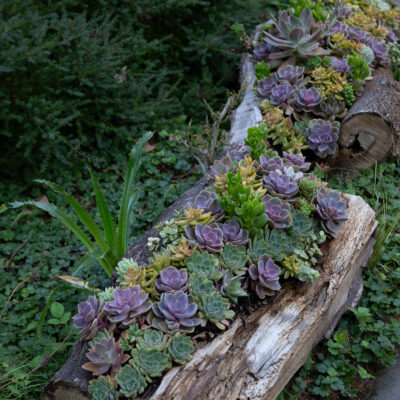
The garden is well established, yet still a work in progress as caretakers update and refresh the original plantings. A tour reveals surprises around every corner. Fall is a favorite time to visit due to the vast collection of established Japanese maples, though a midsummer visit was equally impressive.

Miller and her horticultural adventures are fascinating. Read more at https://millergarden.org/, then toss your name into the tour lottery. I hope you get a call.  

Website: https://millergarden.org/

Hours and tours: All visits to the Miller Garden are by reservation only with a staff member as a guide. The garden website states, “due to an unprecedented response, the 2025 tour season is now filled.” Early bird reservations for 2026 will open in autumn 2025. A “virtual” tour is offered online at https://millergarden.org/the-garden/

Admission: Free

Contact Information: To be added to the email list for class or tour date announcements, send a message to info@millergarden.org

Heronswood Photo © Heronswood
Heronswood
Photo © Heronswood
Heronswood
Photo © Heronswood

Heronswood

Location: 31912 Little Boston Rd NE, Kingston, WA Note: Ferry wait times to the Olympic Penninsula can be long so make reservations and plan accordingly.

By Anne Hays, Skagit County WSU Extension Master Gardener

Nestled in the charming town of Kingston on the north end of the Olympic Peninsula, Heronswood Garden can feel like stepping into a living dream. This enchanting botanical garden, established by renowned plantsman Dan Hinkley, is a paradise for anyone who cherishes nature’s quiet beauty.

The gardens opened in 1987 and comprise 15 acres and more than 8,000 varieties spread across six distinct yet integrated gardens.

As guests pass through the garden gate, they are immersed in a world where every path leads to a new discovery. Heronswood’s collection of rare and unusual plants is astounding, curated from all corners of the globe. The garden’s thoughtful design blends exotic with native plants, creating a seamless tapestry of textures and colors that change with the seasons.

The garden bursts to life in spring, with rhododendrons in full bloom in a variety of vibrant hues contrasting with the surrounding lush greenery. A fern glade mesmerizes visitors with the delicate interplay of light and shadow.

As one of the state’s “hidden gems,” the gardens offer tranquility and intimacy, allowing guests to wander for hours enjoying the color, listening to the birdsong, and gaining inspiration.

For some visitors, Heronswood is more than a garden-it’s a haven. For plant lovers, artists, and anyone seeking solace in nature, it’s a destination that lingers in the heart long after.

Website: https://www.heronswoodgarden.org/

Hours: 9 a.m. to 3 p.m. Saturday and Sunday. Closed major holidays. Summer opening hours start April 2, 2025.

Admission: $10 for adults, $5 for youth aged 7 to 17, and free for children aged 6 and younger. 

Contact Information: 360-297-9620, Info@heronswoodgarden.org. To learn more about classes and events, go to https://www.heronswoodgarden.org/event

Meerkerk Gardens
Photo © Anne Hayes

Meerkerk Gardens

Location: 3531 Meerkerk Lane, Greenbank, WA (Whidbey Island)

By Anne Hayes,  Skagit County WSU Extension Master Gardener

Nestled just 50 miles from Mount Vernon is Meerkerk Gardens, described as a well-curated “peaceful woodland garden.” The grounds provide a conveniently accessible garden, one of Whidbey Island’s best-kept secrets.

Established by Ann and Max Meerkerk, the grounds include a 10-acre Northwest woodland display garden and 43 woodland acres lined with nature trails. The gardens showcase native flora, including rhododendrons, azaleas, and companion plants, in a variety of garden rooms. Visitors may stroll along the curving, easy-walking paths through the splendor of rhododendrons galore – featuring vibrant shades of colors from white to pink and vibrant red to purple. Today, the Meerkerk Rhododendron Garden nonprofit manages the gardens and woodlands, established in 2002.

In addition to garden access, the website offers detailed information about seasonal guided walks, concerts, children’s programs, nature classes, rhododendron care classes, and guided tour information. The website also features a bloom report so guests can time a visit to experience the complete joy and bloom of the gardens. The garden features color and texture during all seasons.

A special addition is the onsite nursery, open by appointment only in the fall and winter months, reopening in March on Friday, Saturday, and Sunday.

Website: gardeninfo@meerkerkgardens.org

Hours: Open 9 a.m. to 4 p.m. daily

Admission: $10 for adults and free for children under age 13. Dogs on leash are welcome.

Walks: Guided walks are offered during some seasons, starting at 1 p.m. at the Gatehouse and lasting about 90 minutes. Walks are free for Friends of Meerkerk (and children under 13); the cost is $15 per person for non-members.  Preregister at www.meerkerkgardens.org/events

Contact Information: 360-678-1912


Is there a garden you love or hope to visit soon?
Share your favorite display gardens in the comment section below.


Urban Meadow at Bellevue Botanical Garden Photo © James Gagliardi, Bellevue Botanical Garden Director
Yao Garden at Bellevue Botanical Garden Photo © James Gagliardi, Bellevue Botanical Garden Director

Bellevue Botanical Garden

Location: 12001 Main St., Bellevue, WA

By Diana Wisen, Skagit County WSU Extension Master Gardener

As one of the most beautifully designed public botanical gardens in the United States, the Bellevue Botanical Garden is a “must-see” for anyone who loves gardens in the Pacific Northwest. The garden spans 53 acres in a wondrous mixture of cultivated gardens, restored woodlands, natural wetlands, and native plant collections. The paths lead visitors through hillside rock gardens, ponds, and a stream, through forests, past a gnome door hidden under a tree, and a Chinese garden, all with lovely works of garden art throughout.

Urban Meadow with irises at Bellevue Botanical Garden Photo © James Gagliardi, Bellevue Botanical Garden Director

Visitors will likely see varieties of trees they have never seen before. Visitors may wish to bring a cell phone to use the QR codes on the signage for more educational information about the plants. A small professional staff maintains and manages the garden along with local groups and individuals who donate nearly 20,000 hours a year to maintain the gardens.

The garden is known for its winter light display called “Garden d’Lights” during December, with tickets sold online.

The garden is currently hosting a special traveling exhibit called “The Lost Birds” through September 2025. The display features hauntingly beautiful giant bronze statues of extinct birds placed in a circle.

The Trillium Store gift shop and Copper Kettle Coffee shop both have seasonal hours.

Website: https://bellevuebotanical.org/

Hours and tours: Open daily from dawn to dusk, including all holidays. Free public tours are available on Saturday and Sunday, April through October. Private docent-led group tours can be scheduled online.

Admission: Free. Service animals are only allowed in the garden.

Contact Information: Administrative Office may be reached at 425-452-2750. To contact the Bellevue Botanical Garden Society, email bbgsoffice@bellevuebotanical.org

Skagit County WSU Extension Master Gardener Discovery Garden

Location: 16650 State Route 536 (Memorial Highway), Mount Vernon, WA

By Ginny Bode, Skagit County WSU Extension Master Gardener

The Skagit County WSU Extension Master Gardener Discovery Garden, located on State Route 536 west of Mount Vernon, always amazes visitors. A stop at the gardens is an easy addition to the list of area attractions.

First-time visitors are often surprised by the extensive collection found in the 1.5-acre garden. The well-maintained paths wind through 25+ garden rooms, including a koi pond, an herb garden, a vegetable garden, and many benches for resting. Each garden has a focus on specific plants that thrive in the Skagit Valley.

Visitors will find many educational opportunities and kiosks about growing fruits and vegetables, ornamental and native plant gardening, pollinators, and composting.

The Children’s Garden at Skagit County WSU Extension Master Gardener Discovery Garden Photo © Sue Wren

A highlight is the Children’s Garden, which is filled with colorful plants and whimsical structures. It is a place where children can touch, smell, and explore different textures, as well as vegetable patches and flower beds that encourage curiosity about how food grows and foster a love of nature and gardening.

The Discovery Garden, designed to inspire and educate the public, is maintained by 150 volunteer master gardeners. An annual open house is held in the garden from 10 a.m. to 2 p.m. on the last Saturday in June, featuring a plant clinic and children’s activities.

Adjacent to the Discovery Garden are two additional public display gardens on the WSU NWREC property: the 0.5-acre Salal Native Plant Garden and the 6-acre NW Fruit Garden.

Website: https://skagitmg.org/home/discovery-garden/

Hours: Open daily during daylight hours

Admission: Free

Contact Information: For information, go to https://skagitmg.org/home/discovery-garden/

THANK YOU TO THE AUTHORS:
Kay Torrance, Laura Kuhn, Kathy Wolfe, Nancy Crowell, Anne Hays, Diana Wisen, and Ginny Bode with the introduction by Kari Ranten. All are Skagit County WSU Extension Master Gardeners who love visiting and finding inspiration in display gardens near home or on holiday.


AMGPost_header5
© Jerald E. Dewey, USDA Forest Service, Bugwood.org

The Tents are Coming-No Cause for Alarm

Caterpillars signify new, rejuvenating life

March 19, 2024 Subscribe to the Blog>  Por favor, lee Española >

By: Virgene Link-New, Skagit County WSU Extension Master Gardener

Egg case. © Virgene Link-New

Perhaps it is our fatigue, our weariness with the darkness of winter. Or maybe it’s our eagerness to see the lush new green of spring bursting forth that fuels our distress and disappointment over the early spring appearance of caterpillar tents in our trees.

Do not despair. Those tents are a sign of another type of life bursting forth: one that will replenish soil over-watered by winter rains and feed many species who have suffered from hunger during the winter. Those tents indicate the under-appreciated western tent caterpillar, Malacosoma californicum. There is also a forest tent caterpillar that is less common, Malacosoma disstria. The first is our most common tent maker in this region. Others are called webworms or tussock moths.

Hawthorne with early tent caterpillar damage © Virgene Link-New
Hawthorne recovered from tent caterpillar infestation © Virgene Link-New

Their egg cases were deposited on deciduous trees and shrubs last year in the late summer and early fall. An egg case is many eggs “glued” together to form a “mass.” In the case of the tent caterpillar, it looks like a silvery Styrofoam mass when fresh. As the temperature warms, the eggs begin to hatch. The newly emerged hatching caterpillars spin a silken web to provide themselves with some protection from predators and weather. At first, they feed inside the tent, then they enlarge their tent as they grow. Since these caterpillars feed in early spring, the young leaves they consume are essentially recycled into compost that rains down to replenish the soil. The host tree has enough time to grow new leaves after the caterpillars have departed. Often, you see caterpillar tents in trees that later fail to develop. This is probably due to weather or other factors like disease or fungus.

Early tent caterpillar damage on apple tree. © Virgene Link-New
Apple tree two weeks after tent caterpillars dispersed. © Virgene Link-New

As they grow, the caterpillars eventually leave the tent and wander about, searching for more leaves to eat and a place to spin a cocoon. They undergo complete metamorphosis, the process of changing from an immature form to an adult form. At this time, they are more easily preyed upon by other insects, spiders, birds, small mammals, reptiles, and amphibians. Even their cocoons can be food for other species. Once they have emerged as moths to mate, they are more easily consumed by birds and bats. They are also vulnerable to viruses, diseases, and fungi.

Now, if you are in business and your livelihood depends upon fruit production or tree production, then action is necessary as energy is spent on producing more leaves. Also, the tents can interfere with setting of fruit. Orchardists act in the winter to remove the egg cases by peeling them off or pruning them out of the branches. The removed egg cases can be harmlessly dropped directly on the ground, which makes them available to predators like ground beetles and centipedes and allows any natural enemies whose parasitized eggs have been deposited in the egg case to exit!

Tent caterpillar egg sack on fence © Pascale Michel

If you have a small, just-planted tree, you should do the same action as the orchardist since unestablished trees are more vulnerable to stress. Or an ornamental tree by your front door would be aesthetically displeasing with tents, and you might want to take some action in that case. If you’ve missed the window for removing the egg cases, the web with caterpillars inside can be pulled off or pinched when cool or in the evening if pruning would distort your desired shape. These mechanical removal methods are more environmentally friendly than the use of pesticides and do not result in chemical run off during rainfall that eventually reaches Puget Sound. As a reminder, please do not use a torch to burn the tents, as fire is more damaging to the plant than defoliation.

Larger trees will put out new leaves and should be less vulnerable to attack the following year as they seem to develop some resistance. Weakened trees are partially killed only when severe infestations (total defoliation) are combined with drought or other stressors (like disease). In forests where trees are too overcrowded for nutrients and moisture, this is a form of natural thinning.
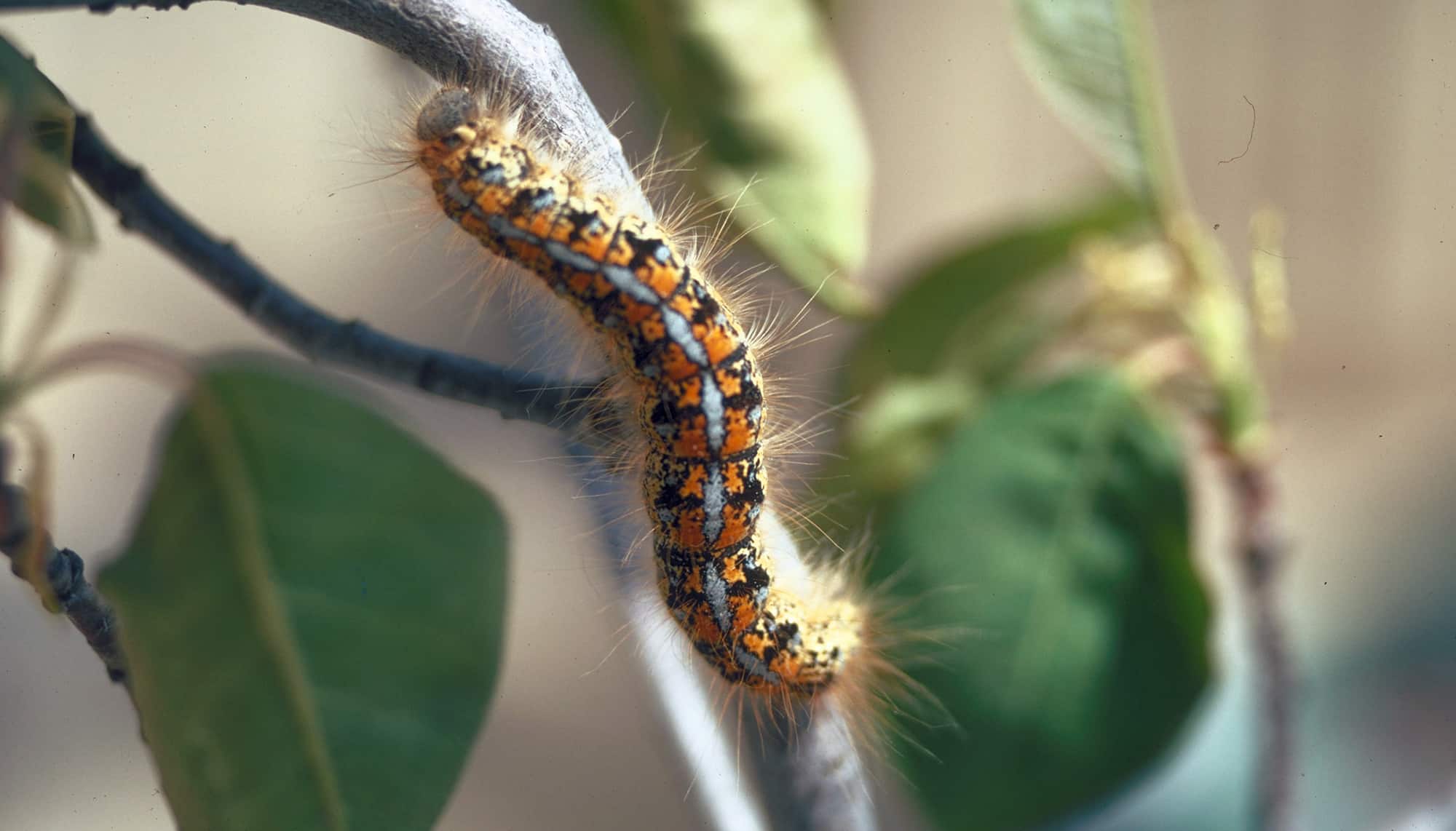
Parasitized tent caterpillars © Virgene Link-New
Proper mulching helps trees withstand drought because water can reach the entire root system. © Virgene Link-New

These past several years, the Pacific NW has been impacted by drought. Although tent caterpillars do not impact conifers (evergreens), their obvious dead tops in our landscape indicate that our trees suffer from a lack of water.

To protect the trees in your landscape, ensure they receive at least one inch of water per week out to the drip line. This is one reason the WSU Extension Master Gardener program recommends not having grass or plantings directly under your tree. You can use a moisture meter to read the depth to which water (rainfall or supplied) is reaching.

Our native trees have evolved with our native insects and thus have a symbiotic relationship that benefits the entire food web. Particularly, the tent caterpillar seeks out red alder in the native forest. Other host plants are those in the rose, birch, and willow families, to name a few.

Later in the year, we hardly notice the trees that hosted tent caterpillars, as we’ve forgotten which trees were defoliated in the abundance of new leaves. Please be tolerant of some damage because this species plays an important role in the ecosystem.

REFERENCES AND RESOURCES:

Eighme, L. (2009) Insects of Skagit County, Skagit County Master Gardener Foundation, pp17-18 & p124. https://skagitmg.org/wp-content/uploads/Public Pages/Library/Insects_of_Skagit_County_Eighme_2022.pdf

Colman, S., Antonelli, A., Murray T. “Tent Caterpillars” Washington State University Extension, December 5, 2022. https://hortsense.cahnrs.wsu.edu/fact-sheet/4377/

Tallamy, D. (2019) Bringing Nature Home, Updated and Expanded: How You Can Sustain Wildlife with Native Plants. Timber Press, Portland, Oregon

Western Tent Caterpillar, U.S. Forest Service, 2011.
https://www.fs.usda.gov/Internet/FSE_DOCUMENTS/stelprdb5303047.pdf
Drought Information and Resources. Washington State Department of Agriculture
https://agr.wa.gov/departments/land-and-water/natural-resources/water-quantity/drought-infoThe Ultimate Guide to Mulching Around Trees. The Eco Tree Company, Madison, WI. April 21, 2021.
https://ecotreecompany.com/how-to-put-mulch-around-a-tree/
Bruner, J. (1993) Tent Caterpillar, WSU Fruit Tree, Washington State University
https://treefruit.wsu.edu/crop-protection/opm/tent-caterpillar/
Tent Caterpillar IMP Strategy Fact Sheet
https://www.seattle.gov/documents/Departments/SPU/SWAC/TentCaterpillarIPMFactSheet.pdf

Koszarek, L. (2023) Moths: The Forgotten Pollinators. Penn State Extension Master Gardener, College of Agricultural Sciences, Penn State University, University Park, PA Retrieved at: Moths-The Forgotten Pollinators

Upcoming Skagit Master Gardener Foundation Events:

Master Gardeners at SICBA Home & Garden Show
March 22 – 24 at the Skagit County Fairgrounds
Visit our booth, see our displays, and talk with master gardeners about how to make your garden more beautiful and productive. Learn about free events and programs for home gardeners in Skagit County.
Food Innovation – Food Waste Prevention – Free
April 6, 9 AM to 12PM at the Port of Skagit
Celebrate Food Waste Prevention Week. Check out the worm composting bin, attend food waste prevention classes. Talk to the Skagit Gleaners. The WSU Breadlab sale starts at 10 AM. Event held at the Extension Office on 11768 Westar Lane, Burlington.
Know & Grow: Growing Roses in Skagit County – Free
April 16, 1 PM at the NWREC Sakuma Auditorium (16650 State Route 536; Mount Vernon) Presented by Virgene Link-New
Skagit County Master Gardener Plant FairFree
May 11, 8 AM to 2 PM at the Skagit County Fairgrounds
Learn More >

ABOUT THE AUTHOR :

Virgene Link-New has been a Skagit County WSU Extension Master Gardener since 2006. She is an avid insect collector and is garden manager of the Rose Garden in the Discovery Garden on SR 536 west of Mount Vernon.

Questions about home gardening or becoming a Master Gardener may be directed to: Skagit County WSU Extension Office, 11768 Westar Lane, Suite A, Burlington, WA 98233; by phone: 360-428-4270; or via the website: www.skagit.wsu.edu/mg


AMGPost_header5
© Kay Torrance

Gardening for All Ages and Abilities

Practical tips and ideas for adapting the garden through life’s transitions

              Subscribe to the Blog >

By: Ginny Bode with Madelyn Case and Anita Reetz, Skagit County WSU Extension Master Gardeners

Gardeners know spending time in the garden feeds the soul. But sometimes, as life changes, we face the need to adapt how we garden so it is possible for ourselves or those we love to continue cultivating wellbeing through gardening.

For some, physical limitations present lifelong challenges; for others, aging begins to interfere with the bending, kneeling, and digging associated with gardening. There are many reasons to take heart and continue to enjoy gardening by implementing some of these adaptive methods.

In her book Gardening for a Lifetime, Sidney Eddison sums up the reason for adapting when she says, “We are all doing exactly the same thing-trying to hang on to something we love.” Her book is loaded with practical ideas for reducing and removing barriers that hinder and continue the joy of growing plants through life’s transitions.

Reducing the size and work of a garden is the first step, followed by making it easier, more accessible, and user-friendly. A vegetable garden the size you’ve always had, and probably shared with others, can be resized to reduce both the work of maintaining and the work of harvesting. Choose to grow your top favorites, looking for plants that require less maintenance.
Eddison writes about requiring a “standard of good behavior” for perennials. Her measure includes observing a perennial’s health, fortitude, and ability to withstand the extremes of summer and winter. They must be “well-behaved” and not invite pests. As plants age out, replace them with sizes and varieties that are easier to maintain. And, because climbing ladders is problematic as we age, choose low-profile trees and shrubs that are easier to reach for pruning and maintenance.
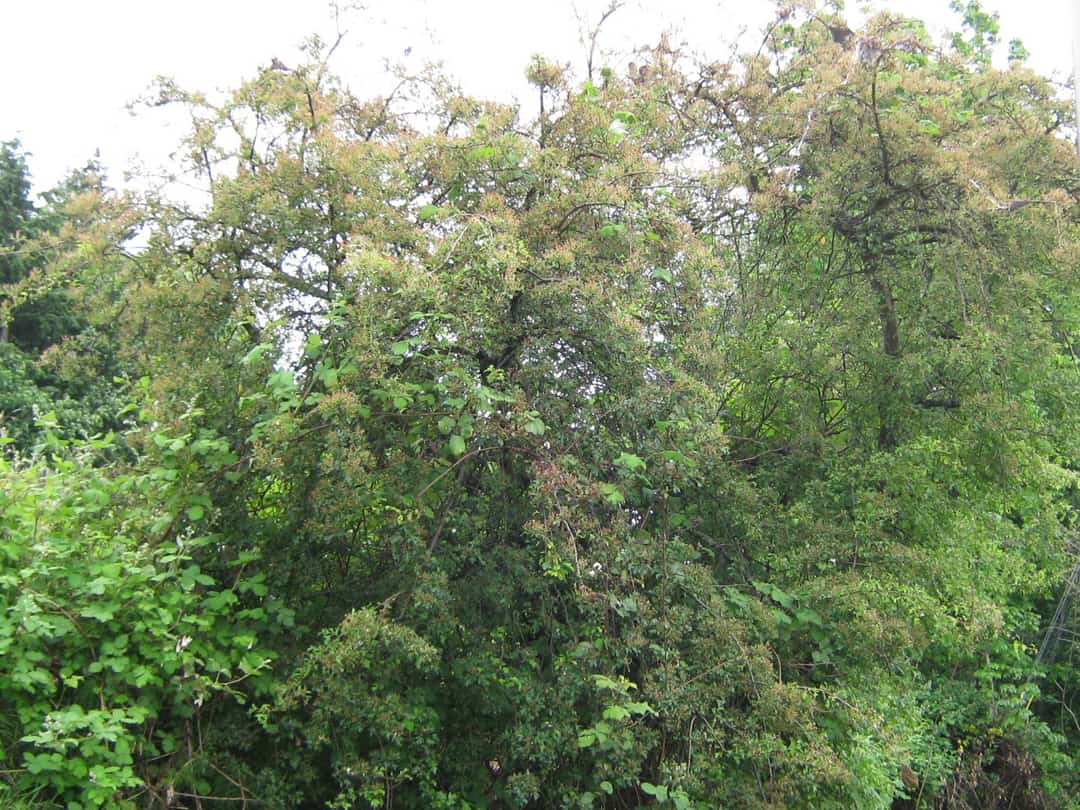
Pay Attention to Walkways
Every garden needs to be accessible and safe. Falls are problematic and can limit the ability to garden even more. Remove any places that may cause one to stumble. Eliminate a dip in a walking path and poor transitions between surfaces. Smooth pathways such as pavers, rather than woodchips or gravel, ensure ease for every gardener, particularly those who need the aid of a cane, walker, or wheelchair.
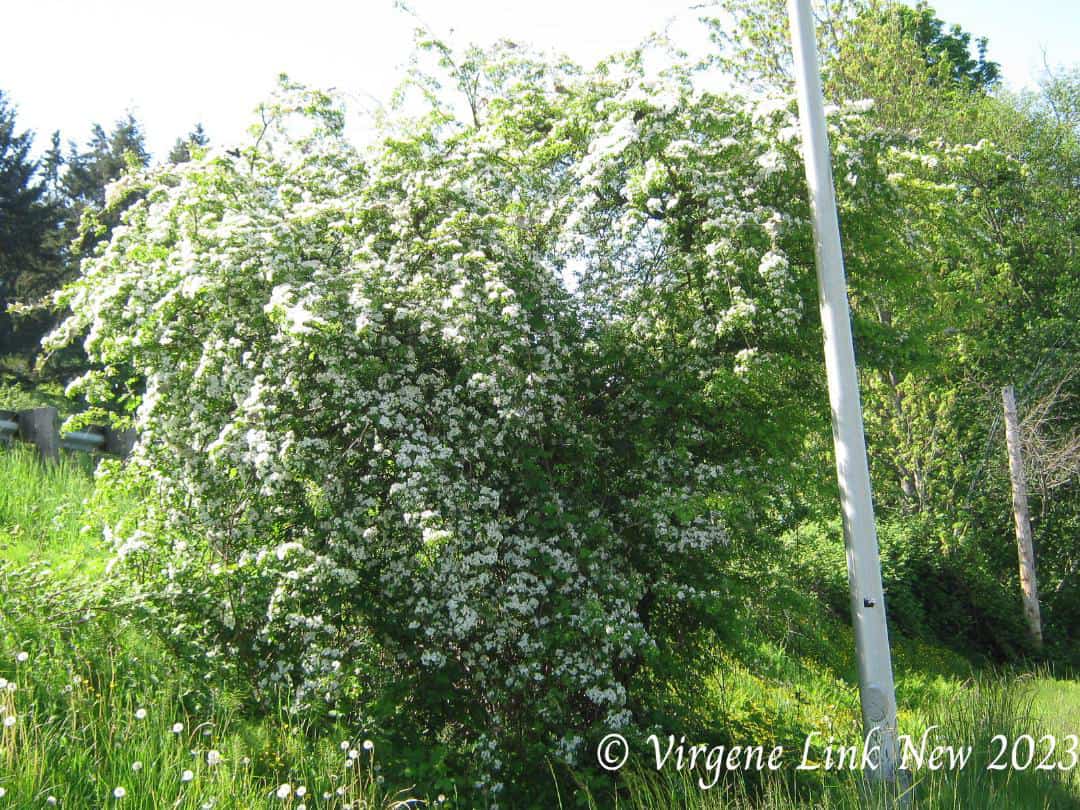
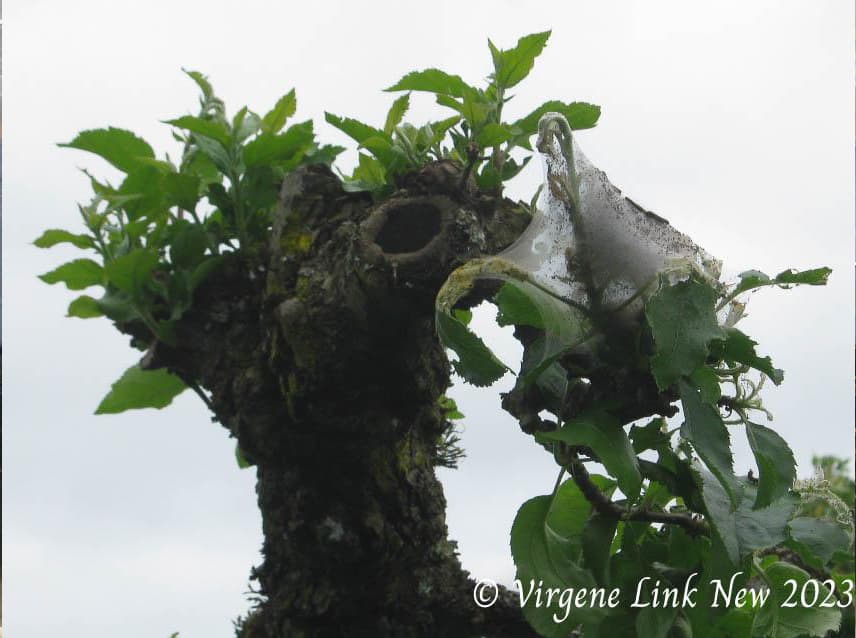
green plants growing in pots on patio
Herbs and lettuces can easily be grown in containers making it easy to gather when preparing a meal.
tomato growing in pot on patio
If the space doesn’t allow a large footprint, grow vertically with trellises in pots. Tomatoes are a beautiful addition, and can drive grown vertically with good airflow.
Be Amazed by What Can Be Grown in Containers
Life can throw us a curve, and home may change from acreage or a city lot with a garden to an apartment. Don’t let it rob the joy of gardening. When faced with gardening on a patio, containers can provide an excellent way to get a dirt fix. Most home gardeners are familiar with growing flowers in pots and containers. Many also successfully grow a wide range of vegetables, including tomatoes, beans, and kitchen herbs in pots. Depending on the space and container size, some folks even grow potatoes! The Vegetable Gardener’s Container Bible by Edward Smith provides advice for growing an abundant vegetable garden on your patio or balcony. Smith’s book is a stalwart in gardeners’ libraries because it is packed with information covering sun exposure, pot size, soil choices, and which varieties do best in containers.

A narrow bench fitted to the edge of a raised bed allows for tending without kneeling.

Raised beds are also an excellent solution to making the garden user-friendly, making it possible to get your hands in the dirt without bending or kneeling. By keeping the beds narrow, 4′ or less, every inch of the garden is reachable from a standing or wheelchair position. It is incredible how much can be grown in a raised bed. With the popularity of raised beds, kits that only require simple assembly are available, or you can use the plans referenced later in this article.

Master gardener and adaptive gardening consultant Toni Gattone shares many adaptive gardening ideas in her book The Lifelong Gardener. Faced with chronic back pain, she searched for ways to adapt her northern California garden. She collected considerable wisdom about assessing limitations and finding joy in the changes. In the book, Toni profiles several gardeners faced with specific challenges and how they solved them with intentional choices and tools.

Gattone has a chapter about tools available for gardeners who face physical challenges. Scooters, carts, and ergonomically designed tools reduce some of the problems caused by aging joints. Long-handled hoes and weeders can make it much easier to garden from a bench.

Share a Gardening Space with a Friend or Join a Community Garden
Another way to garden without a home garden is to share a space. Many communities have garden spaces for people who need a place to garden. Whether in a community garden or sharing space in a friend’s garden, both offer the additional benefit of social interaction and shared knowledge.
shows multiple raised bed gardens and terrlis
The Enabling Garden features an abundance of garden possibilities for making it easier to garden for all ages and abilities © Nancy Crowell Photography
See the Possibilities in Action
As spring turns to summer, you will find inspiration for adaptive gardening techniques in the Skagit County WSU Extension Master Gardener’s Discovery Garden on Memorial Highway (SR 536), west of Mount Vernon. Within the one-and-a-half-acre garden, local master gardeners have created an Enabling Garden, showcasing possibilities for people of all ages with limited physical abilities.

The Enabling Garden’s features include:

  • Smooth ground surfaces
  • Raised beds
  • Resting places
  • A display of adaptive gardening tools
  • A selection of plants chosen for their sensory attributes or space

sign showing garden tools
Many tools are available to help ease physical challenges. Long-handled hoes and weeders can make it much easier to garden from a bench.
© Ginny Bode
white rocks in raised bed garden
White stones delineate areas for the visually impaired in this raised bed in the Enabling Garden

Tripartite garden plants; wheelchair accessible.

Rather than wood chips or gravel, pavers allow visitors with walkers or wheelchairs to move about easily. The raised bed design (8-foot x 4-foot x 1-3-foot) permits the gardener to reach every inch of each bed, standing or from a wheelchair. You’ll find more information about raised beds along with plans at https://skagitmg.org/raised-beds-2023/.

One raised bed features a sitting ledge to offer a rest from work. Another bed is designed for the visually impaired and features curved streams of small white rocks separating plant clusters and plants with different textures to touch and feel. A third raised bed is divided into three parts with cutouts to push in a walker or wheelchair.

A fourth raised bed features a vertical lattice panel in the center, supporting various runner beans and clematis. The panel, located in the middle, permits tending from both sides. Square foot gardening techniques are displayed in another raised bed where 24 one-foot squares, laid out with twine, show the variety and abundance of small vegetables, herbs, and flowers that one raised bed produces.

The coordinators of the Enabling Garden choose plants for their ability to satisfy the senses of smell, touch, hearing, and taste. Kids visiting this garden say, “It’s fun to feel” the wooly lambs’ ear (Stachys byzantina), spiky lemon thyme (Thymus citriodorus), saxifrage, trailing English ivy (Hedera helix), and soft moss that flourish in the bed designed for the visually impaired. Fragrant plants throughout the garden include lilies, mint, sage, violets, and sweet peas. Herbs like lavender, rosemary, and lemon verbena can energize the gardener. You will find plants included for their sounds, too! Balloon flowers (Platycodon grandiflorus), bamboo, Chinese lantern plants (Physalis alkekengi), and honesty (Lunaria annua) provide interesting and pleasant sounds.

Within the Enabling Garden, you’ll also find a display picturing enabling tools, showing the tool and explaining how it helps gardeners use less energy and work more effectively.

These tips only touch on surface ideas to make it possible to experience the rewards of gardening no matter what physical limitations a gardener faces. The resources below dig deeper into the possibilities for gardening at any age or ability.

REFERENCES AND RESOURCES:

Eddison, S. 2010. Gardening for a Lifetime: How to Garden Wiser as You Grow Older. Timber Press Portland, OR.

Smith, E. 2011. The Vegetable Gardener’s Container Bible. Storey Publishing, North Adams, MA.

Bartholomew, M. 2018. All New Square Foot Gardening: Grow More in Less Space! Cool Springs Press, Franklin, TN.

Gattone, T. 2019. The Lifelong Gardener: Garden with Ease and Joy at Any Age. Timber Press, Portland, OR.

Ginny Bode
Ginny Bode
Anita Reetz
Anita Reetz
Madelyn Case
Madelyn Case

ABOUT THE AUTHORS :

Ginny Bode, Anita Reetz, and Madelyn Case are Skagit County WSU Extension Master Gardeners. Anita and Madelyn are the coordinators of the Enabling Garden at the Discovery Garden on SR 536 west of Mount Vernon. https://skagitmg.org/home/discovery-garden/

Questions about home gardening or becoming a Master Gardener may be directed to: Skagit County WSU Extension Office, 11768 Westar Lane, Suite A, Burlington, WA 98233; by phone: 360-428-4270; or via the website: www.skagit.wsu.edu/mg


AMGPost_header5
Red-twig dogwood (Cornus sericea) © Joan D. Stamm

Gardening for Wildlife

Thinking of adding new plants to your garden this spring? Choose from these recommendations to build a healthy ecosystem for your favorite wildlife species.

              Subscribe to the Blog >

Updated: August 18, 2024

By: Joan D. Stamm, Skagit County WSU Extension Master Gardener

In a blog article last September, I recommended reading Nature’s Best Hope by Douglas Tallamy for the “why” of gardening for wildlife. This article will explore the “what” and the “where”-as in “what” plants and “where” to buy them.

For the “what,” I suggest Real Gardens Grow Natives by Eileen M. Stark as a guide to site prep, plant selection, and the benefits each plant offers the ecosystem. “Benefit” in this article, as in Stark’s book, is the critical word. It points to what the National Wildlife Federation (NWF) has coined as keystone plants.

What exactly is a keystone plant?
According to NWF, keystone plants are “native plants critical to the food web and necessary for many wildlife species to complete their life cycle. Without keystone plants in the landscape, butterflies, native bees, and birds will not thrive. 96% of our terrestrial birds rely on insects supported by keystone plants.”

Stark, a wildlife conservationist and landscape designer from Portland, Oregon, specializes in wildlife habitat gardens that include keystone plants. In the 317 pages of her beautifully photographed book, you will find 100 of her favorite Northwest native plant varieties and their many benefits for wildlife.

Yarrow (Achillea millefolium) © Joan D. Stamm

Yarrow (Achillea millefolium) © Joan D. Stamm

Twinberry (Lonicera involucrata) © Joan D. Stamm

Twinberry (Lonicera involucrata) © Joan D. Stamm

Snowberry (Symphoricarpos albus) © Joan D. Stamm

Snowberry (Symphoricarpos albus) © Joan D. Stamm

For example, the Garry oak or Oregon white oak (Quercus garryana) is one of the top keystone plants Stark promotes in her book. If we want butterflies in our garden, we need to have trees, shrubs, and perennials that host butterfly larvae. The Garry oak is one such tree; it is a host plant for many caterpillars, including the “gray hairstreak, California sister, and Propertius duskywing butterfly larvae.” In addition, the “flowers attract native bees,” and the “acorns sustain populations of mammals and birds such as woodpeckers, nuthatches and vireos.” “Studies show,” writes Start, “that oaks support more insect herbivores than any other plant genus.”

Although incredibly beneficial, not everyone has space for an 80-foot Garry oak. If not, consider another keystone tree: bitter cherry (Prunus emarginata). Birds such as “tanagers, waxwings, bluebirds, towhees, and flickers” will arrive to eat the fruit. A native cherry also hosts “swallowtail and Lorquin’s admiral butterfly larvae.”

If you love butterflies, another great keystone tree is Scouler’s willow (Salix scouleriana); it hosts “western tiger swallowtail, great comma, dreamy duskywing, and mourning cloak butterfly larvae.” In addition, native willow flowers “provide pollen and nectar for bees,” and “small and large mammals feed on buds, leaves, and seeds.”

small green bush with red berries

Kinnikinnick (Arctostaphylos uva-ursi) © Joan D. Stamm

frog on orange flower

Frog on Sneezeweed © Joan D. Stamm

Bee on orange and yellow flower

Bumblebee on blanket flower © Joan D. Stamm

Serviceberry (Amelanchier alnifolia) is also a keystone tree, providing “pollen and nectar for large numbers of bees, as well as hummingbird and spring azure butterflies.” Serviceberry fruit, says Stark, “is relished by waxwings, chickadees, woodpeckers, and tanagers,” and it is a host plant for “pale swallowtail, brown elfin, Lorquin’s admiral, and California hairstreak butterfly larvae.”

Along with these important native trees, many keystone perennials can fit into any open sunny space in your garden. A beneficial plant throughout many regions, goldenrod (Solidago canadensis), is a “nectar source for native bees and butterflies, such as the checkered skipper, clouded sulphur, gray hairstreak, monarch [east of the Cascades], and the endangered Oregon silverspot.”

Douglas aster (Symphyotrichum subspicatum) “provides nectar and pollen for bees and nectar for woodland skipper, pine white, painted lady, red admiral, mourning cloak, and the Oregon silverspot.” It is also a “host plant for field crescent and other butterfly larvae.”

plant with purple blue flower

Lupine © Joan D. Stamm

Big-leaf lupine (Lupinus polyphyllus) not only “provide[s] pollen for native bumblebees,” it is a “host plant for silvery blue, painted lady, and orange sulfur butterfly larvae. Aphids attracted to the plant are preyed upon by syrphid fly larvae. Seeds are eaten by birds such as sparrows and finches.”

The Viola adunca, a native violet in our state, is a dynamic host plant for at least seven species of butterfly caterpillars and an enticing nectar plant for the endangered Mardon skipper butterfly.

Stark divides her native plant selections into three categories: plants for sun, partial sun, and mostly shade, guiding us in our creed “right plant, right place.” You’ll also find chapters on soil, pruning, watering, weeding, mulching, and much more. Her book is this gardener’s “go-to” choice whenever looking for the right native plant for a particular area and wanting to know the benefit to nature: what bees, butterflies, birds, or caterpillars the plant will attract.

As beneficial as all native plants are for our native wildlife, some natives on Stark’s list may not be suitable for an urban or suburban garden. For example, western red cedar, grand fir, Douglas fir, western hemlock, and Sitka spruce, are all enormously beneficial, but grow to a height of over 100 feet. The Douglas’ spirea, Stark warns, “may be too assertive for small, moist gardens.” Yet, the Spiraea betulifolia var. lucida, a small shrub with white flowers, might be perfect for a sunny border. Be sure to familiarize yourself with height, width, water requirements, and characteristics such as “vigorous,” “assertive,” or “rapid spreader” to determine if you have the “right plant for the right place.” A Nootka rose’s flowers and hips provide many benefits to wildlife but, over time, will grow into a thicket. However, if you have room for it to spread, it might make the perfect hedgerow, providing not only winter food for juncos and grosbeaks but also a habitat for nesting birds and the western checkerspot butterfly caterpillar.

For a more comprehensive book on creating gardens for wildlife, see Russell Link’s Landscaping for Wildlife in the Pacific Northwest. Link’s book not only includes extensive lists of native and non-native plants that benefit wildlife but also illustrates how to build habitats for birds, reptiles, mammals, and all the other creatures that make up a complete ecosystem. For example, he details snag locations and which draw native birds. He describes how to create a cavity in a live tree without killing the tree and thus create a habitat for a woodpecker. The book contains several kinds of fully illustrated brush or rock piles, including how to make them, where to place them, and who will benefit.

For example, Link says that “bushtits, chickadees, dark-eyed juncos, towhees,” and others “will use the inside of a brush pile,” whereas “hummingbirds, robins, and towhees will use the outside of a brush pile. Salamanders, snakes, toads, and turtles,” will use the base of the brush pile. He also covers how to create or construct proper birdbaths, ponds, nest boxes, and bat houses and features detailed drawings to illustrate how to build homes for Mason and bumblebees. Included are eight pages of colored photos depicting NW native mammals, birds, reptiles, amphibians, butterflies, moths, and other insects, describing our native birds and their preferred habitats.

Bee on Sneezeweed © Joan D. Stamm

Bee on Sneezeweed © Joan D. Stamm

Scotch bluebell (Campanula rotundifolia) © Joan D. Stamm

Scotch bluebell (Campanula rotundifolia) © Joan D. Stamm

With these three books, Nature’s Best Hope, Real Gardens Grow Natives, and Landscaping for Wildlife in the Pacific Northwest, you will be inspired, informed, and guided to provide plants that offer habitat and food (nectar, pollen, insects) for our native wildlife. You will better understand why it’s important to cultivate natives and have a clearer idea of what to plant, thus joining the movement to restore our natural ecosystem.

picture of book cover by Douglas Tallamay
picture of book
Picture of Landscaping for wildlife in the PNW book cover
The only question remaining is “where” to buy all these wonderful beneficial plants?
You can start with our very own Skagit County Master Gardener Foundation’s Annual Plant Fair, which always features a native plant section. The sale occurs the Saturday before Mother’s Day (May 11, 2024) at the Skagit County Fairgrounds in Mount Vernon.

The local Salal chapter of the Washington Native Plant Society (https://www.wnps.org/salal-programs/garden) offers a twice-yearly native plant sale online with pick up at their demonstration garden adjacent to the Discovery Garden. Sign up to get email notifications.

Some of our local nurseries are beginning to carry more native plants. Azusa Gardens in Mount Vernon on Hwy 20 (https://www.azusagardens.com/) keeps expanding its native plant section each season. They feature two- and five-gallon shrubs such as twinberry, ocean spray, snowberry, red-twig dogwood, mountain hemlock, and others. Twinberry (Lonicera involucrata), in particular, is an attractive and beneficial native shrub easily grown with a little shade. It produces yellow tubular flowers attractive to hummingbirds and the berries are eaten by “thrushes, flickers, grosbeaks, and waxwings”; it’s also a host plant for the “snowberry checkerspot butterfly larvae.” Azusa also carries native ferns, and groundcovers such as bunchberry and wild ginger. They also welcome requests for specific plants.

Christianson’s Nursery in Mount Vernon on Best Road  (https://www.christiansonsnursery.com/) has a native plant section and carries one-gallon great camass (Camassia leichtlinii) in spring. They also have vine maple, salal, western red cedar, fir, hemlock, and kinnikinnick. The latter is a perfect groundcover. Kinnikinnick is not only evergreen, but the flowers are popular with bees and hummingbirds; the berries are eaten by “songbirds and many ground-feeding birds,” says Stark. It is also a “host plant for brown elfin and hoary elfin butterfly larvae.”

Plantas Nativa in Bellingham (https://www.plantasnativa.com/) specializes exclusively in native plants. They pack a lot of choices-conifers, shrubs, perennials, ferns, grasses, water plants, groundcovers, and more-into their small corner lot.

A little farther away but worth the drive, a visit to the Pacific Rim Institute (PRI) https://pacificriminstitute.org/ near Coupeville on Whidbey Island will reward you with not only a native plant nursery but a hike through a preserved segment of Washington’s native prairie landscape that contains the endangered golden paintbrush (Castilleja levisecta). PRI’s Nursery specializes in 50 native prairie plants. Many, such as woolly sunflower, red paintbrush, campanula, yarrow, larkspur, and fescue, will thrive in a sunny spot in your garden. Red paintbrush, in particular, is a beautiful, easy-to-grow native when planted with another native-like yarrow, woolly sunflower, penstemon, or blue-eyed grass. Due to its symbiotic nature, paintbrush requires nutrients from a host plant’s roots to survive. It blooms throughout summer, and Anna’s hummingbird loves the red flowers.

PRI also specializes in some unique native bulbs-ookow (Dichelostemma congestum), blue lily (Triteleia grandiflora), and harvest brodiaea (Brodiaea coronaria), that I hope will begin to replace my non-native tulips and daffodils for spring cheer.

With the knowledge and expertise of Tallamy, Stark, and Link, and a little help from our many plant retailers, you will be inspired to garden with native keystone plants that provide food and habitat for our indigenous birds, bees, and butterflies. In our age of endangered plant and animal species, we can be a force for eco-restoration right in our own backyard.

REFERENCES AND RESOURCES:

Link, R. 1999. Landscaping for Wildlife in the Pacific Northwest. Washington Department of Fish and Wildlife.

Stark, E. 2014. Real Gardens Grow Natives. Skipstone, Seattle, WA

Tallamy, D. 2019. Nature’s Best Hope: A New Approach to Conservation That Starts in Your Yard. Timber Press, Portland, OR.

ABOUT THE AUTHOR :
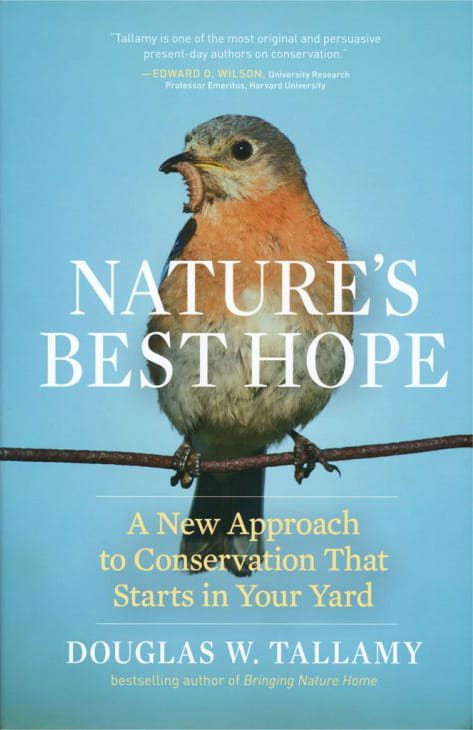
Joan D. Stamm

Joan D. Stamm is a Skagit County WSU Extension Master Gardener and the author of several books, including The Language of Flowers in the Time of COVID: Finding Solace in Zen, Nature and Ikebana.

https://joandstamm.com/

Questions about home gardening or becoming a Master Gardener may be directed to: Skagit County WSU Extension Office, 11768 Westar Lane, Suite A, Burlington, WA 98233; by phone: 360-428-4270; or via the website: www.skagit.wsu.edu/mg


AMGPost_header5
Hummingbird

Gardening for Pollinators

A journey of learning

              Subscribe to the Blog >

By: Patty Puckett Tingler, Skagit County WSU Extension Master Gardener

Pollen is a fine powdery substance, typically yellow, consisting of microscopic grains discharged from the male part of a flower. The term pollinator is not limited to wind, insects, animals, and butterflies. Some unexpected insects such as beetles and moths are also pollinators, performing the critical task of transporting pollen to the female parts of other plants, enabling fertilization and the production of seeds and fruit. Pollinators are vital to global crop production. According to an article published by the U.S. Forest Service, “Of the 1,400 crop plants grown around the world, i.e., those that produce all of our food and plant-based industrial products, almost 80% require pollination by animals.”

It is widely assumed that the honeybee is the predominant pollinator. However, there are many types of bees, solitary and social, and they all play a role in pollination. Typically, in a home garden, you’ll find solitary bees that are not part of a hive; however, all bees play a role in pollen distribution and pollination.

Butterfly on flower
© Patty Puckett Tingler
Island tiger moth, banded wooly bear caterpillar
The Banded Wooly Bear is the larval stage of the Island Tiger Moth. © Virgene Link-New
honeybee on blossom
A honeybee on a kale blossom Caption © Virgene Link-New

Flowers, Fruits, and Veggies

Gardeners should consider choosing plants that will provide pollinators with a variety of feeding choices all season long. Choosing early and mid-spring blooming flowers or bulbs to attract pollinators is a wise strategy. Once the pollinators have been attracted to the garden, vegetables will be bountiful all summer long. Fruit trees in blossom are ready to be pollinated. Be sure to share the bounty with birds later in the season as they were likely part of the pollinator team.

Remember to be patient. Attracting pollinators is laying the groundwork for years to come, so efforts made now will affect the garden and pollinators in the future. Watch and study your space for attractiveness to pollinators as you would for sun and shade. Neighboring plants can repel certain pollinators and you may need to move or rethink what to plant in a particular area to attract the pollinators for garden needs. Gardening for pollinators is a journey of learning and understanding.

swallowtail, butterfly
The Western Swallowtail has a lifespan of only 6 – 14 days. Caption © Virgene Link-New
hover fly
Hover fly on dahlia © Virgene Link-New

Attracting Pollinators

If you personally like scented plants then you already know which plants pollinators enjoy. In addition to scent, think of using the open face of a flower as a landing place for the pollinator to rest while gathering and distributing pollen. Whether it’s a bee, a butterfly, or a bird, rest areas will encourage different pollinators to return. In the Pacific Northwest, especially western Washington, pollinators are lured by crocosmia, coneflowers, lavender, catmint, and sunflowers to name a few. One easy-to-grow pollinator-friendly annual is lacy phacelia, also known as blue tansy. It is a beautiful lavender color, grows easily from seed, and bees will flock to this plant. Distribute the seeds around your yard and enjoy its tall, beautiful splendor.

The number of scented plants in the Pacific Northwest is quite wide, from climbing vines like honeysuckle to lavender and lilac bushes. There are plenty of native species to choose from that are drought tolerant once established such as camas, lupine, salvia, and checker mallow also known as Malva. Daisies, asters, California poppy, catmint, and sage are also pollinator-friendly plants easily grown in the PNW.

What can we do to support pollinators?

How we can best support pollinators depends on the season. In fall, it’s best to put down your rake and leave the leaves on the ground. Mother Nature will do her best to push the leaves together under shrubs or against a structure. Some pollinators burrow under these leaf accumulations to overwinter. Wait until the spring weather is warmer (above 50°F) before cleaning up the garden as the pollinators will need the warmth as they emerge from their winter habitat.

Lorquin’s Admiral butterfly © Virgene Link-New

Reduce the areas of grass on your property by adding shrubs, trees, and perennials that will provide visual interest and habitat for birds and insects. Use fewer toxins and chemicals, when possible. Pollinators need water for many purposes, including drinking, cooling, and reproduction so be sure to provide a source of shallow water near pollinator plants. Recycle pots or repurpose other containers (buckets, watering cans, birdbaths, etc.) on your patio or landscape to encourage more pollinators. Secondhand stores are full of items waiting for a reimagined purpose.

By providing backyard habitats or even a patio garden of scented, open flowers, bees and other pollinators will find your offerings. Support them by providing plants that help them do their job. Look online for native Pacific Northwest plants, shrubs, or seeds. Visit a local nursery to get plant recommendations or attend classes. Use your local library to learn more about creating or filling your garden with pollinator-friendly plants.

The more you learn about the world around you, the easier it is to live simply with our environment. Becoming aware of your environment and learning more about pollinators will open your eyes to the beauty and intricate connectivity of nature. We co-habit with and need insects, birds, butterflies, and other creatures to act as pollinators to plants to provide us with both beauty and nutrition. Our health, both physical and mental, would not exist without the efforts of the earth’s pollinators.

REFERENCES AND RESOURCES:

Why is Pollination Important ? U.S. Forest Service
Retrieved from https://www.fs.usda.gov/managing-land/wildflowers/pollinators/importance

James, D. Pollinators retrieved from https://hortsense.cahnrs.wsu.edu/pollinators/

Krischik, V. Pollinator Conservation Biocontrol: Beneficial Insects | IPM and Pollinator Conservation University of Minnesota retrieved from: https://ncipmhort.cfans.umn.edu/beneficial-insects

Zagory, E., Hetrick, K. (2016) Introducing 10 Bees and 10 Plants They Love. University of California, Davis
https://arboretum.ucdavis.edu/sites/g/files/dgvnsk1546/files/inline-files/10-bees-10-plants_0.pdf

ABOUT THE AUTHOR :
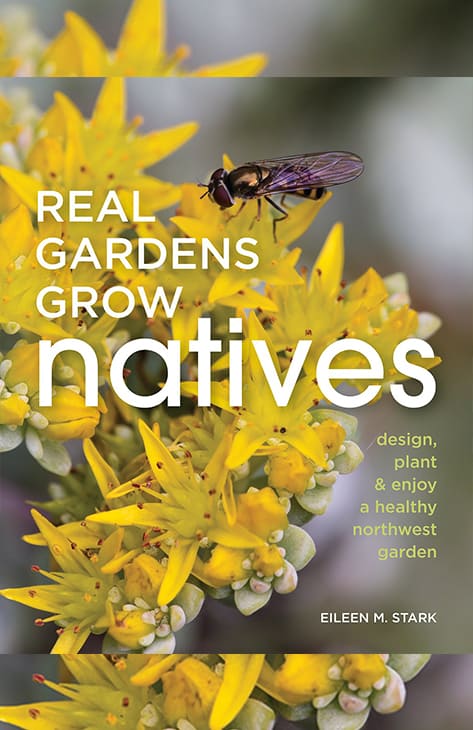
Patty Puckett Tingler

Patty Puckett Tingler is a certified Skagit County WSU Extension Master Gardener, Class of 2022.

Questions about home gardening or becoming a Master Gardener may be directed to: Skagit County WSU Extension Office, 11768 Westar Lane, Suite A, Burlington, WA 98233; by phone: 360-428-4270; or via the website: www.skagit.wsu.edu/mg

bee photo
Learn from the experts at the
Country Living Expo
& Modern Homesteading

Saturday, January 27, 2024

Learn More and Register Here >>

These Gardening Topics and More:

  • Fruit Tree Pruning & Grafting
  • Microclimates in the Garden
  • Low Maintenance Gardening
  • Roses
  • Bee Keeping
  • Soil Sampling
  • Veggie Gardening
  • Growing in High Tunnels, Cold Frames, and Unheated Greenhouses
  • Pest Control
  • Hop Growing
  • Flower Arranging
  • Know Your Native Trees
  • Introduction into Mason Bees


AMGPost_header5
picture of Discovery Garden entrance apples, Salal Native Garden sign


Discover the Skagit Valley Display Gardens Open House

Discover the Discovery Garden, NW Fruit Garden, and the Salal Native Plant Garden

              Subscribe to the Blog >

By Janine Wentworth, Skagit County WSU Extension Master Gardener

June is the beginning of summer blooming, fruit and vegetable growth and early harvests.

Enjoy the summer gardens of Skagit Valley at the Discover the Display Gardens Open House. Skagit Valley is home to 8 acres of display gardens operated by volunteers as a learning resource for the public.

Discover the Display Gardens
Open House

June 24, 2023 · 10 am – 2 pm

Free Admission

  • Skagit County WSU Extension Master Gardener Discovery Garden
  • Western Washington Fruit Research Foundation
  • Salal Native Plant Garden

All three are nestled together in the green fields of the WSU Northwestern Washington Research and Extension Center west of Mount Vernon on HWY 536 (Memorial Hwy.)

While all three of these gardens are open to the public daily, the Annual Open House is focused on educating and inspiring visitors interested in many specific areas of interest, including pollination, water-wise gardening, native plants and raising fruits and vegetables in the Skagit area.
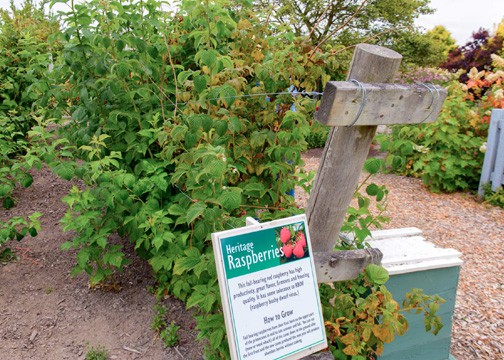
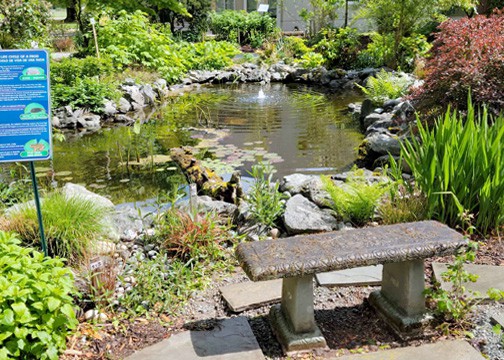
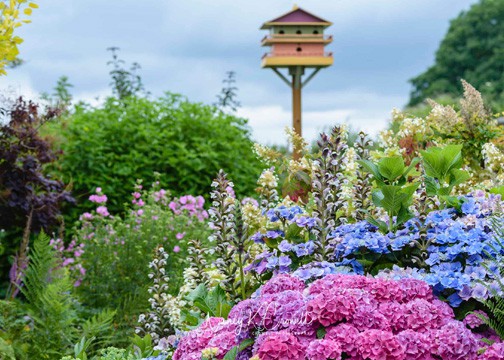
The Discovery Garden
Designed to support Skagit home gardeners by promoting science-based gardening practices, Skagit area WSU Extension Master Gardeners have created 30 garden rooms within the garden, featuring hundreds of plants chosen to flourish in Skagit Valley. Come and spend time with the volunteers who maintain the gardens and learn more about what they grow.

In addition to tours of the garden rooms, Master Gardeners will be on hand offering activities for all ages including:

  • Free garden tool sharpening
  • Solutions to plant problems
  • Plant identification– to help you know what you have
  • Expert advice on weed identification and management

While at the Discovery Garden, visit the small fruits garden and learn more about food you can grow in your own back yard. Photo © Nancy Crowell Photography
Visit the learning station near the pond in the Naturescape Garden. There you will see Koi fish and learn about pond maintenance and construction as well as drip irrigation.
Bring a blanket and picnic lunch and enjoy the day at the Discovery Garden. Photo © Nancy Crowell Photography

Learn about effective gardening at the 8 education stations located throughout the garden area. Master Gardeners will offer instruction on topics such as:

  • Developing healthy soil
  • Composting
  • Pollinator support
  • Fruit tree pruning and thinning
  • Gardening with native plants
  • Weed identification: Match examples of common weeds with their names so you can learn how to identify them and control them
  • Clean water and water conservation: Visit the learning station near the pond in the Naturescape Garden. There you will see Koi fish and learn about pond maintenance and construction as well as drip irrigation

Pollinators: Learn about plants that support pollinators from Master Gardeners who plant and care for the pollinator gardens and the pollinators that live in the garden. The pollinator station at the Open House will teach ways to help native bees and other pollinators thrive in home and community landscapes because pollination is an essential survival function.

Local Food: The Skagit County WSU Extension Master Gardeners offer extensive resources for local gardeners. During the Open House, Master Gardeners will be giving talks on drawing of food baskethealthy soils, growing your own vegetables, and weed identification and eradication. The Grow Your Own Food page at https://skagitmg.org/home/resources/food/ is also an excellent resource for gardeners getting started.
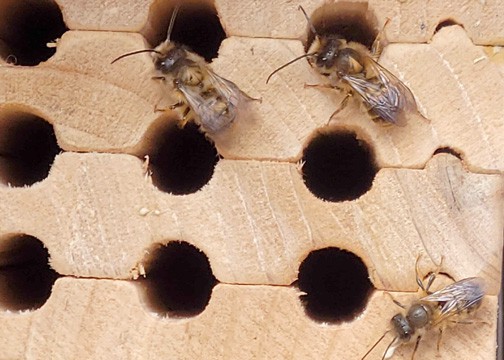
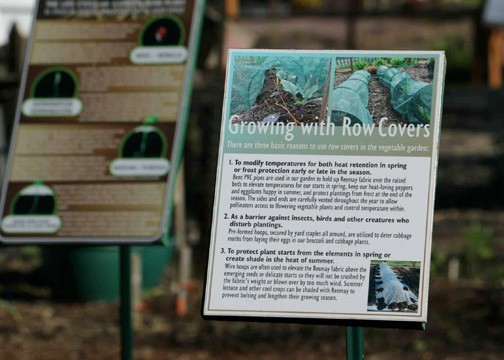
While at the Discovery Garden, visit the Vegetable, Small Fruits, and Doc’s Arbor garden rooms for ideas and examples of food-producing plants that grow well in the Skagit County area.

Educators from the Xerex Society will be at the Open House demonstrating techniques for making your garden pollinator friendly
Learn smarter vegetable gardening tips from the Master Gardeners who have research and tested a variety techniques that face gardeners in the North Puget Sound area.
Throughout the growing season, garden waste is sorted, chopped, and chipped-- the browns and greens are com­bined and turned, giving us nutrient-rich compost in a few months.
Throughout the growing season, garden waste is sorted, chopped, and chipped– the browns and greens are com­bined and turned, giving us nutrient-rich compost in a few months.

Composting: Curious about how to get started composting? Composting reduces waste and provides an inexpensive treatment for home gardens and landscapes. Healthy soil is essential to have healthy plants. Come talk to our soil experts and learn about your soil and what you can do to improve it.

Growing the Discovery Gardens since 1996
In 1994, the Skagit County WSU Extension Master Gardeners had a vision for a garden that would demonstrate best practices for gardening in the Skagit area. After two years of planning, the garden’s first structure of trees and fences was placed in the fall of 1996. Over the following two years, many committed WSU Extension Master Gardeners, along with the help of the community, planted the gardens.

The WSU Master Gardener Program addresses important sociologic and environmental issues by teaching research-based horticulture information. We want people to have important skills and abilities that help mitigate challenges and to understand that everyone has a role to play in creating and sustaining healthy and resilient communities.

Salal Native Plant Garden
The second garden participating in the Tri-Garden Open House is the Salal Native Plant Garden. Bordering the Discovery Garden to the south, the Salal Native Plant Garden is entered by walking through the Discovery Garden following the paths to the south. This labor of love and concern for native plants is manifested in an extensive and charming display garden.

Created twenty-five years ago as a collaborative effort between volunteers of the Salal Chapter of the Washington Native Plant Society and the Washington State University Agriculture Extension Agency at Mount Vernon (WSU), the Native Plant Garden is now a half-acre oasis that holds the seeds for the future of native plants in the lower Skagit Valley. The garden is a terrific resource for homeowners who want to learn how to incorporate more native plants into their landscaping.

Western Washington Fruit Research Foundation (NW Fruit)
The third garden on display is the fruit garden known as the Western Washington Fruit Research Foundation (or NWFruit.org). Here volunteers will answer questions about fruit trees. The 6-acre garden was designed and constructed by volunteers of the foundation and contains large informational signs and handouts based on the research conducted by Washington State University.

During the Open House volunteers will be on hand to explain examples of netting for bird control, a Tatura trellis, and answer questions about the expansive espalier display.

The fruit garden contains a large collection of fruiting plants with many unique varieties, including a collection of 17 variations of Gravenstein apples, a collection of antique apples from all over the world, and unusual fruits such as medlar and blue honeyberry. Located on the west side of the Discovery Garden the fruit garden is open to the public seven days a week from dawn to dusk.

Please join us for the Open House festivities on June 24, 2023 from 10 am – 2 pm. You are welcome to bring a blanket and picnic lunch and enjoy the day with family and friends.

The gardens are open and free to the public throughout the year, 7 days a week from dawn to dusk. Visit the gardens throughout the seasons to view the seasonal changes. Signage in each garden identifies plants and makes for interesting and educational self-guided tours.


RESOURCES:

ABOUT THE AUTHOR:

Janine Wentworth became a master gardener in 2018. She and Kay Torrance are co-chairs of the Discovery Garden Open House.


Questions about home gardening or becoming a master gardener may be directed to: Skagit County WSU Extension Office, 11768 Westar Lane, Suite A, Burlington, WA 98233; by phone: 360-428-4270; or via the website: www.skagit.wsu.edu/mg